Preventing bees from drowning in a top feeder requires establishing a completely sealed perimeter around the syrup reservoir. The most critical precaution is ensuring that all hardware cloth or galvanized screens are "bee tight," effectively blocking bees from entering the liquid from below. You must also verify that the inner cover sits perfectly flat to prevent bees from accessing the syrup from above.
Success lies in inspecting the physical barriers of your feeder; even a single unsealed gap or a warped cover can allow bees to bypass safety screens and drown in the reservoir.
Securing the Feeder from Below
Verifying the Hardware Cloth
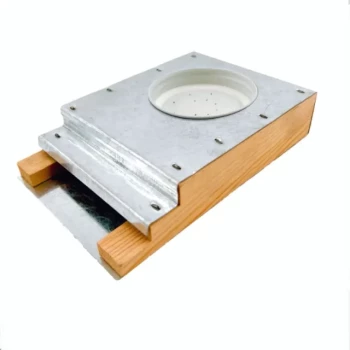
The primary line of defense is the hardware cloth or galvanized steel screen. This mesh allows bees to access the syrup surface without immersing themselves. It is crucial that this screen is "bee tight," meaning the mesh is secure enough to prevent any bee from squeezing through into the main reservoir.
Sealing Structural Gaps
Bees are opportunistic and will locate any structural weakness in the feeder body to reach the sugar source. You must inspect the feeder for any holes or gaps, particularly where the screen attaches to the frame. Any opening large enough for a bee must be sealed immediately using a material like silicone.
Securing the Feeder from Above
The Importance of a Flat Inner Cover
Drowning risks are not limited to the underside of the feeder. The inner cover functions as a critical lid and must be in good condition. It must sit perfectly flat on top of the feeder to create a seal that prevents bees from crawling over the rim and falling into the syrup.
Common Pitfalls to Avoid
Overlooking Wear and Tear
Equipment degrades over time, which can compromise safety features. Wood can warp due to moisture, preventing the inner cover from sitting flat. Regularly check that your equipment has not bowed or cracked, creating new entry points for bees to bypass the safety systems.
Neglecting Sealant Maintenance
Silicone seals can peel or degrade after repeated exposure to the elements and syrup. Do not assume a gap sealed last season remains secure today. Re-apply silicone whenever you notice a seal pulling away from the feeder walls.
Implementing a Safety Routine
Before installing a top feeder, run through this checklist to ensure hive safety:
- If your primary focus is equipment preparation: Apply silicone to any visible gaps, holes, or loose mesh edges before adding syrup to the reservoir.
- If your primary focus is active hive management: Verify the inner cover sits flush every time you refill the feeder to strictly block top-down access.
By rigorously maintaining these physical barriers, you ensure your bees benefit from the feed without risking the colony's population.
Summary Table:
| Safety Element | Precaution Required | Purpose |
|---|---|---|
| Hardware Cloth | Use "bee-tight" galvanized mesh | Prevents bees from entering reservoir from below |
| Structural Body | Seal gaps with food-grade silicone | Blocks opportunistic entry through frame holes |
| Inner Cover | Ensure cover sits perfectly flat | Prevents bees from crawling over the rim into syrup |
| Equipment Condition | Check for warped wood or cracks | Maintains a secure perimeter against moisture damage |
Maximize Hive Productivity with HONESTBEE Professional Equipment
Protect your colony and optimize your feeding operations with high-quality gear. HONESTBEE specializes in serving commercial apiaries and distributors with a robust wholesale catalog. From precision beekeeping tools and machinery to essential consumables and honey-making hardware, we provide the industrial-strength solutions your business needs to thrive.
Don't let equipment failure compromise your yield. Contact us today to discuss our bulk inventory, including specialized honey-filling machines and hive-making equipment tailored for large-scale success.
Related Products
- Professional Hive Top Bee Feeder for Beekeeping
- HONESTBEE Round Hive Top Bee Feeder for Syrup
- HONESTBEE Professional Hive Top Bee Feeder Feeding Solution
- HONESTBEE Square Top Hive Bee Feeder Top Bee Feeder
- Rapid Bee Feeder White Plastic 2L Round Top Feeder for 8 or 10-Frame Bee Hives
People Also Ask
- What is a hive top feeder? A Guide to Efficient, Low-Stress Beekeeping
- Do I need an inner cover with a hive top feeder? Optimize Your Hive Setup for Healthy Bees
- What is a hive top feeder, and how does it work? A Complete Guide to Efficient In-Hive Feeding
- What are the characteristics, advantages, and disadvantages of hive top feeders? Optimize Your High-Volume Feeding
- How does a hive top feeder work? Optimize Your Apiary's Nutrition and Security