Commercial stingless-bee harvesting requires specialized, low-disturbance equipment. Unlike Apis mellifera, Meliponini store honey in small cerumen pots rather than standard wax combs, while propolis is integrated into complex resinous nest structures. A commercial setup therefore needs purpose-designed hive boxes, precision suction tools, separate propolis-collection equipment, hygienic processing systems, and controlled filling and packaging machinery.
The essential principle is non-destructive separation: extract honey from individual pots with controlled suction, collect propolis without mixing it with pollen or brood materials, and process both products with dedicated, hygienic equipment.
Why Standard Honey-Processing Equipment Is Not Enough
Stingless bees use cerumen pots
Stingless bees store honey in small, delicate pots made from wax and plant resins. These structures are not compatible with conventional uncapping knives, honey frames, or standard centrifugal extraction methods.
Commercial equipment must reach individual pots precisely and remove honey without collapsing the surrounding nest structure.
Propolis, honey, and pollen can be closely connected
Meliponini nests contain interconnected resinous structures, food stores, brood areas, and defensive materials. Poorly designed harvesting tools can cause cross-contamination or mechanical damage.
A commercial system should therefore separate honey extraction, propolis collection, and pollen or debris handling as distinct operations.
Colony protection affects production continuity
Destructive harvesting forces colonies to rebuild internal structures and can damage larvae or weaken the colony. Non-invasive tools support repeated harvesting while reducing recovery time and operational losses.
The commonly cited three- to four-month harvesting interval should be treated as a management reference, not a universal schedule. Actual frequency depends on species, colony strength, forage availability, climate, and local husbandry practice.
Core Beekeeping Equipment for Commercial Meliponini Operations
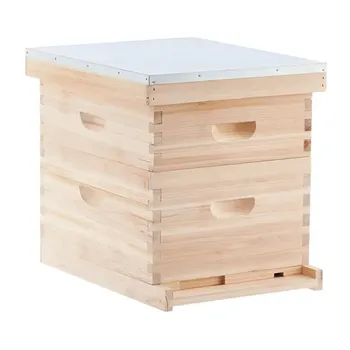
Purpose-designed stingless-bee hive boxes
Commercial colonies need hive boxes designed around the nesting behavior and pot-building habits of the target Meliponini species. Useful features include modular access, removable sections, inspection areas, and dedicated harvesting access.
The box design should allow operators to identify mature honey pots and propolis deposits without exposing the brood area unnecessarily.
Modular nest and separation sections
Modular hive construction helps separate brood, honey pots, pollen stores, and propolis-rich areas during inspection and harvesting. It also makes colony maintenance and material replacement more controlled.
For distributors, offering compatible modules and replacement components is important because hive standardization improves training, inventory planning, and order fulfillment.
Inspection and handling tools
Commercial teams require clean inspection tools, soft brushes, forceps, spatulas, and low-impact nest-handling instruments. These should be sized for small pot structures rather than heavy conventional honey frames.
Food-contact tools should be made from materials that are easy to clean and resistant to corrosion, resin buildup, and repeated sanitization.
Specialized Honey-Harvesting Equipment
Precision suction syringes
High-precision syringes are among the most practical tools for removing honey from individual cerumen pots. They allow the operator to withdraw small volumes while minimizing damage to the pot and nearby nest material.
Manual syringes are useful for small apiaries, premium batches, field work, and species where delicate handling is more important than throughput.
Negative-pressure honey pumps
For larger commercial operations, low-pressure suction pumps can improve speed and consistency. The pump should provide fine control over suction strength so that honey is removed without rupturing pots or drawing in excessive debris.
A pump system should include food-grade tubing, cleanable connectors, a collection vessel, and a mechanism for preventing backflow into the hive or product line.
Food-grade collection vessels
Extracted honey should flow directly into clean, closed, food-contact containers. Narrow-neck vessels can reduce exposure during small-batch collection, while larger sanitary tanks are more suitable for centralized processing.
The collection system should be designed to minimize open handling, uncontrolled splashing, and contact with non-food-grade plastics or contaminated surfaces.
Low-shear transfer equipment
Stingless-bee honey can be relatively fluid and may contain fine nest particles. Low-shear transfer pumps or controlled gravity systems help move the product without unnecessary agitation.
The appropriate choice depends on batch size, viscosity, filtration requirements, and whether the product is sold as raw honey or undergoes further processing.
Propolis Collection Equipment
Propolis traps and removable collection surfaces
Purpose-designed propolis traps or removable resin-collection surfaces provide a more controlled alternative to scraping random areas of the nest. They can encourage collection in accessible locations and simplify batch separation.
The collection method must be compatible with the target species and should not obstruct ventilation, brood development, or colony movement.
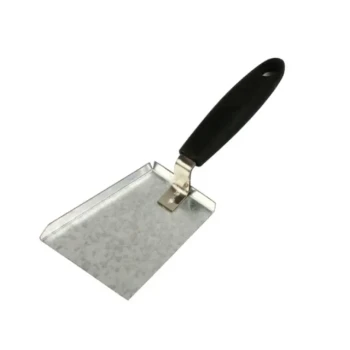
Stainless-steel scrapers and spatulas
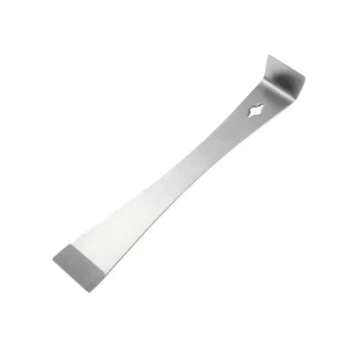
When propolis must be removed from hive components, dedicated stainless-steel scrapers and spatulas provide controlled physical separation. Rounded or appropriately shaped edges help reduce unnecessary damage to the hive structure.
These tools should be reserved for propolis work rather than used interchangeably with honey-contact equipment.
Propolis sorting and cleaning tools
Commercial propolis processing needs trays, sieves, tweezers, and inspection lighting for removing wood fragments, dead insects, excess wax, and other foreign material. Sorting should occur before extraction or packaging.
Because raw propolis is resinous and sticky, equipment should be easy to disassemble and clean without leaving residues that can contaminate later batches.
Separate propolis containers
Propolis should be collected into sealed, clearly labeled containers separate from honey and pollen. Batch identification should include the colony or apiary source, collection date, material type, and processing status.
This separation supports traceability and prevents the resinous material from transferring odor, color, or particles into honey-processing equipment.
Honey and Propolis Processing Equipment
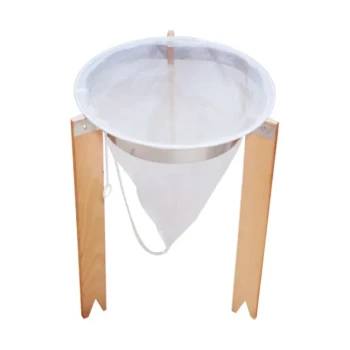
Coarse screening and fine filtration
Honey-processing lines generally require staged screening to remove nest fragments and visible particles. The filtration level should be selected according to the intended product specification.
Excessively aggressive filtration may remove naturally occurring suspended material, while insufficient filtration can reduce appearance, shelf stability, and customer acceptance.
Sanitary settling or holding tanks
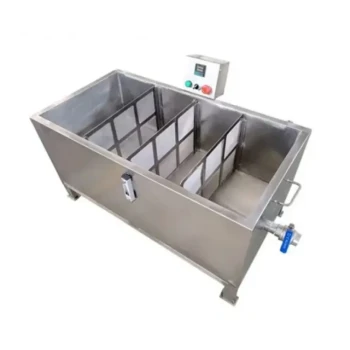
Covered stainless-steel holding tanks allow filtered honey to settle before filling. A tank should have cleanable internal surfaces, suitable drain fittings, and a design that limits environmental exposure.
Separate tanks are recommended for raw honey, filtered honey, blended lots, and any product that has undergone a different processing step.
Propolis cleaning and preparation equipment
Raw propolis may require controlled sorting, size reduction, and separation from unwanted nest materials before it is sold or converted into a derivative. Suitable equipment can include dedicated cutters, grinders, sieves, trays, and enclosed preparation units.
These machines should not be shared with honey equipment unless they can be fully dismantled and validated for cleaning, since propolis residues are difficult to remove.
Controlled extraction and separation units
If the business produces a propolis extract, the extraction system must be selected according to the intended formulation, solvent, and regulatory requirements. The equipment should provide controlled contact between the prepared propolis and the extraction medium, followed by appropriate separation and filtration.
The resulting product should not automatically be marketed as a medicinal product. Health-related claims, active-ingredient specifications, and allowable formulations depend on the destination market and applicable regulations.
Product-specific storage vessels
Honey and propolis require separate storage arrangements because they differ in viscosity, composition, cleaning requirements, and packaging formats. Closed, labeled vessels support product integrity and batch traceability.
Storage equipment should protect products from avoidable contamination, excessive heat, moisture, and prolonged exposure to light where relevant to the product specification.
Filling, Packaging, and Quality-Control Equipment
Honey-filling machines
Small-volume piston fillers, peristaltic fillers, or other controlled filling systems can improve consistency when packing stingless-bee honey into retail or professional containers. The filling method should accommodate the product’s viscosity and any permitted suspended particles.
For premium products, accurate dosing and low product loss are often more valuable than maximum line speed.
Propolis filling and dosing equipment
Propolis may be sold as raw material, granules, extracts, or formulated products. Each format requires a different dosing approach, such as solid dispensing, liquid filling, or semi-viscous product filling.
A distributor should avoid treating “propolis equipment” as a single category; the correct machine depends on the final product form and container.
Capping, sealing, and labeling equipment
Commercial packaging lines may include cap applicators, induction or tamper-evident sealers, labelers, and date or batch coders. These systems reduce manual handling and improve presentation for wholesale customers.
Labels should support traceability and accurately identify the product as honey, raw propolis, or a regulated derivative rather than implying unsupported medicinal effects.
Basic quality-control instruments
A commercial operation should consider instruments for checking moisture, temperature, fill weight, visual clarity, and batch consistency. The exact test panel depends on local food rules and the product specification.
For medicinal or therapeutic positioning, additional laboratory testing and documented quality systems may be required. Processing equipment alone does not establish medicinal status.
Designing a One-Stop Commercial Equipment Package
Match equipment to production scale
A small premium apiary may need manual syringes, compact collection vessels, hand tools, a simple filter, and a semi-automatic filler. A centralized processor will need controlled suction systems, sanitary tanks, dedicated propolis preparation equipment, and automated packaging support.
Sizing equipment by expected harvest volume prevents both under-capacity bottlenecks and unnecessary capital expenditure.
Build around product separation
The equipment package should maintain separation between brood areas, honey, propolis, pollen, raw materials, and finished products. Color coding, dedicated tools, separate storage, and clear workflow routes can reduce accidental mixing.
This is especially important because propolis residue can be persistent and can compromise honey-processing hygiene.
Prioritize cleanability and serviceability
Commercial buyers should evaluate tool disassembly, replacement seals, tubing availability, pump maintenance, and cleaning access before focusing only on nominal capacity. Difficult-to-clean equipment becomes a recurring production risk.
For B2B supply, spare parts, technical documentation, operator training, and rapid service response are part of the equipment package—not optional extras.
Understanding the Trade-offs
Manual tools versus automated systems
Manual syringes and hand tools offer excellent control and low initial cost, but they require more labor and can produce variable throughput. Automated suction and filling systems improve consistency but require greater investment, operator training, and maintenance.
A staged purchasing plan is usually more rational than automating every process at the beginning.
Maximum recovery versus colony preservation
Applying excessive suction or scraping aggressively may increase short-term recovery while damaging pots, brood structures, or hive components. The commercial objective should be repeatable recovery with colony health, not maximum extraction from a single intervention.
Controlled suction and selective propolis removal generally better support long-term production continuity.
Filtration versus product identity
Heavy filtration can produce a cleaner-looking honey, but it may alter the product’s natural appearance and remove suspended components. The processing specification should be decided before purchasing filters or filling equipment.
Raw, filtered, blended, and formulated products should be treated as different commercial categories.
“Medicinal” positioning versus regulatory compliance
Stingless-bee honey and propolis may have valuable functional or traditional-market appeal, but equipment cannot substantiate medical claims by itself. Claims, testing, labeling, and registration must comply with the rules of the target market.
Distributors should request documentation on food-contact materials, cleaning procedures, traceability, and applicable quality testing before presenting a product as medicinal.
How to Apply This to Your Project
Select the equipment package according to both colony-management needs and the final product you intend to sell.
- If your primary focus is colony-safe honey harvesting: Prioritize purpose-designed hive boxes, precision syringes or low-pressure suction pumps, food-grade tubing, closed collection vessels, and gentle filtration.
- If your primary focus is raw propolis production: Prioritize removable propolis traps, dedicated scrapers, sorting trays, sieves, sealed containers, and separate cleaning equipment.
- If your primary focus is wholesale honey packaging: Add sanitary holding tanks, calibrated filling machines, capping or sealing equipment, batch coders, and scalable labeling systems.
- If your primary focus is propolis extracts or formulated products: Design a separate propolis preparation and extraction line with controlled separation, dedicated storage, and product-specific filling equipment.
- If your primary focus is distributor or reseller supply: Source a complete portfolio that includes hive systems, harvesting tools, processing machinery, consumables, spare parts, documentation, and responsive technical support.
A commercially viable Meliponini operation combines specialized harvesting precision, strict product separation, hygienic processing, and scalable fulfillment rather than relying on conventional honey equipment alone.
Summary Table:
| Equipment Category | Key Equipment | Purpose |
|---|---|---|
| Hive Systems | Purpose-designed hive boxes, modular nest sections | Provide colony management and access for harvesting |
| Harvesting Tools | Precision syringes, negative-pressure pumps, collection vessels | Extract honey from cerumen pots without damage |
| Propolis Collection | Traps, scrapers, sorting trays, separate containers | Collect and clean propolis without cross-contamination |
| Processing Equipment | Screening, settling tanks, extraction units | Filter and prepare honey and propolis for packaging |
| Filling & Packaging | Filling machines, capping, labeling | Ensure consistent packaging and traceability |
| Quality Control | Moisture meters, fill weight checkers | Verify product quality and consistency |
Ready to equip your stingless bee operation for commercial success? HONESTBEE provides a comprehensive range of specialized beekeeping tools and processing equipment tailored for Meliponini honey and propolis production. As a trusted B2B partner, we offer reliable supply, rapid delivery, and expert support for APIARIES and distributors. Contact us today to explore our full catalog and discover how we can optimize your harvest yields and streamline your processing. Get in touch now! Contact Form
Related Products
- Professional Stainless Steel Honey Filtering Machine with Water Bath Heating for Beekeeping
- All-Stainless Steel Pivoting Honey Uncapping Fork for Beekeeping
- Professional Stainless Steel Pry-Bar Hive Tool
- Stainless Steel Manual Honey Press with Guard for Pressing Honey and Wax
- Stainless Steel Double Layer Honey Strainer Sieve Filters
People Also Ask
- Why is filtering honey an important step in honey processing? Ensure Purity, Clarity & Marketability
- Is it necessary to filter honey after extraction? A Guide to Straining vs. Raw Honey
- What is the best way to filter honey? A Guide to Quality, Clarity, and Raw Preservation
- Why do people filter honey? For Clarity, Stability, and Consumer Appeal
- What are the benefits of using honey filters? Achieve Purity, Efficiency, and Market Appeal