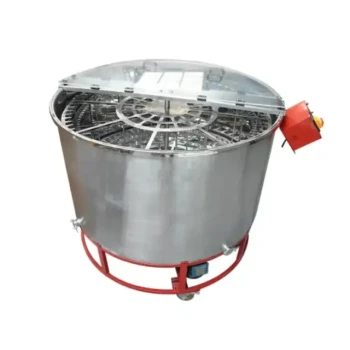
Harvesting honey from a Langstroth hive relies on a specific set of specialized mechanical tools designed to extract liquid honey without destroying the wax comb. The essential equipment includes a heated knife or capping fork to open the cells, a capping tank to catch wax debris, and a centrifugal extractor to spin the honey out of the frames.
Core Takeaway: Harvesting from Langstroth hives is an equipment-heavy process that favors high yield and comb preservation, but it requires a significant upfront investment in expensive machinery and dedicated storage space for tools used infrequently.
The Essential Extraction Toolkit
Uncapping the Honeycomb
Before extraction can begin, the wax seal on the honeycomb must be removed. Beekeepers use a hot knife to slice off the thin layer of wax cappings across the entire frame in one pass. Alternatively, a capping fork can be used to manually scratch open the cappings, though this is slower and more labor-intensive.
Managing Wax Debris
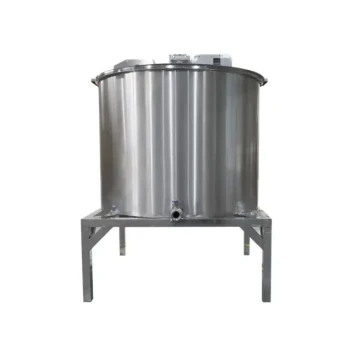
The uncapping process creates significant wax waste and dripping honey. A capping tank is required to catch these cappings. This specialized vessel often includes a screen or sieve to allow honey to drain away from the wax, ensuring no harvest is lost during the preparation phase.
The Centrifugal Extractor
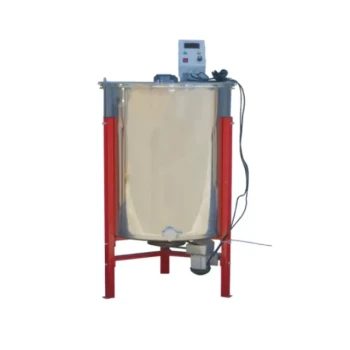
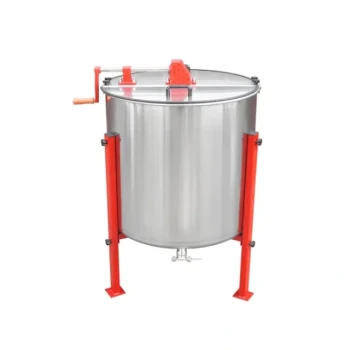
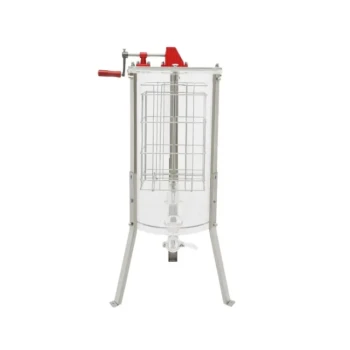
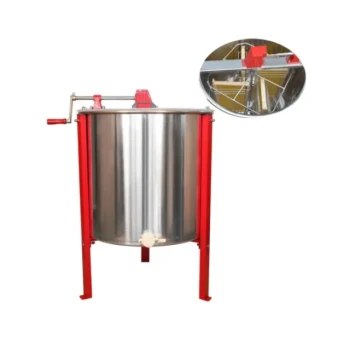
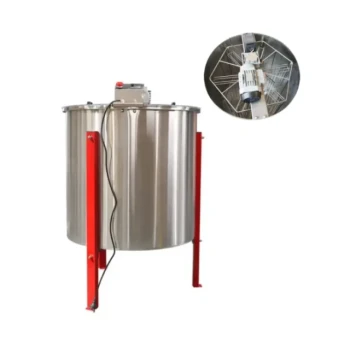
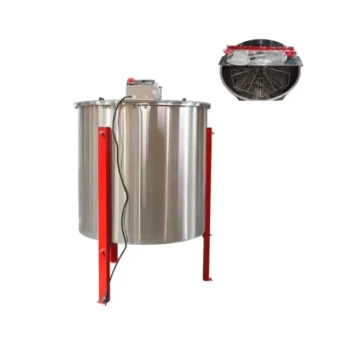
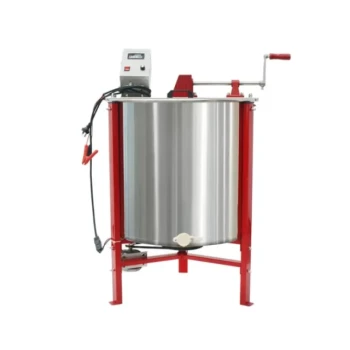
The centerpiece of Langstroth harvesting is the honey extractor. This is a large mechanical drum that holds the uncapped frames. By spinning the frames rapidly, centrifugal force pulls the honey out of the cells and onto the drum walls, where it drains to the bottom, leaving the wax comb intact for reuse.
Managing the Hive and Workflow
Clearing the Bees
Before frames can be removed, the colony must be separated from the honey supers. A bee escape or clearer board is often placed between the brood box and honey supers 24 to 48 hours prior to harvest. This one-way valve allows bees to leave the honey supers but prevents them from returning.
Transporting Frames
Once cleared, the frames must be moved to the processing area without attracting robber bees or pests. A bee-proof covered box is essential for transporting the sticky frames from the apiary to the extraction site.
Filtration and Bottling
After extraction, the honey typically contains small bits of wax and propolis. While not always a heavy piece of machinery, a system of filters or strainers is necessary to purify the honey before it is bottled for consumption.
Understanding the Trade-offs
High Financial Investment
The specialized equipment required for this method is expensive. Purchasing an extractor, heated tools, and tanks represents a significant capital outlay compared to other beekeeping methods.
Storage Space Requirements
Most of this equipment is large, bulky, and used only once or twice a year. You must have adequate, dry storage space to house the extractor and tanks for the majority of the year when they are idle.
Labor Intensity
Despite the mechanical aid, the process remains labor-intensive. It involves multiple steps: placing bee escapes, heavy lifting of supers, manual uncapping, spinning, and extensive cleaning of sticky equipment afterward.
Making the Right Choice for Your Goal
The decision to invest in Langstroth harvesting equipment depends on your long-term objectives for your apiary.
- If your primary focus is maximum honey yield: Invest in a centrifugal extractor, as it allows you to return drawn comb to the bees, significantly speeding up future production.
- If your primary focus is minimizing equipment costs: You may struggle with the Langstroth method, as the required specialized tools (tanks, extractors, hot knives) constitute a high barrier to entry compared to other hive styles.
Success with a Langstroth hive ultimately requires balancing the cost of specialized machinery against the benefit of higher efficiency and honey volume.
Summary Table:
| Equipment Type | Primary Function | Key Benefit |
|---|---|---|
| Centrifugal Extractor | Spins honey out of frames via force | Preserves wax comb for reuse; maximizes yield |
| Heated Uncapping Knife | Removes wax seals from honeycomb | Fast, efficient preparation for extraction |
| Capping Tank | Catches wax debris and drains honey | Minimizes waste and keeps workspace clean |
| Bee Escape Board | Clears bees from honey supers | Reduces bee stress and simplifies harvesting |
| Sieves & Filters | Removes wax particles and impurities | Ensures a professional, clear honey product |
Elevate Your Commercial Apiary with HONESTBEE
Maximizing honey production requires more than just skill—it requires professional-grade equipment. HONESTBEE specializes in supporting commercial apiaries and distributors with a comprehensive range of high-performance beekeeping tools.
Whether you need industrial honey-filling machines, high-capacity centrifugal extractors, or essential consumables for your retail line, we provide the wholesale solutions you need to scale your operations. From specialized hardware to honey-themed cultural merchandise, we help you bring the best of the hive to your customers.
Ready to upgrade your harvesting efficiency? Contact our experts today to discuss our wholesale catalog and tailored machinery solutions.
Related Products
- Manual Hand Crank 4 Frame Honey Extractor Centrifuge for Beekeeping
- electric honey extractor honey centrifuge 3 frame honey extractor stainless steel honey frame extractor
- Professional 4 Frame Self Reversing Electric Honey Extractor for Beekeeping
- Electric 4 Frame Tangential Honey Extractor
- Stainless Steel Manual 8 Frame Radial Honey Extractor Machine for Beehives
People Also Ask
- What are some tips for achieving efficient honey extraction with a centrifuge extractor? Maximize Your Yield & Efficiency
- What is the proper procedure for maintaining a centrifuge honey extractor? Expert Tips for Longevity and Hygiene
- What are the advantages of using a centrifuge honey extractor? Maximize Yields and Protect Your Honeycombs
- Which type of honey extractor is generally more durable? Focus on Material & Build Quality for Longevity
- What is a manual honey extractor? The Essential Guide to Cost-Effective Beekeeping for Beginners