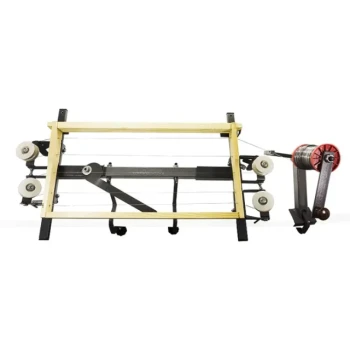
Internal wooden frames and bamboo cross-structures function as the essential skeletal system of a managed beehive. They serve primarily as physical supports that allow bees to construct stable honeycombs capable of bearing their own weight, while simultaneously organizing the hive into distinct layers. This organization enables beekeepers to inspect the colony and harvest honey without destroying the bees' work.
The core function of these internal structures is to bridge the gap between natural bee behavior and human management. They provide the necessary stability for heavy combs while introducing a modularity that makes modern, non-destructive beekeeping possible.
The Foundation of Colony Architecture
Bearing the Structural Load
In a natural setting, honeycomb can become heavy and unstable. Internal frames act as a rigid skeleton, providing secure attachment points for the bees to build their wax combs. This ensures the combs remain stable and do not collapse under the significant weight of stored honey and developing brood.
Guiding Comb Construction
Beyond simple support, these frames dictate the spatial arrangement of the nest. By acting as a guide—often aided by pre-fabricated wax foundation sheets—they induce worker bees to build honeycombs neatly within specific boundaries. This prevents the chaotic, cross-comb construction often found in wild hives.
Vertical Organization
Frames are typically hung vertically, functioning much like studs in the wall of a house. In standard configurations, such as the Newton or ISI models, this vertical placement creates precise "bee space" between combs, allowing bees to move freely while maximizing the use of the hive's internal volume.
Enabling Modern Hive Management
Non-Destructive Harvesting
The most critical advantage of these structures is the ability to harvest in layers. Because the combs are contained within individual frames, a beekeeper can remove specific sections of honey without disrupting the rest of the colony. This preserves the overall structure of the nest, unlike primitive methods that required destroying the comb to extract honey.
Modularity and Inspection
These internal structures render the hive components moveable. Beekeepers can shift frames within a box or move them between boxes to manage the hive's population and resources. This modularity allows for routine inspections of the brood and queen without tearing apart the colony's infrastructure.
Biological Monitoring
Advanced iterations of these frames have evolved to serve diagnostic functions. "Sensor frames" can be positioned centrally above the brood nest to hold microphones and temperature sensors. This leverages the hive's natural heat flow to monitor the colony's biological health without interfering with normal bee activity.
Understanding Material Trade-offs
The Benefit of Natural Materials
Wooden frames and bamboo structures are the traditional choice because they offer a natural feel that bees accept readily. They are generally cost-effective and provide a tactile surface that integrates well with the bees' wax construction.
Maintenance and Durability
The primary downside to organic structural components is their susceptibility to the environment. In humid climates, wooden and bamboo frames require occasional maintenance to prevent warping or rotting. While they are easily repaired or replaced, they lack the permanence of synthetic alternatives.
Making the Right Choice for Your Goal
To select the right internal structure strategy, consider your management priorities:
- If your primary focus is efficient production: Prioritize standard movable wooden frames, as they allow for rapid inspection, easy rotation of resources, and industrial-style honey harvesting.
- If your primary focus is colony health monitoring: Consider integrating specialized sensor frames within the brood chamber to gather data on temperature and acoustics without disruption.
- If your primary focus is cost and repairability: Stick to traditional wood or bamboo components, which are inexpensive and easy to fix, but be prepared for regular maintenance checks to prevent rot.
These internal structures are not just accessories; they are the interface that allows humans and bees to work in tandem.
Summary Table:
| Feature | Primary Function | Benefit to Beekeeping |
|---|---|---|
| Structural Load | Supports heavy wax and honey | Prevents comb collapse and hive damage |
| Spatial Guide | Maintains "Bee Space" | Prevents chaotic cross-comb construction |
| Modularity | Allows individual frame removal | Enables non-destructive inspection and harvest |
| Natural Materials | Provides tactile wood/bamboo surface | High acceptance by bees and easy repairability |
| Diagnostic Use | Holds sensors/microphones | Facilitates biological health monitoring |
Elevate Your Beekeeping Operation with HONESTBEE
At HONESTBEE, we understand that the right internal structures are vital for hive productivity and colony health. We cater specifically to commercial apiaries and distributors, offering a comprehensive wholesale range of professional-grade beekeeping tools, machinery, and essential consumables.
Whether you need precision-cut wooden frames, specialized hive-making machinery, or honey-filling equipment, our portfolio is designed to scale your business. Maximize your yield and streamline your management today.
Contact HONESTBEE to explore our wholesale solutions
References
- David Pattinson. Pre-modern Beekeeping in China: A Short History. DOI: 10.3098/ah.2012.86.4.235
This article is also based on technical information from HonestBee Knowledge Base .
Related Products
- Wooden Bee Hive Frames for Beekeeping and Wholesale
- HONESTBEE Wired and Assembled Wooden Bee Frames Foundation for a Thriving Hive
- Assembled Wooden Bee Frames with Plastic Foundation for Durability and Convenience by HONESTBEE
- Assembled Wooden Bee Frames with Beeswax Foundation Ready to Use by HONESTBEE
- Professional Wooden Requeening Frame for Beekeeping
People Also Ask
- How do wooden and plastic hive frames compare in terms of durability? Wood vs. Plastic Longevity & Repairability
- How does balancing the number of frames impact hive productivity? Optimize Your Apiary's Biological Output
- What are the main considerations when choosing between wooden and plastic bee hive frames? Optimize Your Apiary's Efficiency
- How should beehive frames be maintained to prolong their lifespan? 5 Pro Tips for Durable Beekeeping Equipment
- What is the primary function of frames within a beehive system? Structural Foundation and Hive Management