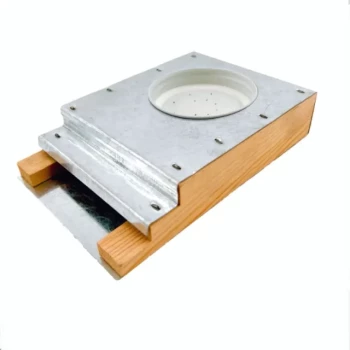
High-capacity feeders primarily solve the logistical challenge of timing and volume. They allow apiarists to rapidly deliver large amounts of high-concentration syrup, ensuring bees have sufficient time to process and cap these stores before freezing temperatures halt hive activity.
By enabling rapid, bulk consumption, these feeders eliminate the bottleneck of frequent refilling. This ensures colonies enter the three-to-five-month winter dormancy with fully stocked reserves while minimizing dangerous exposure to cold air.
Addressing the Biological Deadline
Solving the Volume-Time Constraint
Bees require significant time to convert syrup into stable, capped honey stores. This process must be completed before ambient temperatures drop too low for the bees to be active.
High-capacity feeders solve this by allowing the colony to uptake massive quantities of feed in a short window. This "rapid supplementation" ensures the food is stored and capped well before the winter freeze sets in.
Preventing Winter Starvation
The primary threat during winter is running out of fuel. A colony must survive a three-to-five-month period without foraging.
Standard feeders often cannot supply enough volume quickly enough to build this necessary buffer. High-capacity units ensure the hive reaches the required weight to withstand long-term isolation.
Operational Efficiency and Colony Health
Minimizing Cold Stress
Every time a hive is opened for feeding, the colony loses critical heat. In pre-winter conditions, this cold stress can be detrimental to the bees' health.
High-capacity feeders drastically reduce the frequency of hive interventions. By providing a large volume at once, you avoid the need to constantly crack the propolis seal and expose the cluster to cold air.
Improving Workflow Efficiency
For commercial or serious operations, "industrial-grade" efficiency is vital. Refilling small feeders daily is labor-intensive and disruptive.
High-capacity feeders streamline the pre-winter preparation process. They allow the apiarist to secure the colony's nutritional needs in fewer trips, saving labor while maximizing feed uptake.
Understanding the Trade-offs
The Risk of Mis-Timing
While high-capacity feeders solve the volume problem, they rely heavily on the beekeeper's timing.
If these large volumes are provided after temperatures have already dropped, bees may be unable to process the syrup. This can leave uncapped moisture in the hive, which creates condensation and mold issues during winter. The effectiveness of the feeder is entirely dependent on using it before the cold snap arrives.
Making the Right Choice for Your Goal
To determine if high-capacity feeding is the right strategy for your apiary, consider your specific objectives:
- If your primary focus is Colony Survival: Use these feeders to guarantee capped reserves for the long 3-5 month dormancy period.
- If your primary focus is Operational Efficiency: Utilize these units to reduce labor hours and minimize the frequency of hive inspections.
By aligning feed volume with the biological clock of the hive, you turn a high-risk season into a period of security and stability.
Summary Table:
| Problem Solved | Impact on Colony & Operation | Key Benefit |
|---|---|---|
| Volume-Time Constraint | Rapidly delivers large syrup quantities | Stores are capped before the first freeze |
| Winter Starvation | Ensures 3-5 months of fuel reserves | Guaranteed survival during dormancy |
| Cold Stress | Minimizes hive openings and heat loss | Protects bee health during temperature drops |
| Labor Intensity | Reduces refilling frequency and site visits | Maximizes workflow efficiency for apiaries |
Secure Your Apiary’s Winter Survival with HONESTBEE
Transitioning into winter shouldn't be a gamble. At HONESTBEE, we empower commercial apiaries and distributors with high-performance beekeeping tools and industrial-grade machinery designed for maximum efficiency. Whether you need high-capacity feeding solutions to safeguard your colonies or honey-filling machines to streamline your production, our comprehensive wholesale offering has you covered.
Partner with HONESTBEE to access:
- Industrial-grade beekeeping machinery and specialized hardware.
- A full spectrum of durable hive-making tools and consumables.
- Bulk supplies tailored for large-scale commercial success.
Don't let the cold compromise your investment. Contact us today to discuss how our wholesale equipment can optimize your operations and protect your bees.
References
- Jiao Tang, Chao Chen. Survey Results of Honey Bee Colony Losses in Winter in China (2009–2021). DOI: 10.3390/insects14060554
This article is also based on technical information from HonestBee Knowledge Base .
Related Products
- HONESTBEE Professional Hive Top Bee Feeder Feeding Solution
- Professional Hive Top Bee Feeder for Beekeeping
- 3.5L Plastic Beehive Frame Feeder Deep Frame Water Feeder for In Hive Use
- Rapid Bee Feeder White Plastic 2L Round Top Feeder for 8 or 10-Frame Bee Hives
- HONESTBEE Round Hive Top Bee Feeder for Syrup
People Also Ask
- How does a bee hive top feeder work? A Guide to Efficient, Protected Feeding
- Do I need an inner cover with a hive top feeder? Optimize Your Hive Setup for Healthy Bees
- What is a hive top feeder? A Guide to Efficient, Low-Stress Beekeeping
- What is a hive top feeder, and how does it work? A Complete Guide to Efficient In-Hive Feeding
- What are the characteristics, advantages, and disadvantages of hive top feeders? Optimize Your High-Volume Feeding