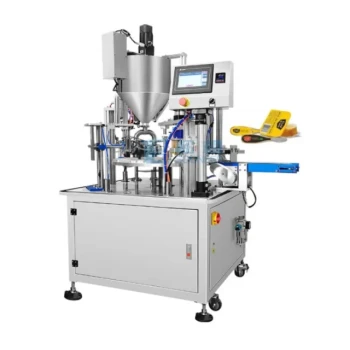
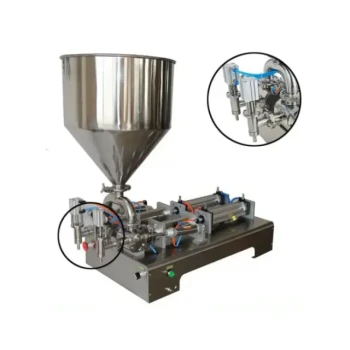
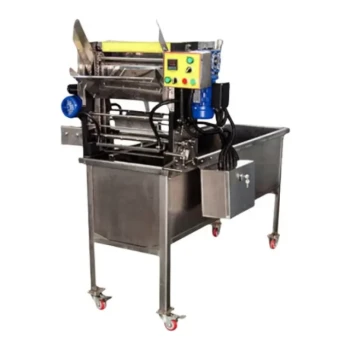
Automatic honey-filling machines fundamentally transform post-processing by introducing precise volumetric control and rigorous hygiene standards. They offer significant technical advantages over manual methods, specifically by minimizing environmental exposure, ensuring consistent packaging specifications, and enabling the throughput necessary for industrial-scale operations.
The core value of this technology lies in standardization and contamination control. By removing human variability and environmental exposure from the equation, automated filling serves as the necessary technological bridge for transitioning from small-scale beekeeping to sustainable, export-grade industrial production.
Elevating Hygiene and Product Safety
Minimizing Environmental Exposure
The most critical technical advantage is the drastic reduction in the time honey is exposed to the external environment. Manual methods often require open-air handling, which invites oxidation and moisture absorption.
Automatic machines accelerate the transfer from bulk storage to sealed packaging. By shortening this window, the equipment protects the chemical integrity of the honey.
Eliminating Secondary Contamination
Human handling is the primary vector for contaminants in food processing. Automatic filling utilizes closed production environments and integrated sealing technologies to isolate the product.
This isolation effectively neutralizes the risk of secondary contamination. It prevents the introduction of foreign particles or bacteria that can occur during manual bottling, ensuring the product remains pure.
Precision Measurement and Resource Management
Volumetric Accuracy and Consistency
Manual filling creates variances in product weight, which can lead to regulatory issues or customer dissatisfaction. Automated machines utilize precise metering control to deliver exact quantities every time.
This ensures high-precision volumetric filling across thousands of units. The result is a standardized product that meets the strict specification requirements of distributors and premium markets.
Reducing Material Waste
In manual operations, physical loss due to spills, overfilling, or drips is common. Industrial-grade machines are designed to mitigate this "physical honey loss."
By strictly controlling the flow and cutoff of the honey, these machines maximize the yield from bulk raw material. This efficiency reduces overhead costs and minimizes the waste of high-value raw honey.
Standardization for Market Viability
Achieving Visual Uniformity
Modern consumer markets demand products that look identical on the shelf. Automated processes ensure that fill levels and sealing are visually consistent across every unit.
This aesthetic consistency is often a prerequisite for entry into high-end retail environments. It signals professional quality control to the consumer.
Enabling Industrial Scalability
The primary reference highlights that these machines are vital for transitioning to "efficient, sustainable industrial production models." Manual labor creates a bottleneck that limits production volume.
Automation increases packaging throughput significantly. This creates a scalable workflow capable of handling large-volume orders, such as those required for export, without a linear increase in labor costs.
Understanding the Operational Trade-offs
The Shift to Rigid Standardization
Adopting this technology requires a commitment to a standardized workflow. While manual methods allow for ad-hoc adjustments, automated lines require consistent container sizes and viscosity profiles to function optimaly.
The Necessity of "Industrial" Compliance
While these machines solve hygiene issues, they also raise the bar for facility requirements. To fully leverage the hygienic filling capabilities, the surrounding facility must also meet industrial standards, essentially forcing a total operational upgrade.
Making the Right Choice for Your Goal
To determine if automatic filling aligns with your current operational needs, consider your primary objectives:
- If your primary focus is Market Expansion: Prioritize this technology to meet the rigorous hygiene and standardization entry requirements of premium and export markets.
- If your primary focus is Operational Efficiency: Implement automation to reduce physical material waste and decouple your production capacity from labor availability.
Ultimately, automatic filling is not just a speed upgrade; it is a mechanism for ensuring the biological safety and commercial consistency of your final product.
Summary Table:
| Feature | Technical Advantage | Business Impact |
|---|---|---|
| Hygiene Control | Closed environment & minimal exposure | Ensures food safety and export-grade purity |
| Filling Precision | Advanced volumetric metering | Eliminates product giveaway and weight disputes |
| Operational Speed | High-throughput automation | Enables industrial scaling and reduces labor costs |
| Product Integrity | Prevention of oxidation/moisture | Maintains honey quality and shelf-life stability |
| Aesthetic Quality | Uniform fill levels and sealing | Enhances brand professionalism for retail markets |
Scale Your Honey Production with HONESTBEE Professional Solutions
Transitioning to industrial-grade production requires equipment that guarantees both precision and purity. At HONESTBEE, we specialize in empowering commercial apiaries and distributors with the tools needed to succeed in competitive markets.
Our comprehensive wholesale portfolio includes:
- Advanced Honey-Filling Machines for precise volumetric control.
- Industrial Hive-Making & Processing Machinery to streamline your operations.
- Complete Beekeeping Tools & Consumables for every stage of production.
- Honey-Themed Cultural Merchandise to diversify your retail offering.
Whether you are looking to minimize waste or meet rigorous export standards, HONESTBEE provides the technical expertise and high-performance hardware to elevate your brand.
Ready to automate your success? Contact us today to explore our wholesale solutions!
References
- Bryndís Snæbjörnsdóttir. Lisa Jean Moore & Mary Kosut. Buzz: Urban Beekeeping and the Power of the Bee. DOI: 10.52537/humanimalia.9917
This article is also based on technical information from HonestBee Knowledge Base .
Related Products
- Automatic Honey Filling and Filtering Machine for Beekeeping Bottle Filling
- Fully Automatic Honey Filling Packaging Machine for Processing Line
- Precision Durable Efficient HONESTBEE Rotary Honey Filling Machine
- Automatic Single-Dose Snap & Squeeze Honey Sachets Packing Machine
- Semi Automatic Small Honey Bottle Filling Machine Honey Filler
People Also Ask
- What process advantages do professional honey filtering and filling machines provide? Optimize Your Organic Honey Output
- How do honey filling and filtering machines increase product value? Turn Raw Honey into Premium Export-Grade Goods
- How do honey filtration and filling machinery contribute to industrialization? Scale Your Commercial Honey Production
- What specific issues do industrial filtration and automated filling machinery address? Ensure Honey Quality & Compliance
- How does the use of professional honey filtration and filling machinery facilitate international honey exports?