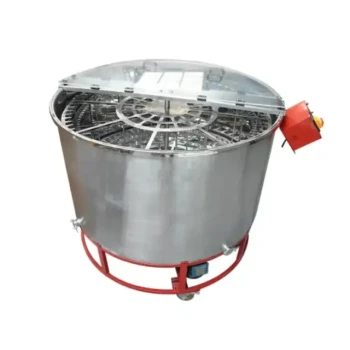
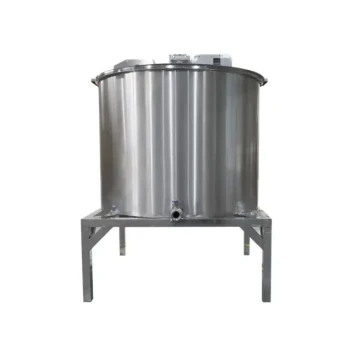
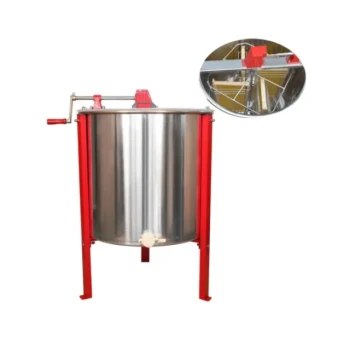
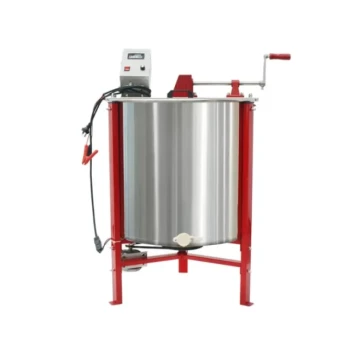
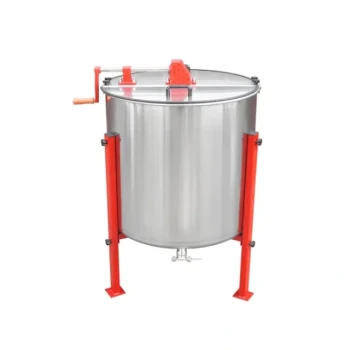
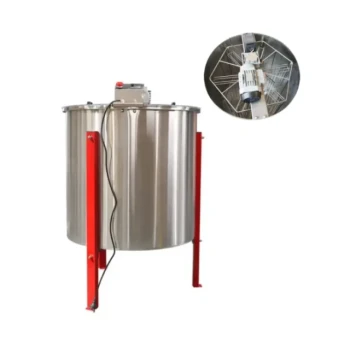
Industrial-grade Automatic Honey Extractors leverage high-precision centrifugal force control to separate honey from the honeycomb with a speed and consistency that manual methods cannot replicate. By utilizing automated speed regulation, these systems maximize extraction efficiency while simultaneously protecting the structural integrity of the honeycomb frames for future use.
The shift to industrial automation transforms extraction from a labor-intensive task into a precision process. It optimizes yield through complete separation while ensuring high hygiene standards and preserving the honeycomb, directly supporting both product quality and colony sustainability.
Optimizing Extraction Mechanics
The core technical advantage of industrial extractors lies in how they manage physical forces. Unlike manual cranking, which relies on inconsistent human effort, industrial machines use programmed physics to achieve superior results.
High-Precision Centrifugal Force
Industrial extractors utilize high-precision centrifugal force. This allows for the rapid and complete separation of honey from the wax cells.
This mechanism ensures that the maximum amount of product is harvested from every frame. It significantly reduces the waste and "leftover" honey often found in manually spun frames.
Automated Speed Regulation
A critical feature of these machines is automated speed regulation. The system adjusts the rotational speed dynamically during the extraction cycle.
This prevents the sudden jerks or excessive speeds that often occur with manual handling. Controlled acceleration is essential for preventing mechanical damage to the delicate wax structures.
Preserving Product Quality
Beyond simple volume, industrial extractors provide technical assurances regarding the chemical and physical state of the final product.
Minimizing Oxidation
Speed is a factor of quality. By rapidly separating the honey, these extractors minimize the time honey is exposed to air.
Reducing air exposure limits oxidation and preserves the honey's natural flavor profile and enzymatic properties. This is a crucial step in maintaining distinct "raw" or high-quality classifications.
Reducing Contamination Risks
Industrial equipment is designed for closed-system processing. This standardization significantly reduces the risk of secondary contamination associated with manual handling.
By limiting human contact and exposure to the environment, these machines ensure product purity. This technical capability is often a prerequisite for obtaining health certifications and entering high-end retail markets.
Sustainability and Workflow Efficiency
The advantages of industrial extraction extend beyond the harvest season, impacting the long-term health of the apiary and the efficiency of the processing line.
Enabling Honeycomb Reuse
Because automated speed regulation prevents frame blowouts, the honeycomb frames remain intact.
This allows the frames to be immediately returned to the bee colony for reuse. This is a massive technical advantage, as it saves the bees the energy required to rebuild wax, allowing them to focus entirely on honey production.
Standardized Processing Capacity
Industrial extractors are the anchor of a standardized honey processing workflow. They are designed to integrate with other automated systems, such as uncapping machines and high-speed centrifuges.
This integration increases large-scale processing capacity and addresses the inherent inefficiencies of manual labor. It stabilizes production timelines, allowing for predictable commercial distribution.
Understanding the Trade-offs
While the technical advantages are clear, adopting industrial extraction involves specific considerations regarding resources and complexity.
Capital and Infrastructure Requirements
Industrial-grade equipment requires a significantly higher upfront capital investment compared to manual extractors. Additionally, these machines require a dedicated power supply and floor space, unlike portable manual units.
Maintenance Complexity
Moving from mechanical gears to automated speed controllers introduces technical complexity. Operators must be prepared for specialized maintenance routines to keep sensors and motors calibrated, whereas manual extractors are generally simple to repair.
Making the Right Choice for Your Goal
Selecting the right equipment depends on the specific constraints and ambitions of your operation.
- If your primary focus is Maximum Yield: Prioritize industrial extractors for their ability to achieve complete separation through high-precision centrifugal force.
- If your primary focus is Colony Health: Rely on the automated speed regulation features to preserve honeycomb structures, reducing the biological load on your bees.
- If your primary focus is Export Compliance: Leverage the closed-system design and reduced handling to meet strict international hygiene and purity standards.
Automating your extraction process is not just about speed; it is about establishing a repeatable, hygienic, and scalable standard for your entire production line.
Summary Table:
| Feature | Industrial Automatic Extractor | Traditional Manual Equipment |
|---|---|---|
| Extraction Control | High-precision centrifugal force | Inconsistent manual cranking |
| Comb Protection | Automated speed regulation | High risk of frame damage |
| Product Quality | Minimized oxidation & closed-system | High air exposure & manual handling |
| Processing Speed | High-capacity, standardized workflow | Labor-intensive, slow output |
| Sustainability | Enables immediate honeycomb reuse | Frequent need for wax rebuilding |
Elevate Your Honey Production with HONESTBEE
Transitioning to industrial-grade automation is a critical step for growing commercial apiaries and distributors. HONESTBEE provides the professional-grade tools you need to maximize efficiency and maintain the highest product standards.
Our comprehensive wholesale portfolio includes:
- Advanced Extraction Machinery: High-precision automatic honey extractors and honey-filling machines.
- Efficiency Tools: Automated uncapping machines and complete beekeeping hardware.
- Industry Consumables: A wide array of essential supplies for large-scale operations.
- Cultural Merchandise: Honey-themed products to expand your retail presence.
Ready to transform your extraction process into a high-yield, precision operation? Contact us today to discuss your wholesale requirements and let HONESTBEE empower your business growth.
References
- Ayşe KÜÇÜK, Orhan Yasin Şahinoğlu. Orman köylerinde arıcılık sorunları ve çözüm önerileri (Trabzon Orman Bölge Müdürlüğü örneği). DOI: 10.17568/ogmoad.997825
This article is also based on technical information from HonestBee Knowledge Base .
Related Products
- HONESTBEE 72 Frame Industrial Electric Honey Extractor for Beekeeping
- 32 Frame Commercial Electric Honey Extractor for Beekeeping and Honey Production
- Commercial Electric 12 Frame Honey Extractor Spinner Motorized Honey Extractor
- HONESTBEE 4 Frame Manual Self Reversing Honey Extractor for Beekeeping
- Stainless Steel Manual 8 Frame Radial Honey Extractor Machine for Beehives
People Also Ask
- What is the importance of balancing honeycomb frames within a honey extractor? Ensure Stability and Protect Machinery
- How is honey separated from the frames after they are uncapped? Efficient Extraction Methods for High Yields
- What are the main benefits of using a honey extractor? Maximize Yields and Protect Your Honeycomb
- What are the recommended methods for removing honey from the honeycomb? Top Extraction Techniques for Maximum Efficiency
- How do manual honey extractors compare to electric honey extractors? Choosing the Right Tool for Your Apiary Growth