For a commercial apiary, a steam wax extractor is preferred because it delivers higher recovery, faster throughput, and dependable processing regardless of weather. Solar extractors work well for cappings, brace comb, and small-scale operations, but they often leave wax trapped inside old, cocoon-heavy brood comb. Steam penetrates this material more thoroughly, allowing an apiary managing around 100 or more hives to recover more of its valuable beeswax.
Solar extraction is economical but weather-dependent and incomplete for old comb. Steam extraction uses controlled heat to melt wax from large quantities of comb efficiently, improving recovery rates and making processing practical for commercial operations.
Why Commercial Apiaries Need Steam Extraction
Solar extraction has limited capacity
A solar extractor uses sunlight passing through a glass or transparent cover to heat wax inside an insulated box. The wax melts and flows into a collection tray without electricity or fuel costs.
That simplicity makes solar equipment attractive for small apiaries. However, its output depends on sunlight, ambient temperature, extractor size, and the type of comb being processed.
Old comb holds valuable wax
Dark brood comb contains cocoons and other material that bind wax inside the comb structure. Solar heat can melt the easily released wax but may leave a substantial amount behind in the remaining slumgum, or comb residue.
This reduces the recovery value of retired comb. Supplementary references commonly estimate that solar melting may leave roughly 30% of the wax bound in the comb cake, although actual results vary with comb condition and equipment design.
Steam improves recovery
Steam supplies sustained, evenly distributed heat that penetrates old comb more effectively than passive solar warming. This releases more of the wax embedded in cocoon-heavy material.
For a commercial apiary, the difference matters because wax is both a reusable production input and a saleable byproduct. Higher recovery can support foundation production, candles, cosmetics, polishes, and other downstream applications.
How a Steam Wax Extractor Operates
Water is heated below the chamber
A steam extractor contains a lower water compartment. An electric heating element or gas burner raises the water temperature until it produces steam.
The heat source gives the operator control over processing conditions and avoids dependence on clear, hot weather.
Comb is loaded into a mesh basket
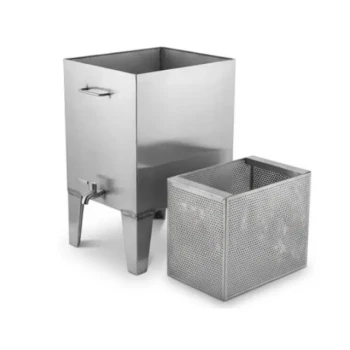
Old comb, cappings, scraps, or frames are placed into an upper metal-mesh basket inside a sealed or enclosed chamber. The basket allows melted wax and condensed moisture to pass through while retaining much of the solid residue.
The design separates the recoverable wax from slumgum during processing.
Steam melts and releases the wax
Steam rises from the heated water into the comb chamber. As the comb warms, the beeswax melts and drains through the mesh.
The steam also helps release wax that is bound within the old comb structure, where a solar extractor may leave it behind.
Molten wax drains into collection trays
The melted wax flows toward a drain or spout and is collected in trays or containers. Because the wax remains hot during extraction, it can be transferred and filtered before solidifying.
Commercial systems may use additional pressure or a steam jacket to keep wax continuously molten and accelerate processing. A basic steam extractor and a steam-jacketed wax press are related but not identical: the press adds mechanical pressure to improve throughput and recovery.
Why Steam Supports Commercial Throughput
Processing is consistent
Steam equipment provides a repeatable heat source and predictable operating cycle. This makes it easier to schedule wax rendering around hive inspections, harvests, and equipment maintenance.
Solar extractors cannot offer the same consistency when cloud cover, seasonal temperatures, or short daylight hours reduce available heat.
Large batches are easier to manage
Commercial apiaries generate wax from cappings, brace comb, damaged comb, and retired frames in quantities that can quickly exceed the practical capacity of a solar box. Steam extractors are designed to handle larger loads and process them in a controlled sequence.
For distributors and commercial buyers, this makes equipment capacity, delivery speed, spare parts, and customer support important purchasing considerations alongside the extractor itself.
Wax stays workable
Beeswax becomes difficult and messy to handle when it repeatedly melts and solidifies. Steam-based systems keep the material hot during extraction and drainage, reducing interruptions between melting, filtering, and collection.
Steam-jacketed presses extend this advantage by maintaining wax in a molten state under pressure, supporting faster continuous processing in high-volume facilities.
Understanding the Trade-offs
Steam requires energy and infrastructure
Unlike a solar extractor, a steam unit requires electricity, gas, or another controlled heat source. The operation also needs water, ventilation, safe handling procedures, and routine cleaning.
These operating requirements add cost, but they provide the capacity and reliability expected in commercial production.
Solar remains useful for clean cappings
Solar extraction is still well suited to clean honey cappings and small quantities of light-colored wax. It operates with minimal energy expense and can produce high-grade wax with relatively simple maintenance.
Many apiaries can use solar equipment for low-volume or premium cappings while reserving steam processing for dark, retired comb.
Equipment selection should match scale
A basic steam extractor may be sufficient for moderate commercial workloads, while a steam-jacketed press may be justified where the operation needs continuous molten handling, pressure-assisted recovery, and higher throughput.
The correct choice depends on annual comb volume, batch size, available utilities, labor, and the value assigned to recovered wax.
Safety and cleanliness matter
Steam, hot water, molten wax, and pressurized components create burn and equipment hazards. Operators need appropriate safeguards, stable installation, and procedures for cleaning residue from baskets, drains, and collection containers.
Wax quality also depends on separating honey, debris, and slumgum before the recovered wax enters downstream production.
Making the Right Choice for Your Goal
Steam extraction is generally the stronger primary system once an apiary reaches commercial scale, while solar extraction can remain a useful supplementary tool.
- If your primary focus is high-volume wax recovery: Choose a steam extractor that can process old comb in large batches and drain molten wax efficiently.
- If your primary focus is maximum throughput: Consider a steam-jacketed press that combines heat with pressure and maintains wax in a continuously molten state.
- If your primary focus is low operating cost: Use a solar extractor for clean cappings, brace comb, and smaller workloads where weather-related delays are acceptable.
- If your primary focus is year-round production: Select steam equipment because it provides controlled processing without relying on sunlight.
- If your primary focus is a complete commercial setup: Evaluate the extractor together with heating requirements, collection trays, filtration, spare parts, delivery reliability, and technical support.
For a growing apiary, steam extraction converts wax recovery from a weather-limited side task into a controlled commercial process.
Summary Table:
| Factor | Solar Extractor | Steam Wax Extractor |
|---|---|---|
| Weather Dependence | High | Low |
| Wax Recovery Rate | Moderate (leaves ~30% in slumgum) | High (penetrates old comb) |
| Throughput | Low | High |
| Energy Source | Sunlight | Electricity/Gas |
| Suitable Scale | Small apiaries | Commercial operations |
Ready to optimize your wax recovery? As a leading wholesale supplier for commercial apiaries and distributors, HONESTBEE provides top-tier steam wax extractors, presses, and complete beekeeping equipment. Benefit from our one-stop sourcing, fast delivery, and expert support. Contact us today to discuss your needs and boost your productivity!
Related Products
- Steam Beeswax Melter Wax Warmer for Wax Processing
- 10L Stainless Steel Honey Wax Press Extractor for Wax Cappings
- Stainless Steel Jack Type Honey Comb Press Machine Wax and Honey Separator
- Stainless Steel Honey Press Wax Press with Tank
- Solar Beeswax Melter Easy Solar Wax Melter for Beeswax
People Also Ask
- How does a steam wax melter work? A Fast, Efficient Method for High-Quality Wax
- How does a professional steam wax melter optimize the recovery of beeswax? Maximize Yield & Hygiene for Your Apiary
- What are the steps to use a steam wax melter? Master Safe & Efficient Wax Rendering
- How do steam wax melters function in the disinfection of apiary equipment? Achieve Chemical-Free Organic Sterilization
- How do you operate a steam wax melter? Master Efficient Wax Extraction and Frame Sterilization