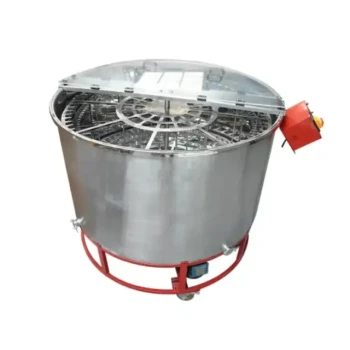
To comply with Sanitary and Phytosanitary (SPS) measures, industrial honey processing equipment must integrate precise temperature-controlled filtration, moisture regulation, and food-grade sanitary construction. These functions are essential to remove physical impurities and prevent fermentation while ensuring that sensitive chemical markers, specifically Hydroxymethylfurfural (HMF), remain within the strict limits required by international standards.
To access premium import markets like the European Union, equipment must go beyond basic extraction; it must integrate rigorous heat management and closed-loop filtration to maintain chemical stability and prevent contamination.
Managing Heat Sensitivity and Chemical Stability
The Critical Role of Temperature Control
Honey is an extremely heat-sensitive product. Industrial systems must feature precise temperature controls during the filtration and impurity removal stages. This capability is the single most important factor for meeting stringent physical and chemical indicators.
Preventing HMF Formation
Uncontrolled heating during processing causes the rapid formation of Hydroxymethylfurfural (HMF). High HMF levels are a primary indicator of thermal degradation and will cause honey to fail SPS inspections in demanding markets like the EU. Equipment must be able to liquefy honey for filtration without exceeding safe thermal limits.
Preventing Crystallization
Controlled heating is also necessary to prevent premature crystallization. However, this function must be balanced delicately against HMF production. Advanced equipment maintains the honey in a liquid state for processing while preserving its biological integrity.
Ensuring Biological Stability and Purity
Controlling Moisture Content
Industrial-grade machines must include specialized dehydration mechanisms. By precisely reducing the moisture content, these systems prevent the honey from fermenting or spoiling during storage. This mechanical treatment is a prerequisite for meeting international food safety standards regarding shelf stability.
Removal of Impurities
To meet SPS physical standards, equipment must utilize advanced filtration systems. These mechanisms remove beeswax, bee parts, and other debris. Clean filtration ensures the final product meets the visual and purity requirements of global quality certifications.
Preventing Contamination Through Design
Food-Grade Material Construction
Equipment must be manufactured from food-grade stainless steel. This construction material is non-negotiable for preventing the migration of external heavy metals into the product. It ensures that heavy metal levels remain below legal safety limits from extraction to packaging.
Closed-Loop Operation
High-standard machinery operates as a precision closed-loop system. This isolates the honey from the external environment throughout the harvesting, filtration, and filling processes. This isolation is critical for preventing biological contamination and maintaining the honey’s original purity.
Understanding the Trade-offs
Efficiency vs. Quality
There is often a tension between processing speed and product quality. Increasing heat can speed up filtration and moisture removal, boosting production efficiency. However, doing so risks spiking HMF levels and destroying beneficial enzymes.
The Cost of Compliance
Achieving SPS compliance requires investment in sophisticated systems rather than simple extractors. While automated dosing and centrifugal extraction reduce labor costs and material loss, the initial capital expenditure for temperature-controlled, stainless steel machinery is significantly higher. Producers must view this as the cost of market access rather than a simple operational expense.
Making the Right Choice for Your Export Goals
Selecting the right equipment depends on which specific compliance hurdle allows you to enter your target market.
- If your primary focus is EU Market Access: Prioritize equipment with the most precise temperature regulation to ensure HMF levels remain low enough for European standards.
- If your primary focus is Long-Term Storage: Focus on machinery with superior dehydration and moisture control capabilities to eliminate the risk of fermentation.
- If your primary focus is Safety Certification: Ensure your entire processing line uses a closed-loop, food-grade stainless steel design to guarantee zero heavy metal contamination.
The correct equipment transforms processing from a bottleneck into a strategic asset for global trade.
Summary Table:
| Requirement Category | Essential Equipment Function | SPS Compliance Goal |
|---|---|---|
| Chemical Stability | Precise Temperature Control | Prevents HMF formation and preserves honey enzymes. |
| Biological Safety | Moisture Dehydration Mechanisms | Reduces water content to prevent fermentation and spoilage. |
| Physical Purity | Multi-stage Closed Filtration | Removes beeswax, bee parts, and debris for clear honey. |
| Safety & Hygiene | Food-Grade Stainless Steel | Eliminates heavy metal contamination and prevents migration. |
| Operational Integrity | Closed-Loop Processing System | Isolates product from environment to stop biological contamination. |
Unlock Premium Markets with HONESTBEE Professional Processing Solutions
Navigating stringent SPS measures is critical for success in the global honey trade. HONESTBEE empowers commercial apiaries and distributors with high-performance, food-grade machinery designed to meet the strictest EU and international standards. From temperature-controlled honey-filling machines to advanced dehydration and hive-making equipment, we provide the full spectrum of tools needed to maintain chemical stability and product purity.
Don't let technical barriers limit your reach. Partner with HONESTBEE for a comprehensive wholesale offering of equipment and consumables that transform compliance into a competitive advantage.
Contact our experts today to optimize your honey processing line!
References
- Liam Pippinato, Filippo Brun. A Sustainable Niche Market: How Does Honey Behave?. DOI: 10.3390/su122410678
This article is also based on technical information from HonestBee Knowledge Base .
Related Products
- Electric Double Wall Honey Filtering Machine Purifier Equipment for Honey Processing Plant
- HONESTBEE 72 Frame Industrial Electric Honey Extractor for Beekeeping
- 0.5T Capacity Honey Dehumidifier Dryer with Vacuum Heating and Thickening Filtering Machine
- Heavy Duty Stainless Steel Honey Processing Machine Decrystallizing Tank
- Electric Honey Press Machine for Squeezing Honey Comb Press Equipment
People Also Ask
- What types of equipment are used in honey filtering? Build an Efficient System for Pure, Marketable Honey
- What is the process of filtering honey? A Guide to Clean, Pure, and Market-Ready Honey
- What is the overall importance of using the right equipment in honey filtering? Boost Quality & Marketability
- What is a potential concern associated with filtering honey? Balancing Clarity and Pollen Preservation
- Why is filtering important in honey processing, and what equipment is used? A Guide to Quality & Efficiency