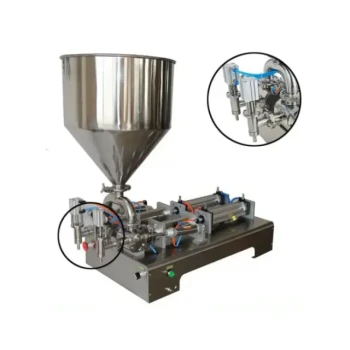
Automated honey-filling machines form the backbone of modern commercial beekeeping distribution. They are vital because they utilize high-precision flow metering systems and specialized sealing technologies to ensure consistent bottle weights, maintain strict hygiene standards, and preserve the natural flavor of the honey, allowing apiaries to meet the rigorous demands of industrial-scale markets.
Core Takeaway While manual filling suffices for local sales, automated machines are the prerequisite for entering the global distribution chain. By standardizing weight, reducing labor costs, and ensuring traceable hygiene, these systems convert raw apiary output into shelf-ready commercial products.
The Pillars of Commercial Scalability
Achieving Absolute Weight Consistency
In commercial distribution, consistency is currency. Automated machines employ high-precision flow metering systems to guarantee that every jar meets exact net weight standards.
This eliminates the variances common in manual filling, ensuring that products comply with commercial trading laws regarding packaged goods.
Ensuring Hygiene and Traceability
Large-scale retailers demand rigorous adherence to food safety protocols. Automated systems create a closed-loop processing environment that drastically reduces the risk of contamination compared to open-air manual methods.
This strict hygiene control is essential for producing traceable honey products that meet international food safety standards and regulatory requirements.
Preserving Product Integrity
Commercial processing often involves filtering and dehydration, which can impact quality if not handled correctly. Automated machines use specialized sealing technology designed to lock in the honey's natural flavor profile immediately after filling.
By minimizing exposure to air and potential contaminants, these machines ensure the final product retains the sensory qualities consumers expect from a premium brand.
Operational Efficiency and Market Reach
Reducing Labor Dependencies
Scaling production manually requires a linear increase in labor, which eats into margins. Automated fillers significantly reduce labor costs by handling high-volume tasks that would require teams of workers.
This efficiency allows commercial apiaries to reallocate human resources toward hive management and logistics rather than repetitive packaging tasks.
Meeting Industrial Demand
Supermarkets and distribution networks require reliable, high-volume supply chains. Automation enables the transition from batch-based bulk storage to continuous retail-ready production.
These machines are designed to handle high-viscosity fluids efficiently, ensuring that production speeds match the aggressive schedules of large-scale distribution agreements.
Understanding the Trade-offs
While automation is critical for scale, it introduces specific constraints that producers must navigate.
Viscosity and Texture Limitations
Most industrial filling machines are optimized for dehydrated and filtered honey. Highly viscous, raw, or crystallized honey can cause blockages or inaccuracies in standard flow meters, potentially requiring specialized heating or pumping equipment that alters the product's raw state.
Maintenance and Technical Overhead
The shift to automation trades manual labor for technical complexity. Maintaining precise volumetric control requires regular calibration and specialized technical maintenance, which introduces a new type of operational overhead compared to low-tech manual methods.
Making the Right Choice for Your Goal
To determine how to best integrate automation into your distribution strategy, consider your specific end-market requirements.
- If your primary focus is Mass Market Retail: Prioritize machines with high-precision metering to ensure strict compliance with weights and measures regulations for supermarket shelves.
- If your primary focus is Product Purity: Select equipment with advanced sealing technology to maximize flavor retention and ensure a fully closed hygienic loop.
- If your primary focus is Operational Efficiency: Focus on high-speed systems that minimize labor inputs to maximize your margins on large-volume contracts.
Automation is not just a tool for speed; it is the mechanism that transforms agriculture into industry.
Summary Table:
| Key Feature | Benefit for Commercial Distribution | Impact on Efficiency |
|---|---|---|
| High-Precision Flow Metering | Ensures exact net weight and legal compliance | Eliminates product waste and manual errors |
| Closed-Loop Processing | Maintains strict hygiene and food safety standards | Reduces contamination risks and audit failures |
| Specialized Sealing Tech | Preserves natural honey flavor and shelf life | Enhances brand reputation and product quality |
| High-Volume Automation | Meets aggressive industrial supply schedules | Drastically reduces labor costs and overhead |
Elevate Your Apiary's Commercial Potential with HONESTBEE
At HONESTBEE, we specialize in empowering commercial apiaries and distributors with the tools needed to dominate the industrial-scale market. From high-precision honey-filling machines and automated hive-making equipment to a full spectrum of specialized beekeeping hardware and consumables, we provide the comprehensive wholesale solutions your business requires.
Whether you are scaling up for supermarket distribution or looking to optimize your production line for maximum efficiency, our experts are ready to provide you with industry-leading machinery and cultural merchandise tailored to your brand.
Ready to transform your production?
Contact Us Today to Explore Wholesale Opportunities
References
- Clint R. V. Otto, Skip Hyberg. Past role and future outlook of the Conservation Reserve Program for supporting honey bees in the Great Plains. DOI: 10.1073/pnas.1800057115
This article is also based on technical information from HonestBee Knowledge Base .
Related Products
- Fully Automatic Honey Filling Packaging Machine for Processing Line
- Automatic Honey Filling and Filtering Machine for Beekeeping Bottle Filling
- Precision Durable Efficient HONESTBEE Rotary Honey Filling Machine
- Precision Automated Packaging Turntable Honey Spoon Filling Sealing Packing Machine
- Semi Automatic Small Honey Bottle Filling Machine Honey Filler
People Also Ask
- Why are fully automatic honey filling and packaging lines essential? Boost Your Honey's Market Value and Quality
- What is a fully-automatic honey filler? Streamline Your Production with High-Precision Automation
- How do automated honey filling and packaging machines affect profitability? Boost Margins with HONESTBEE Technology
- How do automated honey filling and packaging machines contribute to the market value of honey products? Maximize Your ROI
- How do industrial-grade automated honey filling and packaging machines mitigate the risk of physical contamination?