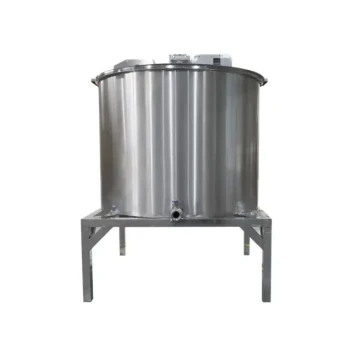
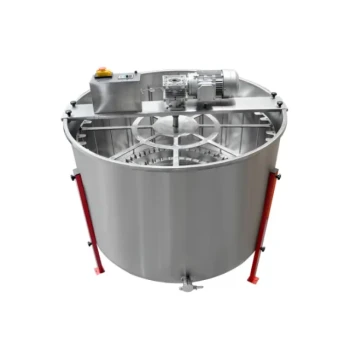
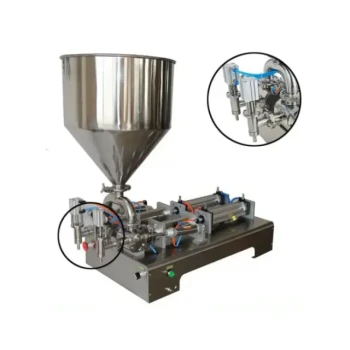
Commercial honey-filling machines are the definitive solution for ensuring product stability and production scalability. Utilizing precision metering pumps and anti-drip technology, these machines achieve quantitative, rapid, and sterile packaging within a closed operating environment. By minimizing contact between the honey and the ambient air, they prevent environmental impurities from compromising the physical and chemical indicators of the final product.
Core Insight: The transition to commercial filling is not merely about speed; it is a quality control necessity. These machines mechanically isolate the product to maintain its chemical stability while delivering the precise consistency required for regulatory compliance and high-end retail markets.
Preserving Product Integrity
The Criticality of a Closed Environment
The primary technical advantage of commercial filling machines is the creation of a closed operating environment. This isolation is essential for minimizing the honey's contact with air during the final stage of processing.
By reducing exposure, the system prevents the introduction of environmental impurities, such as dust or airborne microbes. This protection is vital for maintaining the physical and chemical stability of the honey, ensuring it remains unchanged from the filtration tank to the jar.
Extending Shelf Life and Safety
Manual handling introduces significant risks of secondary contamination. Commercial machines eliminate this variable through sterile packaging processes.
By integrating with upstream refining equipment (which handles filtration and dehydration), filling machines seal the processed honey immediately. This automated sequence prevents fermentation and spoilage, directly extending the product's shelf life and ensuring it remains safe for long-term storage.
Operational Precision and Efficiency
Precision Metering and Dosage Control
Commercial units employ high-precision mechanisms, such as piston pumps or weighing systems, to achieve exact volumetric control. This ensures that every container meets strict net content specifications.
Anti-drip technology further refines this process by preventing waste and ensuring the sealing surface remains clean. This level of consistency is virtually impossible to achieve with manual pouring methods and is a requirement for professional quality control.
Scaling from Artisan to Industrial
For producers moving beyond small-batch creation, these machines facilitate the transition to large-scale commercial production.
They significantly increase packaging line efficiency by automating the dosing and sealing steps. This reduces the labor cost per unit and resolves the bottlenecks and inconsistencies inherent in manual processing, allowing producers to meet higher volume demands without sacrificing quality.
Meeting Market Standards
Standardization for Certification
To achieve quality certifications, such as Geographical Indication (GI) or organic standards, mechanical consistency is non-negotiable.
Standardized packaging proves that the product has been handled according to strict hygiene protocols. This consistency is a critical means of establishing a professional brand image and ensuring the product meets the rigorous requirements of international export markets.
Understanding the Trade-offs
Maintenance Complexity
While these machines offer superior hygiene, they introduce a requirement for rigorous maintenance protocols. The precision pumps and anti-drip nozzles must be cleaned thoroughly to prevent honey crystallization, which can damage the machinery or clog the lines.
Initial Investment vs. Long-term Gain
The implementation of industrial-grade filling equipment represents a significant capital expenditure compared to manual labor. Producers must weigh this upfront cost against the long-term benefits of reduced labor costs and the ability to access premium retail markets that demand standardized packaging.
Making the Right Choice for Your Goals
To determine the role of this technology in your production line, consider your primary objectives:
- If your primary focus is Food Safety and Shelf Life: Prioritize machines with a fully closed-loop system to eliminate environmental contact and prevent fermentation.
- If your primary focus is Market Expansion: Select equipment that guarantees high-precision dosing to meet the strict weight and volume regulations of export markets.
- If your primary focus is Production Scalability: Focus on machines featuring high-speed piston pumps to remove labor bottlenecks and lower your cost per unit.
By automating the final mile of production, you transform honey packaging from a manual choke point into a strategic asset for quality assurance and brand growth.
Summary Table:
| Feature | Manual Filling | Commercial Filling Machines | Impact on Quality |
|---|---|---|---|
| Environment | Open to air/contaminants | Fully closed & sterile | Prevents fermentation & spoilage |
| Dosing Accuracy | High variability | Precision metering pumps | Ensures regulatory compliance |
| Cleanliness | Manual drips & spills | Anti-drip technology | Clean seals & professional branding |
| Scalability | Labor-intensive/slow | High-speed automation | Drastic increase in output volume |
| Shelf Life | Higher contamination risk | Minimum air contact | Maintains physical/chemical stability |
Elevate Your Honey Brand with HONESTBEE Precision Equipment
Transitioning from artisan batches to industrial excellence requires more than just speed—it requires a partner who understands the science of honey. HONESTBEE specializes in empowering commercial apiaries and distributors with high-performance beekeeping machinery and essential consumables.
Our Value to You:
- Advanced Machinery: From precision honey-filling machines to hive-making and honey-dehydration equipment.
- End-to-End Solutions: We supply everything from specialized hardware to honey-themed cultural merchandise.
- Regulatory Success: Our equipment ensures the consistency needed for organic and GI certifications.
Ready to eliminate production bottlenecks and secure your product's integrity? Contact HONESTBEE today to discover our comprehensive wholesale offerings and expert technical support!
References
- Jaime Rendón–von Osten, Omar Arellano‐Aguilar. Glifosato en Tizimin: Agricultura y Apicultura. DOI: 10.26359/52462.0704
This article is also based on technical information from HonestBee Knowledge Base .
Related Products
- Commercial Rotary Honey Filling Machine for Production
- Precision Durable Efficient HONESTBEE Rotary Honey Filling Machine
- Fully Automatic Honey Filling Packaging Machine for Processing Line
- 32 Frame Commercial Electric Honey Extractor for Beekeeping and Honey Production
- Precision Automated Packaging Turntable Honey Spoon Filling Sealing Packing Machine
People Also Ask
- What role do commercial honey filling machines play in honey distribution? Scaling Efficiency and Quality Control
- What technical support do commercial-grade filling machines provide? Convert Honey NTFPs into Marketable Commodities
- What is the significance of specialized honey filling equipment? Scaling from Beekeeping to Commercial Success
- Why is professional honey filling machinery critical for honey production? Scale Your Apiary's Profit & Efficiency
- Why is high-capacity honey filling machinery necessary for Giant Honey Bees? Solve the Apis dorsata Volume Crisis