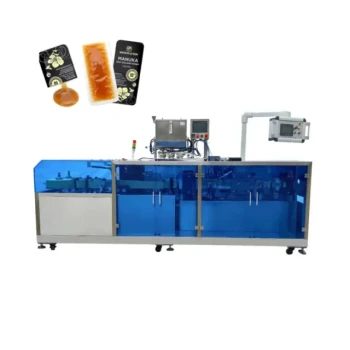
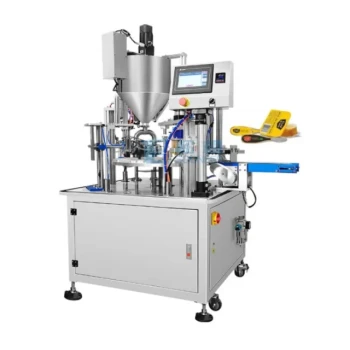
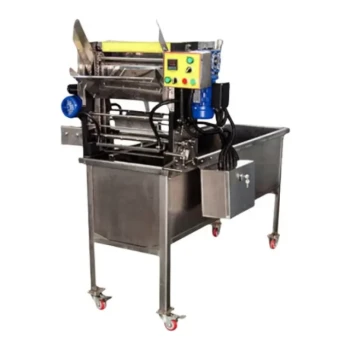
Efficiency and speed are the decisive factors that determine a honey producer's ability to scale operations and maintain profitability. Evaluating a packaging machine requires analyzing the total time required to fill, seal, and label each container, as moving from manual filling to automated systems can increase output from single units to hundreds of containers per hour.
Efficiency in honey packaging is not just about raw speed; it is about maximizing throughput while minimizing the cost per unit. High-speed, multi-lane machines allow producers to meet volume demands without proportionally increasing labor or time overhead.
The Direct Impact on Production Capacity
Throughput and Volume Management
The most immediate benefit of speed is the ability to match supply with demand. A basic filling machine often limits you to processing one container at a time, which creates a bottleneck.
In contrast, automatic packing machines are designed to process hundreds of containers per hour. This leap in capacity is essential for businesses transitioning from boutique production to larger retail distribution.
Leveraging Multi-Lane Capabilities
To maximize production speed, advanced machines utilize multi-lane capabilities. This technology allows the machine to fill and package multiple products simultaneously rather than sequentially.
By processing several lanes at once, you drastically reduce the total production time required for a specific batch size, effectively multiplying your output without multiplying your labor hours.
Economic Implications of Efficiency
Reducing Operational Costs
Speed directly correlates to cost savings. By reducing the time it takes to fill, seal, and label a product, you lower the operational cost attached to every jar or sachet.
Efficiency minimizes the labor hours required to hit daily targets. Consequently, a faster machine lowers the "cost per unit," improving your overall profit margin on every container sold.
Long-Term Return on Investment
While high-speed machines often carry a higher initial price tag, their efficiency drives long-term value. An efficient machine that operates reliably ensures you can fulfill large orders without incurring overtime costs or requiring additional shifts.
Understanding the Trade-offs
Viscosity and Precision
Speed must never compromise accuracy, particularly with a viscous product like honey. A machine running at high speeds must still maintain precise fill levels to prevent product giveaway (overfilling) or regulatory issues (underfilling).
If a machine runs too fast for its viscosity settings, it may cause dripping or stringing. This leads to wasted product and messy containers, negating the benefits of the increased speed.
Maintenance vs. Uptime
High-speed machinery often requires more rigorous maintenance to sustain its efficiency. You must consider the ease of cleaning and maintenance as part of the speed equation.
If a fast machine is difficult to clean or prone to clogging due to honey crystallization, the resulting downtime will destroy your efficiency metrics. True efficiency includes the time spent keeping the machine operational.
Making the Right Choice for Your Goal
Selecting the right machine depends on aligning the equipment's speed with your current business stage and future growth.
- If your primary focus is Boutique/Small-Scale Production (50-200 jars/day): Prioritize a semi-automatic machine that balances moderate speed with high precision and low initial cost.
- If your primary focus is Mass Market/High-Volume Growth: Invest in a fully automatic, multi-lane system that maximizes containers per hour to minimize unit costs and meet bulk demand.
Your packaging machine should be a catalyst for growth, ensuring your production capabilities always stay one step ahead of your sales.
Summary Table:
| Feature | Small-Scale (Semi-Auto) | Mass Market (Full-Auto) |
|---|---|---|
| Output Speed | 50 - 200 units/day | Hundreds of units/hour |
| Cost per Unit | Higher due to labor | Minimized via automation |
| Key Benefit | Low initial investment | High-volume scalability |
| Best For | Boutique apiaries | Large retail distributors |
Scale Your Honey Production with HONESTBEE
Maximize your profit margins and meet rising market demands with HONESTBEE’s advanced beekeeping machinery. Whether you are a commercial apiary looking to upgrade your filling lines or a distributor seeking high-speed, multi-lane honey-filling machines and automated packaging solutions, we have the expertise to help you succeed.
Our comprehensive wholesale offering includes everything from specialized hive-making and honey-filling machines to essential industry consumables and honey-themed cultural merchandise. Let us help you eliminate production bottlenecks and reduce your operational costs.
Ready to boost your efficiency? Contact us today to find the perfect equipment for your business!
Related Products
- Automatic Single-Dose Snap & Squeeze Honey Sachets Packing Machine
- Fully Automatic Honey Filling Packaging Machine for Processing Line
- Precision Automated Packaging Turntable Honey Spoon Filling Sealing Packing Machine
- Economy Small Honey Filling Machine Honey Bottle Filler Packaging Machine
- Honey Stick Filler Vertical Paste Sachet Packing Machine for Honey Sachets
People Also Ask
- What are the advantages of honey sachet packing machines? Boost Efficiency & Unlock New Markets
- What are the main functions of a honey sachet packing machine? Boost Efficiency with Automated Precision
- How does an industrial-grade honey sachet packaging machine assist beekeepers in accessing public institution markets?
- Why is automated packaging machinery essential for scaling industrial honey production? Drive Commercial Scalability
- Why is it advantageous for apiaries to be located near honey processing centers? Boost Quality and Market Reach