Food-grade honey storage tanks are the only reliable barrier against the two primary threats to honey quality: fermentation and chemical contamination. Because honey is a chemically active and hygroscopic substance, standard containers inevitably lead to spoilage or toxicity over time. Specialized tanks provide the superior sealing and corrosion resistance required to lock out moisture and prevent heavy metal leaching.
The Core Reality Honey is not a passive liquid; it is hygroscopic and acidic, meaning it naturally attracts moisture and eats away at reactive surfaces. Food-grade storage tanks are essential not just for hygiene, but to provide physicochemical stability, ensuring the product does not ferment or absorb hazardous materials before reaching the consumer.
The Critical Role of Moisture Control
Stopping the Hygroscopic Effect
Honey is highly hygroscopic, meaning it aggressively absorbs moisture from the surrounding air. If stored in non-specialized containers with poor seals, the water content in the honey will rise rapidly.
Preventing Fermentation
When honey absorbs excess environmental moisture, it creates the perfect environment for yeast to thrive. This triggers fermentation, which sours the flavor and ruins the product.
The Airtight Solution
Food-grade tanks are designed with superior sealing properties that act as a moisture-proof barrier. This is particularly vital for varieties like stingless bee honey, which already has a naturally higher moisture content and is more susceptible to spoilage without a hermetic seal.
Chemical Stability and Material Safety
Eliminating Corrosion Risks
Honey is naturally acidic and corrosive. Storing it in ordinary metal containers can cause the material to degrade, leading to heavy metal contamination in the final product.
Physicochemical Inertness
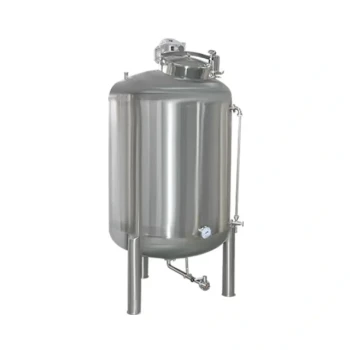
Food-grade tanks, typically made from industrial-grade stainless steel, are chemically inert. They do not react with the honey’s acidity, ensuring that no foreign chemicals or metallic tastes leach into the product.
Preserving Biochemical Properties
Beyond safety, these tanks maintain the honey's biological value. By preventing chemical reactions, they stabilize key quality indicators such as diastase activity and color, which are essential for meeting export-grade standards.
Sensory Protection
Blocking Environmental Odors
Honey easily absorbs strong scents from its environment. The airtight nature of professional storage tanks prevents external odors from altering the honey's natural aroma profile.
Maintaining Original Flavor
By isolating the honey from air and contaminants, these tanks preserve the original flavor nuances intended by nature. This allows producers to extend shelf life without compromising the sensory experience that commands higher market value.
Understanding the Trade-offs
The "Container vs. Environment" Balance
While food-grade tanks provide excellent protection, they cannot reverse damage that occurs prior to storage. If honey is harvested using unhygienic methods or exposed to high humidity during extraction, fermentation may occur regardless of the tank quality.
Maintenance Requirements
The superior sealing mechanisms of these tanks require maintenance to remain effective. If the seals degrade or the tank is not cleaned properly between batches, the hermetic barrier is compromised, rendering the expensive infrastructure as vulnerable as a standard container.
Making the Right Choice for Your Goal
To select the right storage strategy, you must align your equipment with your specific production risks.
- If your primary focus is preventing spoilage in humid climates: Prioritize tanks with verifiable airtight sealing capabilities to counteract the hygroscopic nature of honey and prevent fermentation.
- If your primary focus is meeting international export standards: Invest in industrial-grade stainless steel tanks to ensure zero heavy metal leaching and the preservation of diastase activity.
- If your primary focus is long-term flavor preservation: Ensure the tank material is certified chemically inert to prevent the absorption of storage facility odors.
Investing in the right storage infrastructure is not an optional cost; it is the only way to guarantee the purity and longevity of your harvest.
Summary Table:
| Feature | Protection Provided | Impact on Honey Quality |
|---|---|---|
| Hygroscopic Shield | Blocks environmental moisture | Prevents yeast growth and fermentation |
| Corrosion Resistance | Prevents acid-metal reactions | Eliminates heavy metal contamination and off-tastes |
| Hermetic Sealing | Isolates external scents | Preserves original aroma and sensory profile |
| Material Inertness | Chemical stability | Maintains diastase activity and export-grade color |
Secure Your Harvest with HONESTBEE’s Professional Grade Solutions
Don’t let fermentation or contamination compromise your commercial apiary's profitability. At HONESTBEE, we specialize in empowering large-scale producers and distributors with the industry's most reliable food-grade storage and processing infrastructure.
Our comprehensive wholesale catalog features:
- Industrial-Grade Stainless Steel Tanks: Engineered for superior airtight sealing and chemical inertness.
- Honey-Filling & Processing Machinery: Streamlining your production from hive to jar.
- Commercial Beekeeping Tools: Everything from specialized hardware to essential consumables.
Whether you are scaling your export operations or optimizing local distribution, HONESTBEE delivers the tools and machinery you need to maintain peak product value. Contact our experts today to build your customized equipment package!
References
- Dereje Shibru, Emana Megersa. Identifying Opportunities and Constraints of Beekeeping: The Case of Gambella Zuria and Godere Weredas, Gambella Regional State, Ethiopia. DOI: 10.4172/2161-0983.1000182
This article is also based on technical information from HonestBee Knowledge Base .
Related Products
- Stainless Steel Honey Storage Tank with Lid for Honey
- Stainless Steel Honey Storage and Settling Tank with Double Strainer
- Professional Honey Storage Tank with Agitation System
- Food Grade Plastic Honey Bucket Pail for Beekeeping
- Premium Stainless Steel Honey Tank Bucket Pail with Reinforced Handle and Polished Finish
People Also Ask
- What economic role do honey storage tanks play? Boost Your Revenue Through Strategic Inventory Management
- What roles do industrial honey storage tanks and filtration meshes play in processing? Ensure Purity & Consistency
- What is the purpose of a honey storage tank? Streamline Your Honey Processing for Quality & Efficiency
- What are honey storage tanks used for? Essential Features for Quality Preservation and Profit
- How do large honey storage tanks and gravity fall filling systems improve honey packaging efficiency and safety?