High-grade stainless steel is the strictly defined standard for organic honey compliance. Specifically, tanks constructed from AISI 304 or 316L steel provide the necessary chemical inertia and surface smoothness required to prevent contamination. Without these specific material properties, producers cannot guarantee the absence of heavy metal leaching or off-odors, which are immediate grounds for failing the rigorous inspections associated with organic certification.
The core value of high-grade stainless steel lies in its neutrality. It effectively renders the storage vessel invisible to the chemistry of the honey, ensuring the product that leaves the tank is chemically identical to the product that entered it, a fundamental requirement for organic labeling.
The Chemistry of Contamination Prevention
To maintain organic status, honey must be protected from both chemical reactions and physical impurities.
Preventing Heavy Metal Leaching
Honey is naturally acidic. When stored in lower-quality containers, this acidity can trigger chemical reactions, causing the material to break down. High-grade stainless steel (AISI 304/316L) possesses chemical inertia. This property ensures that no heavy metals migrate from the tank walls into the honey, preserving its pure, organic composition.
Eliminating Off-Odors
The porous nature of some storage materials can trap microscopic residues. Over time, these residues degrade and release off-odors that taint the honey. The high surface smoothness of high-grade stainless steel prevents this absorption. It ensures the honey retains its natural aromatic profile without interference from the storage vessel.
Meeting Rigorous Hygiene Standards
Organic inspectors focus heavily on the sanitation protocols used in processing facilities.
Compatibility with CIP Systems
Organic certification requires proof of total cleanliness. High-grade stainless steel tanks are designed to withstand Cleaning-In-Place (CIP) systems. These systems use heat and cleaning agents to sanitize equipment without disassembly. The durability of the steel ensures it can handle these aggressive cleaning cycles repeatedly without degrading.
The Barrier Against Microorganisms
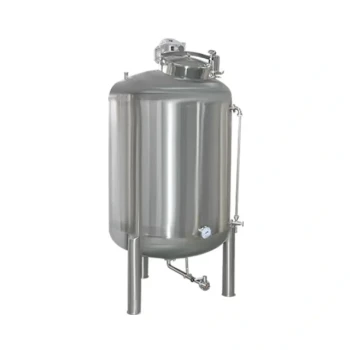
Honey filters and settling tanks made from this material act as a hygienic barrier. They facilitate the static sedimentation process, where gravity separates impurities and micro-bubbles. This creates a purified product free from wax particles or larval remains, satisfying the sensory quality standards of organic markets.
Environmental Control and Stability
Beyond the material itself, the engineering of these tanks plays a vital role in preservation.
Managing Moisture and Fermentation
Honey is hygroscopic, meaning it naturally absorbs moisture from the air. If the water content rises too high, the honey will ferment. High-specification stainless steel tanks offer superior airtight sealing. This blocks external humidity, maintaining the honey’s viscosity and preventing spoilage during maturation.
Corrosion Resistance
Long-term storage poses a risk of corrosion due to honey's acidity. Food-grade stainless steel offers excellent corrosion resistance. This prevents the tank interior from pitting or rusting, which would otherwise ruin the honey and necessitate the disposal of the entire batch.
Understanding the Trade-offs
While high-grade stainless steel is the superior choice for organic compliance, it is important to recognize the operational considerations involved.
Thermal Conductivity Management
Stainless steel is a highly conductive material. Without integrated temperature control systems (such as heating or cooling jackets), the honey inside is susceptible to external temperature fluctuations. This can lead to premature crystallization or, conversely, heat damage that degrades active ingredients.
Cost vs. Longevity
AISI 304 and 316L tanks represent a significant upfront capital investment compared to food-grade polymers. However, polymers are softer and more prone to scratching during cleaning. These scratches can harbor bacteria, making long-term organic compliance more difficult with plastic vessels than with steel.
Making the Right Choice for Your Goal
To select the right equipment for your facility, consider your specific operational priorities.
- If your primary focus is Passing Organic Inspections: Prioritize tanks made specifically from AISI 316L or 304, as their compatibility with CIP systems provides the verifiable cleanliness inspectors require.
- If your primary focus is Long-Term Maturation: Prioritize tanks with airtight sealing and corrosion resistance to prevent moisture absorption and fermentation over extended periods.
High-grade stainless steel transforms storage from a passive holding stage into an active quality assurance step, securing your certification and your product's integrity.
Summary Table:
| Feature | Organic Compliance Benefit | Technical Property |
|---|---|---|
| Material Inertia | Prevents heavy metal leaching into acidic honey | AISI 304/316L Steel |
| Surface Smoothness | Eliminates off-odors and bacterial traps | High-Polished Finish |
| CIP Compatibility | Facilitates verifiable, medical-grade sanitation | Corrosion Resistance |
| Airtight Sealing | Prevents moisture absorption and fermentation | Precision Engineering |
| Thermal Stability | Protects active enzymes and prevents crystallization | Optional Cooling Jackets |
Secure Your Organic Certification with HONESTBEE
Maintaining the integrity of organic honey requires more than just good beekeeping; it demands professional-grade infrastructure. HONESTBEE specializes in supporting commercial apiaries and distributors with high-grade stainless steel storage tanks, honey-filling machines, and advanced processing equipment designed to meet the world’s strictest organic standards.
From heavy-duty hardware to essential industry consumables, our comprehensive wholesale solutions ensure your honey remains as pure as the day it was harvested. Partner with us to scale your operations and safeguard your product quality.
Contact HONESTBEE Experts Today
References
- Nadia Palmieri, Luigi Pari. Italian Consumer Preferences for Eucalyptus Honey: An Exploratory Study. DOI: 10.3390/su14137741
This article is also based on technical information from HonestBee Knowledge Base .
Related Products
- Stainless Steel Honey Storage Tank with Lid for Honey
- Stainless Steel Honey Storage and Settling Tank with Double Strainer
- Stainless Steel Honey Tank Stand for Honey Storage
- Premium Stainless Steel Honey Tank Bucket Pail with Reinforced Handle and Polished Finish
- Heavy Duty Stainless Steel Honey Processing Machine Decrystallizing Tank
People Also Ask
- What economic role do honey storage tanks play? Boost Your Revenue Through Strategic Inventory Management
- What roles do industrial honey storage tanks and filtration meshes play in processing? Ensure Purity & Consistency
- What is the purpose of a honey storage tank? Streamline Your Honey Processing for Quality & Efficiency
- What are honey storage tanks used for? Essential Features for Quality Preservation and Profit
- How do large honey storage tanks and gravity fall filling systems improve honey packaging efficiency and safety?