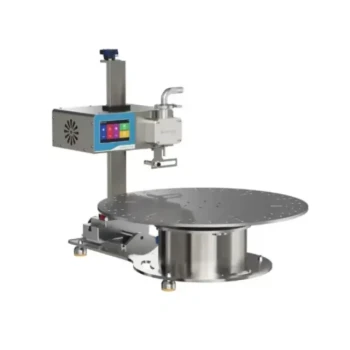
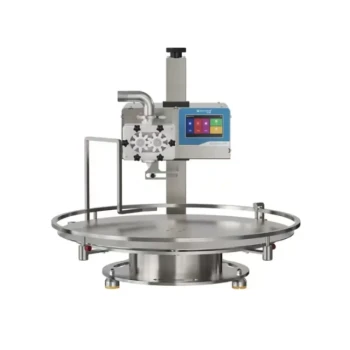
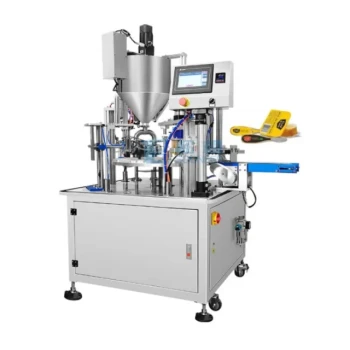
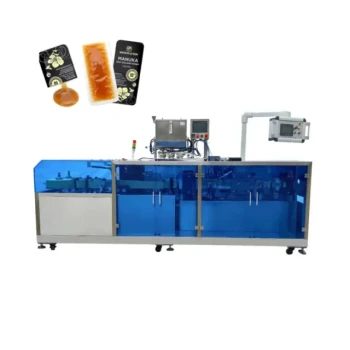
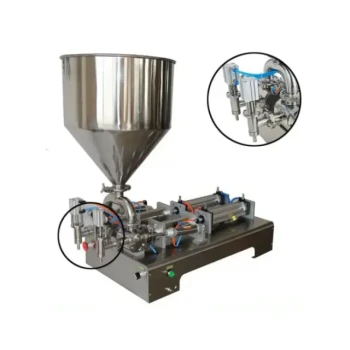
High-precision filling and labeling equipment are the distinct prerequisites for commercializing stingless bee honey due to its unique chemical instability and high market value. Because this specific honey variety possesses a naturally high water content, it is prone to rapid fermentation; industrial-grade machinery is required to execute a sterile, accurate fill that prevents spoilage, while advanced labeling is essential to certify the geographical and biological origins that drive its premium pricing.
The Core Reality: Stingless bee honey is not a standard shelf-stable sweetener; it is a volatile, bioactive substance. Commercial success depends entirely on using precision technology to stabilize the product against fermentation while documenting its provenance to justify its high cost.
The Challenge of Stability and Hygiene
Managing High Moisture Content
Unlike standard honey (from Apis mellifera), stingless bee honey is defined by significantly higher water content. This unique physicochemical property makes the product inherently unstable and highly susceptible to fermentation. High-precision filling machines are necessary to handle this viscosity without introducing air pockets that accelerate spoilage.
Preventing Secondary Contamination
Manual packaging poses a severe risk to this delicate product. Automated filling machines create a controlled, sterile environment during the packaging process. By sealing the honey immediately and hygienically, these machines prevent oxidation and external microbial contamination, which is the only way to ensure the shelf life required for retail distribution.
The Economics of Precision
Maximizing a Low-Yield Resource
Stingless bee honey is a low-yield, high-value commodity. Inaccurate manual filling results in either product giveaway (overfilling) or customer dissatisfaction (underfilling), both of which are costly. Precision quantitative filling ensures exact measurement, minimizing the waste of expensive raw materials and protecting profit margins.
Meeting International Standards
To move from local bulk sales to high-end domestic or international markets, consistency is non-negotiable. Industrial machines enable standardized packaging into specific retail specifications (e.g., 300g, 500g, 1kg). This uniformity is a prerequisite for entering modern retail environments and complying with international food safety standards.
The Strategic Value of Labeling
Validating Origin and Species
In the premium market, value is derived from traceability. Complementary labeling equipment is not merely aesthetic; it is a documentation tool. It allows producers to clearly display specific geographical indications and the distinct bee species origin.
Elevating Brand Perception
Professional labeling transforms the product from a generic agricultural item into a recognized regional brand. This adherence to professional packaging standards drastically increases market recognition. It signals to the consumer that the product is safe, authentic, and worth a premium price.
Understanding the Trade-offs
Calibration Complexity
While automation is necessary, it introduces technical complexity. Stingless bee honey flows differently than standard honey. Equipment must be calibrated specifically for this unique viscosity; using generic settings can lead to nozzle drips, inaccurate weights, or machinery clogs.
Capital Investment vs. Volume
High-precision machinery represents a significant capital expenditure. For very small-scale artisanal producers, the cost of this equipment may outweigh the immediate returns. However, without it, scaling to a volume that makes the business profitable is chemically and logistically impossible due to the spoilage risks mentioned above.
Making the Right Choice for Your Goal
To commercialize successfully, align your equipment choice with your specific market target:
- If your primary focus is International Export: Prioritize filling machines with vacuum sealing capabilities to maximize shelf life and prevent fermentation during long transport.
- If your primary focus is High-End Retail: Invest heavily in labeling equipment that can accommodate premium textures and detailed provenance data to justify higher price points.
- If your primary focus is Pharmaceutical or Cosmetic Applications: Select filling equipment capable of handling small, specialized containers (like eye-droppers or cream jars) to transition away from low-margin bulk sales.
Ultimately, precision equipment is not just about speed; it is the only mechanism capable of stabilizing a chemically volatile product to make it commercially viable.
Summary Table:
| Feature | Importance for Stingless Bee Honey | Impact on Commercialization |
|---|---|---|
| High-Precision Filling | Manages high moisture & prevents fermentation | Ensures shelf stability & reduces product waste |
| Sterile Automation | Prevents secondary microbial contamination | Meets international food safety & export standards |
| Advanced Labeling | Certifies geographical & biological origins | Justifies premium pricing & builds brand trust |
| Standardized Packing | Ensures consistency across retail units | Enables entry into high-end retail environments |
Scale Your Honey Business with HONESTBEE
Transitioning from local sales to a global commercial brand requires industrial-grade precision. HONESTBEE specializes in empowering commercial apiaries and distributors with the high-end machinery needed to handle the unique challenges of stingless bee honey.
Our Value to You:
- Precision Machinery: Specialized filling and honey-making machines designed for varied viscosities.
- Wholesale Excellence: Full spectrum of beekeeping tools, hardware, and essential consumables.
- Global Compliance: Equipment built to meet the rigorous standards of international retail and pharmaceutical markets.
Ready to stabilize your production and elevate your brand perception? Contact HONESTBEE today to discover how our comprehensive wholesale offerings can transform your commercial operations.
References
- Celso Barbiéri, Tiago Maurício Francoy. Theoretical model for interdisciplinary analysis of human activities: Meliponiculture as an activity that promotes sustainability. DOI: 10.1590/1809-4422asoc20190020r2vu2020l4ao
This article is also based on technical information from HonestBee Knowledge Base .
Related Products
- Precision Durable Efficient HONESTBEE Rotary Honey Filling Machine
- Semi Automatic Small Honey Bottle Filling Machine Honey Filler
- Economy Small Honey Filling Machine Honey Bottle Filler Packaging Machine
- Fully Automatic Honey Filling Packaging Machine for Processing Line
- Commercial Rotary Honey Filling Machine for Production
People Also Ask
- What are the common types of bottling machines used for honey? Choosing the Right Solution for Your Apiary
- How do high-precision honey filling machines ensure quality? Optimize Your Commercial Production with HONESTBEE
- What is a key feature of the new generation of the honey filling machine? The Advanced Electronic Control Unit
- How do honey filling machines work? Achieve Precision & Speed for Your Apiary
- What quality control role does professional honey filling equipment perform? Ensure Consistency and Product Stability