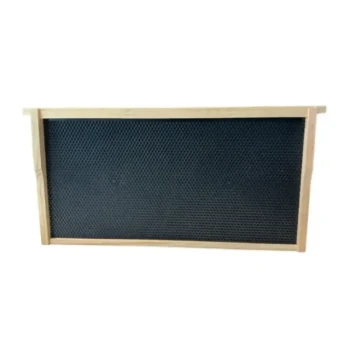
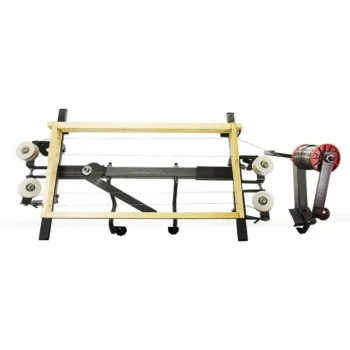
Movable-frame hives and secure transport hardware are the foundation of commercial migratory beekeeping. Movable frames keep comb organized and removable, allowing colonies to be inspected, treated, split, and harvested without destroying the hive structure. Secure transport equipment— including stable racks, lifting systems, restraints, and ventilation-supporting designs— protects colonies during loading, unloading, and long-distance movement between flowering regions.
Commercial migratory beekeeping depends on two connected capabilities: modular colony management and controlled mobility. Movable-frame hives provide the first; secure transport hardware provides the second.
Why Migratory Operations Require Specialized Equipment
Colonies must follow changing nectar flows
Migratory beekeepers relocate colonies several times per year to match peak flowering periods. These movements may cover anything from a few kilometers to several hundred kilometers across plains, orchards, pastures, and mountainous regions.
This approach can extend the nectar-collection season and support targeted pollination when crops reach their flowering stages. However, the business model only works when colonies can be moved efficiently without unacceptable biological or equipment losses.
Commercial scale demands repeatable handling
A large apiary cannot depend on improvised lifting, loading, or hive-management methods. Commercial operators need standardized equipment that allows workers to inspect, move, secure, and deploy consistent numbers of hives across multiple sites.
This repeatability improves operational planning and helps beekeepers respond quickly when flowering conditions change.
How Movable-Frame Hives Protect Productivity
They allow comb to be handled without destroying the hive
Movable-frame hives let beekeepers remove individual frames for inspection, cleaning, honey extraction, pest and disease control, or artificial colony splitting. The hive’s internal structure remains intact during these interventions.
That modularity is essential for managing larger bee populations and conducting routine work efficiently across many colonies.
They reduce transport-related structural damage
During movement, poorly supported comb can break or shift, potentially disrupting the nest and harming bees. Properly designed movable-frame systems provide a more controlled internal structure, helping maintain frame stability during handling and transit.
They also reduce the risk of comb damage and queen injury associated with uncontrolled movement inside the hive.
They standardize colony management
Commercial operators can inspect, adjust, and organize colonies using a consistent frame system. This makes it easier to compare colonies, apply management procedures, and maintain predictable production across different apiary locations.
Standardization is particularly valuable for distributors and resellers supplying customers with complete, compatible hive systems rather than isolated components.
Why Secure Transport Hardware Is Equally Important
Stability limits vibration and impact
Road transport exposes hives to vibration, sudden movement, and handling shocks. Professional racks, lifting equipment, and securing systems help keep hives stable and minimize vibration-induced stress on colonies.
Lightweight and shock-resistant equipment can also reduce physical strain on workers while protecting beekeeping assets during repeated transport cycles.
Ventilation helps manage transit conditions
Closed hives generate heat and require suitable airflow during movement. Transport-oriented hive designs and mobile equipment should support adequate ventilation while keeping colonies contained and protected.
This is especially important during long-distance transit, when poor airflow and excessive heat can increase colony stress and loss rates.
Efficient loading protects both time and margins
Loading and unloading can become a major labor cost in a migratory operation. Racks, lifting systems, and mobile platforms help crews handle more colonies with greater consistency and speed.
Faster deployment allows beekeepers to react to flowering changes, while more efficient fulfillment and equipment availability help reduce delays during time-sensitive seasonal movements.
The Combined Business Value
More flowering cycles can mean greater annual output
When colonies can be moved safely between successive flowering regions, beekeepers may maintain honey collection across multiple nectar flows. Movable-frame management supports colony readiness, while secure transport enables timely relocation.
The result is a system designed to improve annual equipment utilization and production continuity rather than relying on a single local bloom.
Pollination services become more responsive
Migratory colonies can be positioned near orchards, pastures, and other crops when pollination is needed. Reliable transport hardware makes that movement more practical and reduces the risk that logistical failures will compromise a narrow flowering window.
This gives commercial operators value beyond honey production.
Equipment reliability supports customer confidence
For wholesalers, distributors, and B2B resellers, the product is not simply a hive box. Customers often need a coordinated portfolio covering movable-frame hives, transport racks, lifting equipment, and related mobile-apiary solutions.
A supplier that can provide compatible products, professional guidance, rapid responses, and efficient fulfillment is better positioned to support complete commercial operations.
Understanding the Trade-offs
Mobility increases equipment and planning requirements
Migratory beekeeping requires transport capacity, labor, site coordination, and suitable hardware. The initial investment is higher than for a stationary apiary, and equipment must be selected for repeated loading, transit, and unloading.
The business case therefore depends on whether additional honey production, pollination income, and seasonal utilization justify the operational complexity.
Secure hardware cannot replace good colony management
Racks and restraints reduce movement, but they do not eliminate all biological risks. Colonies still require appropriate preparation, inspection, ventilation management, and careful handling before and after transport.
Transport equipment should be treated as part of an integrated management system, not as a substitute for beekeeping expertise.
Compatibility matters across the product portfolio
A hive, frame system, rack, lifting device, and transport platform must work together. Incompatible dimensions or handling methods can create delays, instability, and unnecessary labor.
This is why one-stop sourcing and technical support are important for commercial buyers: they reduce the risk of assembling a system from mismatched products.
What Commercial Buyers Should Evaluate
Prioritize modular hive construction
Select movable-frame hives that support routine inspection, extraction, disease control, and colony splitting without damaging the nest structure. Standardized frames also make expansion and replacement easier across an operation.
Match transport hardware to operating scale
Evaluate racks, lifting equipment, and mobile platforms according to the number of colonies moved, travel distance, loading conditions, and required response speed. Equipment should be stable, practical to handle, and suitable for repeated use.
Confirm stability and ventilation provisions
Transport solutions should address both physical movement and internal hive conditions. Stability protects frames and colonies from vibration, while appropriate ventilation support helps manage transit stress.
Consider supply and service capability
For distributors and professional beekeepers, product quality is only one part of purchasing value. Consistent availability, rapid communication, technical expertise, order coordination, and fast delivery are also critical during time-sensitive migration seasons.
How to Apply This to Your Project
The right specification depends on whether you are optimizing colony productivity, transport efficiency, or supply-chain reliability.
- If your primary focus is colony management: Choose standardized movable-frame hives that support inspection, disease control, artificial splitting, and honey extraction without destroying the comb structure.
- If your primary focus is transport safety: Prioritize stable racks, secure handling systems, shock-resistant construction, and ventilation-supporting transport designs.
- If your primary focus is operational speed: Select lifting and mobile-apiary equipment that simplifies loading and unloading across repeated seasonal relocations.
- If your primary focus is distribution growth: Build a compatible, full-spectrum product portfolio and support it with responsive service, professional expertise, and efficient order fulfillment.
For commercial migratory beekeeping, the combination of modular hives and secure transport hardware turns seasonal movement into a controlled, repeatable, and scalable operation.
Summary Table:
| Component | Purpose | Key Benefits |
|---|---|---|
| Movable-Frame Hives | Enable modular colony management | Non-destructive inspection, extraction, and splitting; reduced comb damage during transit; standardized operations |
| Secure Transport Hardware | Ensure safe handling during movement | Stability to limit vibration; ventilation management; efficient loading/unloading |
Equip your migratory beekeeping operation with reliable movable-frame hives and transport hardware. Contact HONESTBEE today for a one-stop sourcing solution, premium trading services, and rapid delivery. Our full-spectrum portfolio ensures compatibility and quality, so you can move with confidence. Contact us to discuss your needs.
Related Products
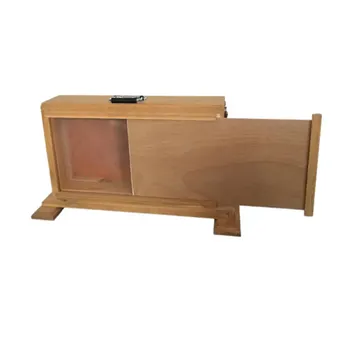
- Professional Observation Hive: The Ultimate Portable Solution for Beekeeping Education, Exhibitions, and Colony Displays
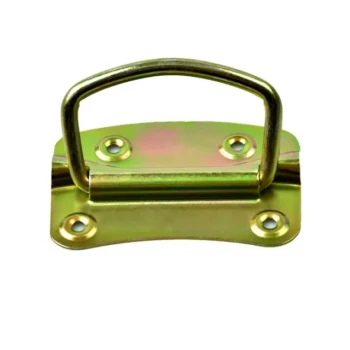
- Professional Grade Foldable Beehive Handles
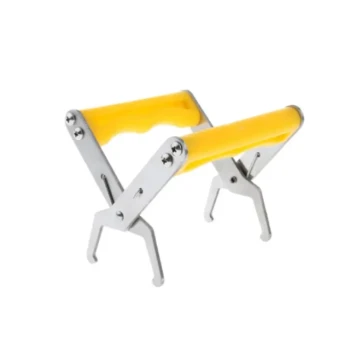
- Ergonomic High Visibility Plastic Frame Grip Handles
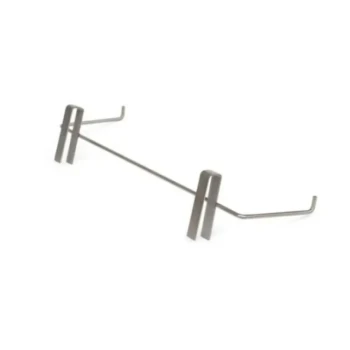
- Heavy-Duty Stainless Steel Clip-On Frame Perch
- Heavy-Duty Lever-Action Frame Grip with Hive Tool
People Also Ask
- How does transitioning to modern hives boost honey yield? Increase production and product quality for your commercial apiary
- How do Langstroth and Dadant standard beehives compare regarding brood chamber management and component compatibility? Find the Perfect Fit for Your Apiary
- What are the key operational differences and structural trade-offs between Langstroth beehives and top-bar beehives for apiary management? Discover which hive system fits your operational needs.
- Why are Langstroth beehives widely preferred for commercial honey production and equipment compatibility compared to alternative hive designs? Discover the advantages of standardized frames and scalable expansion for efficient beekeeping.
- What are the primary differences between Langstroth, horizontal top bar, and Warré hive box designs when selecting beekeeping equipment? Choose the Right Hive for Your Apiary