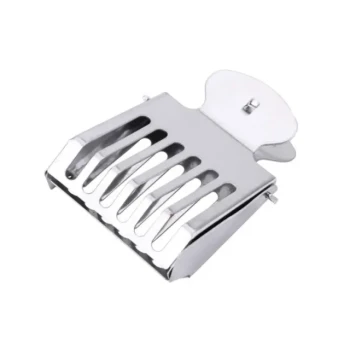
Numbered metal tags are essential for the long-term tracking of wild honeybee colonies because they act as durable, weather-resistant anchors in a constantly changing environment. By physically identifying specific trees, these tags prevent the identification errors that naturally occur over decades of ecological monitoring. This ensures that current field observations can be confidently matched with historical records to maintain rigorous data accuracy.
In studies spanning decades, environmental landscapes shift and biological markers fade. Metal tags provide the immutable physical evidence required to maintain strict data continuity between historical records and current observations.
Overcoming Environmental Volatility
Withstanding the Elements
Biological markers, paint, or simple flagging tape eventually degrade or disappear due to weathering. Metal tags are highly weather-resistant, ensuring the unique identifier survives rain, sun, and temperature shifts for decades.
Countering Landscape Changes
Over twenty or thirty years, the forest surrounding a hive changes drastically as vegetation grows or dies. A physical tag serves as a constant reference point when visual landmarks shift, preventing confusion in the field.
The Foundation of Data Continuity
Eliminating Identification Errors
Long-term studies require absolute certainty that the tree being sampled today is the same one sampled years ago. Numbered tags remove ambiguity, preventing identification errors that would otherwise corrupt the longitudinal dataset.
Bridging Personnel Changes
Field researchers often change over the course of a multi-decade project. A standardized numbering system allows new sampling personnel to instantly and accurately link their current findings to the historical records created by their predecessors.
Understanding the Limitations
The Necessity of Physical Proximity
While tags are durable, they are passive identifiers. Researchers must physically reach the tree to read the number, meaning the tag validates identity but does not broadcast location like a GPS transmitter.
Maintenance Considerations
Attaching hardware to living trees requires foresight regarding tree growth. Over extremely long periods, tags must be monitored to ensure the tree's bark does not grow over the metal, obscuring the identification number.
Ensuring Success in Longitudinal Studies
To maximize the value of your monitoring project, consider the following implementation strategies:
- If your primary focus is data accuracy: Rely on numbered tags to create a verifiable, error-proof link between distinct generations of field data.
- If your primary focus is project longevity: Invest in high-quality, weather-resistant metal materials that can withstand decades of exposure without degrading.
By securing the physical identity of the hive location, you secure the integrity of the scientific insight derived from it.
Summary Table:
| Feature | Benefit for Long-Term Monitoring | Why It Matters |
|---|---|---|
| Material Durability | Resists weathering, UV, and rain | Ensures IDs remain readable for decades |
| Unique Numbering | Eliminates identification errors | Links current observations to historical data |
| Physical Anchor | Counters landscape/landmark shifts | Maintains a constant reference point in forest growth |
| Standardization | Bridges gaps between researchers | Allows new personnel to follow established records |
Secure Your Research Integrity with HONESTBEE
At HONESTBEE, we understand that precision is the backbone of successful apiculture and ecological research. Whether you are managing vast commercial apiaries or distributing professional-grade beekeeping supplies, we provide the robust tools you need for long-term success.
From specialized hive-making machinery and honey-filling systems to high-quality hardware and essential industry consumables, our comprehensive wholesale portfolio is designed to meet the demands of professionals. We empower our partners to maintain rigorous standards and scale their operations with confidence.
Ready to elevate your beekeeping operations? Contact us today to explore our full spectrum of equipment and cultural merchandise tailored for commercial growth!
References
- Juliana Rangel, John S. Johnston. Africanization of a feral honey bee (<i><scp>A</scp>pis mellifera</i>) population in <scp>S</scp>outh <scp>T</scp>exas: does a decade make a difference?. DOI: 10.1002/ece3.1974
This article is also based on technical information from HonestBee Knowledge Base .
Related Products
- Professional Engraved Round Hive Number Tags for Beekeeping
- Modern Flat-Mount Hive Number Set for Beekeeping
- Durable Plastic Hive Number Set for Beekeeping
- Professional Large-Format Hive Number Set for Beekeeping
- Assembled Wooden Bee Frames with Beeswax Foundation Ready to Use by HONESTBEE
People Also Ask
- What role do numbered tags and specialized adhesives play in honey bee genetic research? Linking Genotype to Behavior
- What function do hive identification tags serve in long-term monitoring? Secure Precise Data & Outlier Detection
- What is the role of record-keeping tools like manuals and hive markers in professional queen bee breeding? Master Data.
- What are the advantages of numbered plastic tags? Achieve Precise Individual Honeybee Identification
- What protective functions does hive portability provide? Adapt to Seasonal Climates with Ease