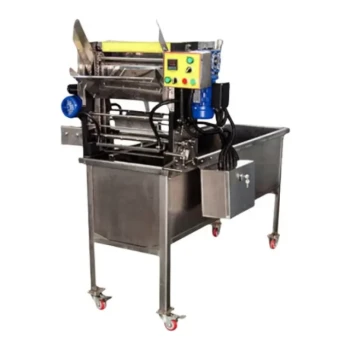
Specialized honey filling and packaging machines are the critical link that transforms raw forest honey into a tradable global commodity. For large-scale operations, these systems are mandatory because they guarantee the precise measurement, sterile sealing, and consistent physical stability required to enter international markets and maintain high-volume supply chains.
Core Takeaway While manual processing suffices for local sales, industrial-grade machinery is the only way to achieve the sterilization, standardization, and shelf-stability required for the large-scale trade of forest honey. It converts a variable agricultural harvest into a consistent, compliant commercial product.
The Imperative of Standardization and Efficiency
Achieving Precision at Scale
When dealing with forest sources that yield thousands of tons of honey, manual volumetric estimation is financially unsustainable. Industrial filling lines utilize precision metering controls to ensure exact volume consistency across every container.
Minimizing Product Loss
In high-volume trade, even minor overfilling per bottle accumulates into significant revenue loss. Automated machinery offers precise quantitative packaging, significantly reducing "overflow loss" and ensuring the net weight meets strict commercial standards.
Reducing Operational Costs
Large-scale trade requires speed that manual labor cannot match without exorbitant costs. High-efficiency mechanized packaging drastically reduces labor requirements, streamlining the final processing stage and allowing for the large-batch filling necessary for wholesale distribution.
Preserving Quality and Bioactive Integrity
Eliminating Secondary Contamination
Honey is a sensitive product prone to degrading when exposed to the environment. Automated machines operate in a fully enclosed environment, minimizing contact between the honey and surrounding air.
Controlling Moisture and Microbes
Forest honey is hygroscopic, meaning it absorbs moisture from the air, which can lead to fermentation. Specialized equipment prevents this moisture absorption and eliminates the risk of microbial contamination associated with manual handling.
Protecting Active Ingredients
Premium forest honeys, such as linden or willow, derive their value from specific botanical origins and bioactive components. Advanced filling technology preserves the natural flavor and active ingredients by managing the physical stress and exposure during bottling, ensuring the product remains "organic" grade.
Understanding the Trade-offs
Implementation Complexity
While necessary for scale, these machines represent a significant shift in operational complexity. They require a move from artisanal intuition to standardized technical oversight to ensure the equipment remains calibrated and sterile.
Maintenance and Calibration
To maintain the food safety standards promised by automation, the machinery requires rigorous maintenance. A failure in the sealing technology or metering calibration can lead to large batches of non-compliant product, making regular technical audits essential.
Ensuring Market Access and Stability
Meeting International Standards
Entry into international organic markets is impossible without guaranteed consistency. Industrial machinery provides the standardized packaging required to mitigate trade risks associated with measurement deviations or packaging failures.
Guaranteeing Shelf Life and Transport Stability
Honey traded globally faces long-distance transportation and varying storage conditions. High-specification sealing technology ensures the product remains stable in quality throughout its journey, preventing leakage and spoilage that would damage brand reputation.
Making the Right Choice for Your Goal
To leverage these systems effectively, align your machinery choice with your specific commercial objective:
- If your primary focus is Global Export: Prioritize machinery with advanced sealing technology to ensure stability during long-distance transport and compliance with international standardization requirements.
- If your primary focus is Premium/Organic Branding: Focus on equipment designed for enclosed, low-stress filling to preserve bioactive components and prevent secondary contamination.
- If your primary focus is Wholesale Volume: Select high-efficiency lines with precision metering controls to maximize speed and minimize overflow loss for bulk commodity trade.
Investing in specialized packaging infrastructure is not merely an operational upgrade; it is the fundamental hardware requirement for building a scalable, traceable, and profitable forest honey brand.
Summary Table:
| Feature | Manual Processing | Industrial Machinery | Trade Impact |
|---|---|---|---|
| Measurement | Volumetric Estimation | Precision Metering | Eliminates revenue loss from overfilling |
| Hygiene | Open Air Exposure | Fully Enclosed System | Prevents fermentation and contamination |
| Efficiency | High Labor / Low Speed | High-Efficiency Batches | Reduces operational costs for wholesale |
| Quality | Variable Stability | Preserved Bioactives | Maintains 'organic' grade for premium markets |
| Compliance | Local Standards Only | International Standards | Enables global export and transport stability |
Elevate Your Honey Trade with HONESTBEE Precision Engineering
Transitioning from artisanal production to global wholesale requires more than just high-quality honey—it requires the right infrastructure. HONESTBEE specializes in empowering commercial apiaries and distributors with the robust machinery needed to dominate the market.
Our comprehensive wholesale offering includes:
- Advanced Filling & Packaging Lines: Precision-engineered to minimize loss and maximize shelf-stability.
- Beekeeping Machinery: From hive-making to honey-processing equipment designed for high-volume output.
- Industrial Consumables & Tools: A full spectrum of supplies to keep your operation running seamlessly.
Whether you are scaling your brand or outfitting a new facility, HONESTBEE provides the technical expertise and hardware to ensure your product meets the most stringent international standards.
Contact HONESTBEE Today to discover how our specialized equipment can transform your forest honey harvest into a profitable global commodity.
References
- Janet Lowore. Understanding the Livelihood Implications of Reliable Honey Trade in the Miombo Woodlands in Zambia. DOI: 10.3389/ffgc.2020.00028
This article is also based on technical information from HonestBee Knowledge Base .
Related Products
- Fully Automatic Honey Filling Packaging Machine for Processing Line
- Precision Automated Packaging Turntable Honey Spoon Filling Sealing Packing Machine
- Economy Small Honey Filling Machine Honey Bottle Filler Packaging Machine
- Automatic Single-Dose Snap & Squeeze Honey Sachets Packing Machine
- Double Nozzle Small Honey Filling Machine Honey Sachet Packing Packaging Equipment
People Also Ask
- Why are fully automatic honey filling and packaging lines essential? Boost Your Honey's Market Value and Quality
- What is a fully-automatic honey filler? Streamline Your Production with High-Precision Automation
- How do automated honey filling and packaging machines affect profitability? Boost Margins with HONESTBEE Technology
- How do automated honey filling and packaging machines contribute to the market value of honey products? Maximize Your ROI
- How do industrial-grade automated honey filling and packaging machines mitigate the risk of physical contamination?