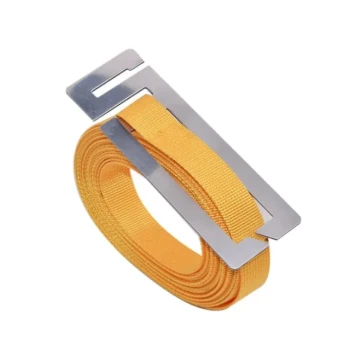
Specialized under-baskets are critical mortality monitoring tools designed to intercept and collect honeybees that have died at the hive entrance. In field trials, particularly those assessing toxicity, these devices are essential because they prevent the colony’s natural hygienic behavior—removing dead workers from the area—from skewing mortality data.
Core Takeaway Honeybee colonies instinctively clean their hives by carrying away dead individuals, which results in lost data during scientific trials. Under-baskets physically trap these carcasses before they can be removed, providing researchers with the accurate body counts necessary to evaluate acute pesticide toxicity and abnormal death rates.
The Mechanics of Mortality Monitoring
Counteracting Natural Hygiene
Honeybees possess a strong instinct to maintain hive hygiene.
Without intervention, worker bees will rapidly identify and carry dead individuals (carcasses) away from the hive entrance.
Under-baskets are installed to interrupt this process, ensuring that every bee that dies at the hive is retained for counting rather than being discarded into the surrounding environment where it cannot be recovered.
Evaluating Pesticide Toxicity
The primary application of these baskets is in toxicity assessments.
When testing the impact of pesticides or other environmental stressors, researchers need to calculate acute mortality rates.
By collecting every dead bee via the under-basket, scientists can determine if a specific chemical is causing an immediate, abnormal spike in death rates that exceeds natural baseline mortality.
Distinguishing Between Field Equipment
Under-baskets vs. Pollen Traps
It is vital not to confuse mortality under-baskets with pollen traps.
Pollen traps are placed at the entrance to mechanically strip pollen pellets from the legs of live, returning foragers for nutritional or toxicological analysis.
In contrast, under-baskets are passive collection devices located beneath or in front of the entrance specifically to catch falling, deceased bees.
The Role of Standardization
Under-baskets are often used in conjunction with standardized beehives.
Standardized hives ensure that variables like entrance size and nesting volume are uniform, so they do not influence how bees enter or exit.
This control allows researchers to be certain that the mortality data collected in the under-baskets is a result of the experimental variable (such as a pesticide), not a quirk of the hive's physical structure.
Understanding the Limitations
Scope of Data Collection
While under-baskets are excellent for monitoring toxicity at the hive, they have a limited scope.
They only collect bees that manage to return to the hive before dying or those that die inside and are dragged out.
They do not account for bees that die in the field immediately after contacting a toxin; therefore, under-basket data represents at-hive mortality, not necessarily total colony loss.
Making the Right Choice for Your Goal
To ensure your field trial gathers the correct data, you must align your equipment with your specific research metrics.
- If your primary focus is measuring acute pesticide lethality: Prioritize under-baskets to capture accurate mortality counts without interference from hive cleaning behaviors.
- If your primary focus is assessing environmental contamination: Use pollen traps to intercept raw material brought back from the field for chemical analysis.
- If your primary focus is analyzing foraging efficiency: Rely on high-precision timers and standardized entrances to measure ingression/egression rates and flower handling times.
Correctly implementing under-baskets transforms missing biological evidence into quantifiable data, ensuring your toxicity assessments are rigorous and accurate.
Summary Table:
| Feature | Under-Baskets | Pollen Traps |
|---|---|---|
| Primary Function | Mortality monitoring & carcass collection | Nutritional & toxicological pollen analysis |
| Mechanism | Intercepts dead bees removed by workers | Strips pollen pellets from live foragers |
| Research Goal | Measuring acute pesticide lethality | Assessing environmental contamination |
| Placement | Beneath or in front of hive entrance | Directly at the hive entrance entrance |
Elevate Your Beekeeping Operations with HONESTBEE
Precision in the field starts with the right equipment. HONESTBEE specializes in supporting commercial apiaries and distributors with a robust wholesale catalog designed for professional success. From specialized mortality monitoring tools and pollen traps to high-efficiency honey-filling machines and hive-making hardware, we provide the full spectrum of beekeeping machinery and essential consumables.
Whether you are conducting rigorous toxicity trials or scaling up honey production, our portfolio is engineered to enhance your efficiency and data accuracy. Partner with us to access industry-leading beekeeping technology and honey-themed cultural merchandise.
Ready to optimize your apiary or distribution network? Contact HONESTBEE Today for Wholesale Solutions
References
- V. Girolami, Andrea Tapparo. Effect of repeated intakes of a neonicotinoid insecticide on the foraging behaviours of Apis mellifera in field trials. DOI: 10.1007/s11356-022-22977-y
This article is also based on technical information from HonestBee Knowledge Base .
Related Products
- Professional 600D Oxford Cloth Beekeeping Tool Bag with 8 Pockets and Elastic Loops
- Solid Bottom Board Australian Pine Wood Langstroth Bottom Board for Wholesale
- Yellow Plastic Bucket Pail Perch for Beekeeping
- Durable Plastic Hive Number Set for Beekeeping
- Modern Flat-Mount Hive Number Set for Beekeeping
People Also Ask
- What is the recommended method for storing beekeeping tools? Expert Vertical Storage Solutions for Your Apiary
- Why is the treatment of beekeeping tools with high-concentration chemical disinfectants necessary for preventing AFB?
- How does a favorable microclimate interact with beekeeping tools? Boost Overwintering Success and Equipment Longevity
- How does the genetic identification of honeybee populations influence the selection of beekeeping tools? Precision Gear Guide
- Proper Beekeeping Tools and Regular Hive Maintenance: How to Mitigate Pest Infestations and Colony Instability?