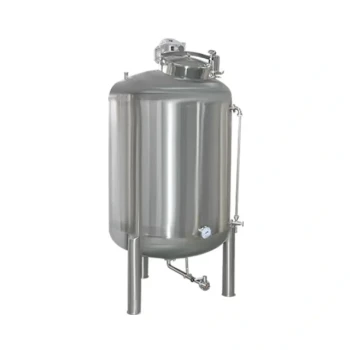
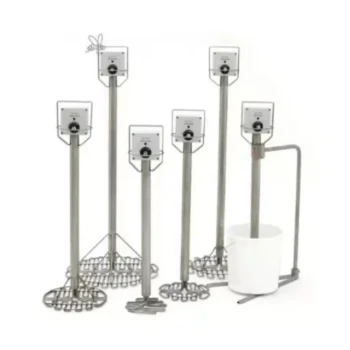
Standardized honey collection centers are the linchpin of modern honey quality assurance. They are vital because they stabilize the product's physical and chemical properties immediately after it leaves the apiary, utilizing temperature control and preliminary filtration to ensure consistency. Without this infrastructure, honey remains a raw, volatile commodity rather than a graded product capable of entering high-end international markets.
Core Takeaway: These facilities function not just as warehouses, but as active "quality firewalls" that transform heterogeneous raw honey into a uniform commercial product. They bridge the critical gap between the fluctuating output of remote beekeepers and the rigid consistency and safety standards demanded by global retail chains.
Preserving Product Integrity
The primary value of these centers lies in their ability to arrest the natural degradation of raw honey.
Stabilizing Chemical Characteristics
Honey is sensitive to environmental changes. Temperature-controlled storage is essential to maintain the honey's specific physical and chemical profile.
By regulating the environment, these centers prevent heat-induced damage that can alter enzymes and flavor profiles.
The Filtration Firewall
Collection centers employ preliminary filtration equipment as a critical Quality Control (QC) node.
This infrastructure allows for the immediate removal of physical impurities and unqualified products before they move further down the chain. This early intervention prevents contamination from spreading to larger batches.
Enabling Market Standardization
To enter the global market, honey must transition from an artisanal variation to an industrial standard.
From Heterogeneous to Uniform
Small-scale apiaries produce "heterogeneous" batches—honey that varies wildly in color, moisture, and composition.
Processing warehouses allow these various sources to be consolidated and transformed into uniform products. This uniformity is a non-negotiable requirement for supermarkets and large retail chains that demand consistency on the shelf.
Standardized Grading
The infrastructure within these centers enables large-scale standardized grading.
Rather than selling honey as a generic bulk product, the center can categorize it based on quality metrics. This precise grading allows producers to capture higher value by directing premium grades to premium markets.
Logistics and Operational Efficiency
Beyond chemistry, these centers solve fundamental logistical problems inherent in agriculture.
Reducing Transportation Losses
Honey is hygroscopic (it absorbs moisture from the air), which leads to fermentation.
Centers utilize standardized containers, such as tin drums or plastic bottles, to create a barrier against air and moisture. This minimizes spoilage during long-distance transport and ensures the weight and volume remain precise for commercial transactions.
Bridging the Supply-Demand Gap
These facilities act as logistical hubs that reduce the physical distance between remote producers and market points.
By aggregating supply, they lower overall transportation costs and help producers avoid "distress selling" at low prices to local buyers. They provide the stable volume required to negotiate with higher-value cooperatives and distributors.
Understanding the Trade-offs
While standardized centers are essential for scaling, they introduce specific challenges that must be managed.
Centralization vs. Nuance
The process of transforming heterogeneous batches into uniform products effectively standardizes the unique characteristics of specific regional honeys. While this is necessary for mass retail, it can dilute the distinctiveness of small, artisanal micro-batches.
The Capital Barrier
Establishing these centers requires significant investment in specialized machinery and climate control systems.
This creates a high barrier to entry. If the volume of honey flowing through the center does not meet capacity, the overhead costs of maintaining temperature and sterile environments can erode profit margins.
Making the Right Choice for Your Goal
Whether you are developing regional infrastructure or sourcing product, the value of these centers depends on your end market.
- If your primary focus is High-End Export: Prioritize facilities with advanced filtration and temperature logs, as these are prerequisites for meeting international food safety regulations and certifications.
- If your primary focus is Mass Retail Supply: Look for centers with high-capacity mixing and grading infrastructure to ensure the product uniformity required by supermarket chains.
Ultimately, a standardized collection center is the only mechanism capable of converting raw apiary output into a stable, safe, and globally tradeable asset.
Summary Table:
| Feature | Function in Supply Chain | Business Impact |
|---|---|---|
| Temperature Control | Stabilizes chemical & enzyme profiles | Prevents heat damage; preserves shelf life |
| Preliminary Filtration | Removes physical impurities & debris | Acts as a quality firewall; reduces contamination |
| Batch Standardization | Consolidates heterogeneous raw honey | Ensures product uniformity for retail chains |
| Standardized Grading | Categorizes honey by quality metrics | Enables premium pricing & targeted market entry |
| Protective Packaging | Uses tin drums/sealed containers | Prevents moisture absorption & fermentation |
Elevate Your Honey Production with HONESTBEE
Transitioning from raw apiary output to a premium, export-ready product requires the right infrastructure. HONESTBEE specializes in supporting commercial apiaries and distributors with the professional machinery needed to build standardized collection centers.
Our value to your business includes:
- Comprehensive Equipment Supply: From high-capacity honey-filling machines to specialized hive-making hardware.
- Industrial-Grade Solutions: Wholesale beekeeping tools and essential consumables designed for large-scale operations.
- Market Growth Support: We provide the technical foundation to help you meet rigid international safety standards and consistency requirements.
Ready to scale your operation and secure high-end retail contracts?
Contact HONESTBEE Today to Discuss Your Equipment Needs
References
- Joaquín Llorca Franco, Mayanín Asunción Sosa Alcaraz. El sistema apícola en las regiones I y II de Yucatán: un cambio de paradigma en las reglas, políticas y relaciones. DOI: 10.31381/gbaj.v4i2.2520
This article is also based on technical information from HonestBee Knowledge Base .
Related Products
- Electric Double Wall Honey Filtering Machine Purifier Equipment for Honey Processing Plant
- Honey Concentrating and Filtering Dehumidifier Machine 2T Capacity for Honey
- Stainless Steel Triangle Support Honey Strainer and Filters
- 0.5T Capacity Honey Dehumidifier Dryer with Vacuum Heating and Thickening Filtering Machine
- Professional Stainless Steel Honey Filtering Machine with Water Bath Heating for Beekeeping
People Also Ask
- What types of equipment are used in honey filtering? Build an Efficient System for Pure, Marketable Honey
- What is the process of filtering honey? A Guide to Clean, Pure, and Market-Ready Honey
- What is the overall importance of using the right equipment in honey filtering? Boost Quality & Marketability
- Why is filtering important in honey processing, and what equipment is used? A Guide to Quality & Efficiency
- What steps are involved in maintaining honey filtering equipment? A Guide to Protecting Your Honey Quality