The design specifications of honeybee feeders are not merely matters of convenience; they are a decisive factor in winter survival mechanisms. In cold climates, the primary threat to a colony is often not the lack of food stores, but the inability to access them. Specialized feeder designs prevent starvation by ensuring syrup or fondant remains reachable without forcing bees to break their thermal cluster or traverse freezing barriers, while simultaneously minimizing the risk of accidental drowning.
Winter colony losses are frequently caused by "isolation starvation," where food exists within the hive but remains physically inaccessible due to cold. High-quality feeder design bridges this gap, providing a safe, accessible interface that delivers nutrition directly to the winter cluster without compromising the colony's safety.
The Mechanics of Winter Feeding Accessibility
Overcoming Physical Barriers
During extreme cold, honeybees form a tight cluster to conserve heat. They physically cannot travel across cold gaps to reach food frames located at the periphery of the hive.
Feeder design is critical here because it must position the food source immediately adjacent to or above the cluster. High-standard feeders are engineered to minimize the travel distance, ensuring that food remains accessible even when low temperatures restrict bee mobility.
Preventing "Isolation Starvation"
If a feeder is poorly designed, it creates a physical barrier that bees cannot cross in freezing temperatures. This leads to starvation despite the presence of food.
Effective designs facilitate the continuous movement of the cluster toward the food source. By removing physical obstacles, these feeders ensure the colony can maintain its energy intake required to generate heat.
Critical Design Features for Survival
Safety Against Drowning
One of the most immediate risks in supplemental feeding is bees drowning in liquid syrup. This depletes the colony population at a time when every individual bee is vital for maintaining thermal mass.
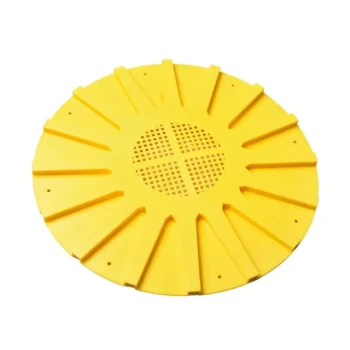
Scientifically designed feeders incorporate structures to prevent drowning, such as ladders, mesh, or floats. These features allow bees to access syrup safely without becoming submerged, preserving the colony's population density.
Deterring Robbing Behavior
During nectar shortages, strong colonies may attempt to steal food from weaker ones, a behavior known as robbing. Poorly designed feeders release scents that attract external predators.
Specialized feeders provide a controlled environment that restricts access to the hive's inhabitants only. By containing the scent and access points, these devices prevent fatal conflicts between colonies.
Versatility for Solid vs. Liquid Feed
Winter conditions often necessitate a switch from liquid syrup (which can freeze or cause moisture issues) to solid food like fondant or candy boards.
Advanced feeder systems, particularly candy boards, act as both an emergency food source and a moisture absorber. This dual function provides necessary carbohydrates and protein while positioning the food directly over the cluster, requiring zero travel for the bees.
Understanding the Trade-offs
Moisture Management Risks
While feeders are essential, introducing liquid feed in winter can be dangerous if the design lacks proper containment. Metabolic activity and evaporating syrup generate moisture.
If a feeder lacks proper ventilation or insulation properties, this moisture can condense and drip back onto the cluster. Cold and wet conditions are almost always fatal to bees, making the thermal and ventilation properties of the feeder system just as important as its capacity.
Thermal Efficiency Costs
Internal feeders generally offer better protection than external ones, but accessing them can disrupt the hive's thermal seal.
Top-feeders or internal frame feeders must be designed to allow refilling without exposing the brood nest to shock-cooling. Designs that fail to insulate the feed can also turn the syrup into a heat sink, drawing warmth away from the cluster.
Making the Right Choice for Your Goal
Selecting the correct feeder specification depends heavily on the specific seasonal challenge you are addressing.
- If your primary focus is emergency mid-winter survival: Prioritize solid-state feeders or candy boards that sit directly on top frames to maximize accessibility and minimize moisture buildup.
- If your primary focus is fall preparation and weight gain: Utilize high-capacity internal liquid feeders with robust anti-drowning ladders to allow rapid uptake of heavy syrup before the first freeze.
The specifications of your feeder largely dictate the metabolic efficiency of your colony; choose a design that minimizes the energy cost of eating.
Summary Table:
| Feature | Impact on Winter Survival | Key Benefit |
|---|---|---|
| Thermal Accessibility | Minimizes cluster travel distance | Prevents isolation starvation in freezing temps |
| Anti-Drowning Design | Preserves colony population density | Prevents unnecessary bee loss during feeding |
| Dual-State Feeding | Allows switch from liquid to solid | Provides emergency fondant while managing moisture |
| Robbing Deterrence | Controls scent and access points | Protects weak colonies from external predators |
| Moisture Control | Reduces condensation on the cluster | Prevents fatal cold-wet conditions within the hive |
Secure Your Apiary’s Success with HONESTBEE
Don't let preventable winter losses impact your bottom line. HONESTBEE provides commercial apiaries and distributors with high-performance beekeeping tools and machinery designed for resilience. From specialized honey-filling machines to engineered feeders that ensure colony survival, our wholesale offerings support every aspect of your operation.
Partner with HONESTBEE to access:
- Precision Machinery: Hive-making and honey-processing equipment.
- Premium Consumables: Durable feeders and essential hardware for large-scale operations.
- Expert Support: Solutions tailored to the needs of professional beekeepers.
Contact our expert team today to equip your business with the industry's most reliable beekeeping supplies.
References
- Mariia Fedorіak, V. Jos. IMPACT OF WAR ON THE WINTER SURVIVAL OF BEE COLONIES IN UKRAINE: MONITORING RESULTS FOR 2023-2024. DOI: 10.31861/biosystems2025.01.131
This article is also based on technical information from HonestBee Knowledge Base .
Related Products
- HONESTBEE Entrance Bee Feeder Professional Hive Nutrition Solution for Beekeeping
- HONESTBEE Professional Entrance Bee Feeder Hive Nutrition Solution
- HONESTBEE Round Hive Top Bee Feeder for Syrup
- HONESTBEE Entrance Bee Feeder Efficient Hive Front Liquid Feeding Solution for Beekeeping
- HONESTBEE Square Top Hive Bee Feeder Top Bee Feeder
People Also Ask
- What types of bee feeders are available for beginners? Start with the Simple Entrance Feeder
- What are the advantages and disadvantages of using an entrance feeder for bees? Balance Convenience and Hive Security.
- What is a bee entrance feeder and what are its drawbacks? Essential Guide to Hive Security and Feeding Efficiency
- How does a bee entrance feeder work? A Simple Guide to Convenient Hive Feeding
- How to make an entrance feeder for bees? A DIY Guide for Safe & Effective Feeding