Honey bee breeding requires a colony-level model, not a direct livestock model. Traditional livestock breeding methods assume identifiable parents, predictable pedigrees, and phenotypic records linked to individual animals. Honey bees violate these assumptions: a queen mates with approximately 10–20 drones, produces thousands of workers, and the colony—not an individual bee—is usually measured for honey production, docility, or disease resistance. Specialized queen-rearing equipment and controlled mating infrastructure help breeders reduce this genetic uncertainty and reproduce superior lines more consistently.
Honey bee breeding values are difficult to estimate because colony performance reflects multiple paternal subfamilies, haploid drones, and shared environmental effects. Controlled queen rearing, mating nuclei, isolated mating stations, and—where appropriate—instrumental insemination provide the practical controls needed to evaluate and propagate valuable genetics.
Why Traditional Livestock Models Fall Short
The breeding unit is a colony, not an individual
In conventional livestock breeding, performance data can often be assigned directly to an individual animal and connected to a defined sire and dam. In honey bees, traits such as honey yield, swarming tendency, temperament, and disease resistance are typically observed at the colony level.
A colony’s result therefore combines the genetics of its queen, the multiple drones that mated with her, thousands of workers, and the colony’s management and environmental conditions.
One queen has multiple paternal lineages
A honey bee queen commonly mates with 10 to 20 drones. Her worker offspring consequently belong to several paternal subfamilies, even though they share the same mother.
This means workers in one colony do not represent a single, uniform genetic family. A colony’s measured performance may reflect the combined or uneven contribution of several subfamilies.
Drones have a different inheritance pattern
Drones are haploid: they develop from unfertilized eggs and carry one set of chromosomes. Their sperm cells are therefore genetically identical copies of the drone’s genotype.
This differs from the diploid inheritance assumptions used in many standard livestock calculations. Applying those assumptions directly can produce inaccurate estimates of relatedness and breeding value.
Natural mating obscures the pedigree
Honey bee queens typically mate during flight, often with drones from multiple colonies. Unless breeders use controlled mating methods, the identities and genetic contributions of all sires may be unknown.
The result is an incomplete pedigree. Even when the queen’s maternal line is known, the paternal side may remain uncertain, making conventional parent-offspring calculations unreliable.
What Makes Honey Bee Breeding Evaluation More Reliable
Record performance at the colony level
Breeding programs must evaluate colonies as integrated units rather than treating a single worker or queen as the complete expression of a trait. Records should be collected under sufficiently standardized management conditions so that genetic differences are not confused with differences in feeding, population strength, location, or treatment.
For commercial operations, consistent hive systems and apiary procedures are therefore as important as the genetic material itself.
Separate genetic effects from environmental effects
Honey production and colony health depend on forage availability, climate, pests, disease pressure, queen age, colony size, and management. A high-performing colony may owe its result partly to favorable conditions rather than superior genetics.
Standardized colony environments and comparable apiary practices help breeders make more meaningful comparisons between colonies.
Manage queen and sire exposure
The most direct way to improve pedigree confidence is to control which queens and drones contribute to the next generation. Breeders may use isolated mating stations, mating nucleus hives, selected drone populations, or artificial insemination, depending on the required level of control.
These methods do not eliminate the biological complexity of honey bees, but they make the parental contribution more traceable and repeatable.
How Specialized Equipment Supports Genetic Management
Queen-rearing tools convert selection into propagation
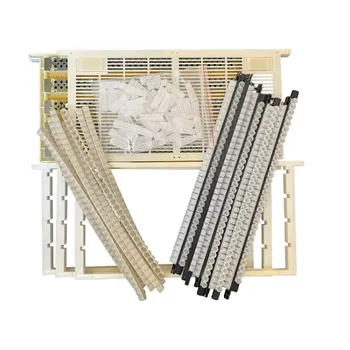
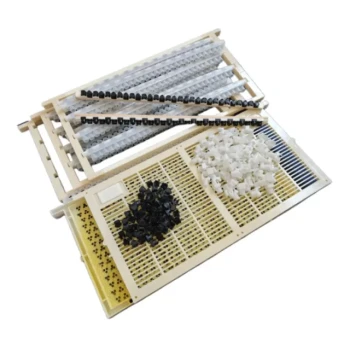
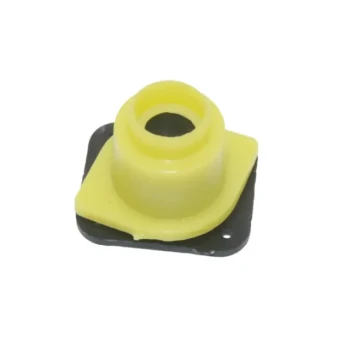
Once a superior colony or queen has been identified, grafting needles, queen-rearing frames, cell cups, and incubation systems allow breeders to produce queens from selected maternal lines.
This is essential because identifying a desirable queen is only the first step. The genetic gain becomes commercially useful when that line can be reproduced in sufficient quantity and quality.
Mating nuclei provide controlled evaluation units
Mating nucleus hives, or mating nucs, provide small, manageable colonies for mating and early queen evaluation. They reduce resource requirements compared with full-size production colonies while allowing breeders to monitor queen acceptance, mating success, and early colony development.
Mating nucs also support more organized distribution of selected queens across a breeding program.
Isolated stations limit unwanted gene flow
Isolated breeding stations reduce the likelihood that queens will mate with unknown or undesirable drones. This helps maintain local genetic resources, protect selected lines, and limit the introduction of invasive or poorly adapted genetics.
Isolation is not equivalent to absolute genetic control, particularly where flight ranges and drone populations are difficult to manage. It is best understood as a risk-reduction measure that works alongside selected drone colonies and accurate records.
Artificial insemination provides the highest mating control
Artificial insemination equipment can be used when breeders need to specify the drone contribution more precisely. It is particularly valuable for research, line maintenance, and programs focused on narrow genetic objectives.
However, it requires specialized skill, laboratory consumables, careful handling, and strict operational procedures. It is a precision method, not a universal replacement for well-managed open or isolated mating systems.
Standardized hive equipment improves comparisons
Precision hive systems and consistent apiary equipment help reduce variation in colony housing and management. When colonies are assessed under comparable conditions, differences in productivity, temperament, swarming, or disease response are more likely to reflect meaningful genetic differences.
For distributors and commercial apiaries, this creates value beyond individual tools: a coordinated equipment portfolio can support the full workflow from queen production through colony evaluation and replacement.
The Breeding Workflow in Practice
1. Identify candidate colonies
Breeders first select colonies showing commercially valuable traits, such as high honey productivity, docility, disease resistance, adaptability, or reduced swarming tendency.
Selection should rely on repeated and comparable colony records rather than a single exceptional harvest or observation.
2. Rear queens from selected maternal lines
Grafting and queen-cell management allow larvae from elite colonies to be developed into new queens. Incubation systems and queen-rearing frames help maintain consistent timing and handling during production.
This stage establishes the maternal line but does not, by itself, fully control the future queen’s paternal contribution.
3. Control or document mating
The new queens can be placed in mating nucs at an isolated breeding location, exposed to selected drone populations, or inseminated under controlled conditions.
The appropriate method depends on the required genetic precision, production scale, cost, and available technical expertise.
4. Evaluate daughter colonies
Queens must ultimately be judged by the performance of their resulting colonies. Breeders compare daughter colonies using consistent management, environmental records, and trait measurements.
This is where specialized hive systems and standardized apiary practices support more defensible breeding decisions.
5. Propagate validated genetics
After a line demonstrates reliable performance, queen-rearing equipment enables scaled multiplication and distribution. This turns breeding results into practical gains in apiary productivity, colony stability, and genetic consistency.
Understanding the Trade-offs
More control increases cost and complexity
Isolated mating, instrumental insemination, incubation, and laboratory procedures provide stronger genetic control than uncontrolled natural mating. They also require trained personnel, specialized consumables, maintenance, and detailed recordkeeping.
For many commercial operations, a well-designed isolated mating system may provide a more practical balance than full instrumental insemination.
Equipment does not replace breeding expertise
A grafting needle or mating nuc cannot compensate for poor colony records, unsuitable breeder selection, weak drone management, or inconsistent evaluation conditions. Equipment improves control; it does not create reliable genetic information automatically.
Genetic gains can be lost through uncontrolled replacement
If selected queens are later replaced by queens of unknown origin, or if mating occurs with unmanaged drone populations, the breeding program’s genetic direction can become diluted. Controlled queen replacement and continuing lineage records are therefore essential.
Local adaptation must be preserved
Selecting only for maximum honey production may reduce attention to traits such as climate adaptation, disease resilience, or overwintering ability. Breeding objectives should reflect the operating environment and the long-term health of the apiary.
How to Apply This to Your Project
The right equipment strategy depends on whether the priority is commercial queen supply, genetic conservation, performance testing, or high-control research breeding.
- If your primary focus is commercial queen production: Combine grafting tools, queen-rearing frames, incubation systems, and mating nucs with standardized colony records to reproduce desirable lines efficiently.
- If your primary focus is genetic accuracy: Use isolated mating stations, selected drone populations, and—where justified—artificial insemination to improve control over sire exposure.
- If your primary focus is apiary productivity: Prioritize reliable queen replacement systems and consistent hive equipment so selected traits can be propagated across production colonies.
- If your primary focus is local genetic conservation: Use isolated breeding infrastructure and controlled queen distribution to protect adapted local lines from unwanted genetic mixing.
- If your primary focus is equipment sourcing and fulfillment: Work with a supplier able to provide the complete breeding workflow—from grafting and queen-cell management to mating nuclei, hive systems, and replacement consumables—through responsive service and coordinated delivery.
With the right combination of biological understanding, controlled mating, standardized evaluation, and dependable equipment, honey bee breeding can become a measurable and repeatable genetic improvement program.
Summary Table:
| Challenge | Livestock Model | Honey Bee Reality |
|---|---|---|
| Breeding unit | Individual animal | Colony (queen + workers) |
| Parentage | Single sire, dam known | Queen mates with 10–20 drones, paternal lineages unknown |
| Inheritance | Diploid | Haploid drones |
| Pedigree | Complete | Often incomplete due to natural mating |
| Trait measurement | Individual phenotypic records | Colony-level performance |
Ready to enhance your bee breeding program? At HONESTBEE, we supply a comprehensive range of queen-rearing kits, mating nucs, and hive systems tailored for commercial apiaries and distributors. Our one-stop sourcing and rapid delivery ensure you get the right equipment to manage genetics effectively. Contact us today to discuss your needs and boost your apiary's productivity!
Related Products
- HONESTBEE Improved No Grafting Queen Rearing Kit For Queen Rearing and Royal Jelly Production
- Stainless Steel Queen Grafting Tool for Beekeeping and Bee Queen Grafting
- No Grafting Queen Rearing Kit: System for Royal Jelly Production and Queen Rearing
- Plastic Chinese Queen Grafting Tool for Bee Queen Rearing
- Retractable Chinese Queen Rearing Grafting Tools Equipment
People Also Ask
- How can commercial queen rearers and royal jelly producers align their harvesting schedules and equipment with the biological timing of larval development? Master the 48-Hour Grafting Window and 72-Hour Harvest Cycle
- How do honeybee reproductive traits affect queen rearing and hive equipment?
- What equipment and systems are utilized in queen rearing operations to scale queen bee production? Essential Tools for Commercial-Scale Queen Rearing
- How can commercial queen breeders and apiaries utilize low-density SNP screening alongside queen rearing equipment to maintain genetic purity in native honey bee populations? Achieve Genetic Purity with Efficient Screening
- What biological principles govern honeybee queen rearing, and why should commercial beekeepers use controlled queen-rearing equipment rather than relying on natural queen cells?