Because honey is not a uniform product, its processing requirements are strictly dictated by its specific botanical origin. Different floral sources produce honey with vastly different physical characteristics—specifically viscosity and crystallization rates—which standard equipment cannot handle effectively.
Honey varieties prone to rapid crystallization require temperature-controlled stirring facilities to maintain a consistent liquid state without overheating, which would degrade quality. Conversely, varieties with high thickness (viscosity) demand high-power filtration systems to push the honey through fine screens to remove impurities without stalling the production line.
The Core Reality: Specialized equipment is not merely about efficiency; it is the only way to process diverse honey types while preserving the fragile medicinal and nutritional components that allow for differentiated, high-value pricing in the retail market.
The Physical Dictates of Botanical Origin
Variable Viscosity Levels
Not all honey flows the same way. The botanical source determines the fluid's thickness, meaning a standard pump or filter that works for clover honey may fail completely with a denser variety.
The Crystallization Factor
Some honey varieties solidify (crystallize) much faster than others due to their sugar composition. To prevent this from happening prematurely or unevenly in the bottle, processors use temperature-controlled stirring.
Preserving Nutritional Integrity
This stirring process must be precise. If the temperature is too high, it destroys enzymes and lowers the honey's value; if it is too low, the stirring is ineffective against crystallization.
Handling Extreme Textures and Purity
High-Power Filtration Requirements
Thick, high-viscosity honey creates immense back-pressure in standard filtration units. High-power filtration systems are necessary to force the product through micron-rated screens to remove physical contaminants without compromising speed.
The Challenge of Thixotropic Honey
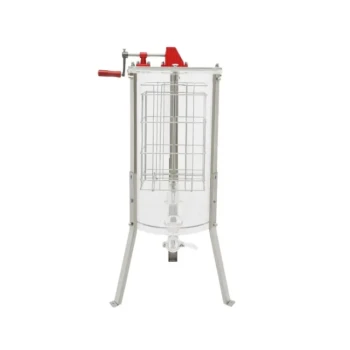
Certain premium varieties, such as Manuka honey, exist in a jelly-like (thixotropic) state inside the honeycomb. Standard centrifugal extractors cannot separate this honey effectively.
Specialized Extraction Mechanics
To process these jelly-like varieties, machinery must be equipped with shearing functions or vibration devices. These forces temporarily liquefy the honey for extraction without damaging the honeycomb structure.
Material Science and Safety Standards
The Acidity Problem
Honey has a naturally acidic pH. If processed using non-compliant materials like aluminum or galvanized steel, the acidity can trigger chemical leaching.
Preventing Heavy Metal Contamination
To avoid releasing heavy metals (such as lead, cadmium, or zinc) into the product, specialized machinery must be constructed from high-specification stainless steel. This ensures the honey’s physicochemical properties remain safe for consumption.
Understanding the Trade-offs
Cost vs. Differentiation
Specialized equipment represents a higher initial capital investment and potentially higher maintenance costs compared to generic setups. However, this investment enables the production of differentiated, high-price-point products (like raw or medicinal honey) that generic equipment cannot produce.
Complexity vs. Quality Control
Advanced machinery, such as precision graders and multi-stage filters, adds complexity to the operation. While this requires more skilled labor to operate, it significantly improves the Quality Competitive Index (QCI) by ensuring strict control over color, moisture, and purity.
Making the Right Choice for Your Goal
Selecting the right equipment depends entirely on the end-product you intend to take to market.
- If your primary focus is High-Value/Medicinal Honey: Prioritize equipment with temperature-controlled stirring and gentle extraction methods (vibration/shear) to preserve enzymes and handle unique textures like Manuka.
- If your primary focus is Volume and Efficiency: Invest in high-power filtration and automated grading systems to maximize throughput and minimize maintenance downtime while handling varying viscosities.
- If your primary focus is Regulatory Compliance: Ensure every piece of processing equipment is composed of high-grade stainless steel to negate the risk of heavy metal leaching due to honey's acidity.
Match your machinery not just to your production volume, but to the specific physical behaviors of the floral varieties you harvest.
Summary Table:
| Equipment Type | Key Function | Specific Honey Challenge |
|---|---|---|
| Temp-Controlled Stirring | Prevents uneven crystallization | Rapid-solidifying floral varieties |
| High-Power Filtration | Forces thick honey through screens | High-viscosity honey / Impurity removal |
| Shearing/Vibration Units | Temporarily liquefies jelly-like honey | Thixotropic varieties (e.g., Manuka) |
| High-Grade Stainless Steel | Prevents heavy metal leaching | Natural honey acidity (pH levels) |
Elevate Your Honey Production with HONESTBEE
Maximize the value of your harvest by matching your machinery to the specific physical properties of your honey. HONESTBEE provides commercial apiaries and distributors with premium, high-specification equipment designed to preserve medicinal and nutritional integrity.
Our comprehensive wholesale portfolio includes:
- Specialized Machinery: From precision honey-filling and hive-making machines to high-power filtration systems.
- Essential Consumables: A full spectrum of beekeeping tools and hardware for professional operations.
- Brand Value: Honey-themed cultural merchandise to differentiate your retail presence.
Ready to upgrade your processing line and improve your Quality Competitive Index? Contact our experts today to find the right solution for your apiary.
References
- Ahmed Alghamdi, Nuru Adgaba. Structure and Performance of the Retail Outlets of Honey in the Kingdom of Saudi Arabia. DOI: 10.4236/fns.2014.513127
This article is also based on technical information from HonestBee Knowledge Base .
Related Products
- Electric Double Wall Honey Filtering Machine Purifier Equipment for Honey Processing Plant
- 0.5T Capacity Honey Dehumidifier Dryer with Vacuum Heating and Thickening Filtering Machine
- Heavy Duty Stainless Steel Honey Processing Machine Decrystallizing Tank
- Double Wall Honey Heating Stirring Homogenizer Mixing Machine with Various Capacity
- Economy Honey Homogenizer Mixer and Melting Machine for Beekeeping
People Also Ask
- What is the process of filtering honey? A Guide to Clean, Pure, and Market-Ready Honey
- What types of equipment are used in honey filtering? Build an Efficient System for Pure, Marketable Honey
- What is the overall importance of using the right equipment in honey filtering? Boost Quality & Marketability
- What are the benefits of drying honey filtering equipment after use? Protect Your Honey Quality & Equipment Investment
- Why is filtering important in honey processing, and what equipment is used? A Guide to Quality & Efficiency