Large-scale commercial apiaries require efficient logistics to bridge the gap between scattered resources and concentrated agricultural needs. Commercial pollination relies on the rapid deployment of tens of thousands of beehives into orchards within very short timeframes. Because critical support resources—such as eucalyptus forests for recovery—are often geographically separated from crop fields, robust logistics systems are the only way to move colonies quickly enough to meet demand without suffering catastrophic losses.
Core Takeaway Commercial pollination is fundamentally a logistics challenge that requires connecting dispersed landscape resources with specific service needs. Advanced handling systems and hardware standardization provide the necessary infrastructure to migrate thousands of colonies rapidly, minimizing biological stress on the bees while maximizing operational efficiency.
The Geographic Challenge of Pollination
Connecting Dispersed Landscapes
In commercial apiculture, the resources bees need to survive and the crops they need to pollinate are rarely in the same place. Critical support resources, such as natural vegetation or forests, are spatially separated from agricultural orchards.
The Need for Rapid Deployment
Pollination windows are brief. Apiaries must transport tens of thousands of hives from their support grounds to the orchards precisely when crops bloom. Efficient logistics systems provide the "hardware guarantee" required to execute this mass migration effectively.
The Role of Standardization in Logistics
Enabling Mechanized Transport
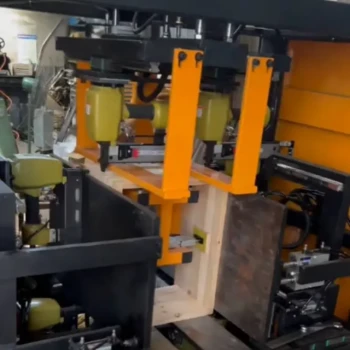
Efficiency in logistics begins with the hardware itself. Industrial hive-making machines produce components with uniform specifications, ensuring full interchangeability across thousands of colonies.
Palletization and Forklift Operations
Standardized hive dimensions allow for the use of industrial forklifts and pallet systems. By securing multiple hives onto a single pallet, operators can rapidly load trailers from the ground. This replaces manual lifting, significantly shortening migration times.
Precision Engineering and "Bee Space"
Precision manufacturing ensures hives adhere to the technical specifications of "Bee Space." This prevents bees from building excessive burr comb or propolis, which would otherwise glue internal components together. This structural accuracy ensures that frames remain movable, facilitating smoother mechanized loading and inspections.
Operational Efficiency and Bee Health
Minimizing Biological Stress
Logistics is not just about speed; it is about preservation. The use of mechanized loading minimizes the physical disturbance and physiological stress bees experience during long-distance transport.
Reducing Labor Intensity
Standardized systems streamline asset management and reduce manual labor. Tasks such as honey extraction, nutritional supplementation, and spring expansion can be executed under standardized protocols, improving the coverage capabilities of the apiary.
Intelligent Resource Management
Modern logistics often integrate with digital management systems. These systems allow apiaries to monitor environmental factors, such as pesticide application windows, enabling scientifically scheduled relocations that protect colony health at the source.
Understanding the Trade-offs
Capital Intensity vs. Labor Costs
Implementing high-efficiency logistics requires a significant upfront investment in specialized machinery, such as industrial hive-makers, forklifts, and transport trailers. While this reduces long-term labor costs and reliance on manual work, it raises the financial barrier to entry for the operation.
Rigidity of Standardization
Reliance on mechanized systems demands strict adherence to standardization. There is little room for improvisation; if components do not fit the specific dimensions required by the handling machinery, the logistical chain breaks down. This requires a disciplined approach to asset maintenance and replacement.
Making the Right Choice for Your Goal
To optimize your commercial apiary operations, consider these strategic priorities:
- If your primary focus is Scalability: Prioritize the adoption of standardized pallet systems and industrial forklifts to eliminate manual loading bottlenecks.
- If your primary focus is Colony Health: Invest in precision-manufactured hive bodies that maintain exact "Bee Space" to reduce internal hive stress and facilitate smoother inspections.
- If your primary focus is Risk Mitigation: Integrate digital monitoring with your logistics schedule to time relocations around local pesticide applications and bloom windows.
Efficiency in commercial beekeeping is no longer just about management; it is defined by the precision of your logistics.
Summary Table:
| Key Logistical Component | Role in Commercial Apiary | Strategic Benefit |
|---|---|---|
| Standardized Hive Bodies | Ensures interchangeability and forklift compatibility | Rapid loading and reduced labor costs |
| Mechanized Handling | Use of forklifts and specialized trailers | Minimizes bee stress and transport time |
| Precision Manufacturing | Maintains exact "Bee Space" in every unit | Prevents burr comb and eases inspections |
| Digital Monitoring | Tracks environmental factors and bloom windows | Scientific scheduling of hive relocations |
Scale Your Commercial Apiary with HONESTBEE Precision Equipment
Efficiency in large-scale beekeeping is a hardware challenge. At HONESTBEE, we specialize in providing the industrial infrastructure necessary for global distributors and commercial apiaries to meet regional pollination demands at scale. From precision hive-making machines that guarantee standardization to honey-filling systems and high-capacity machinery, we provide the full spectrum of tools needed to modernize your logistical chain.
Our Value to You:
- Wholesale Solutions: Comprehensive supply of durable hardware and essential industry consumables.
- Operational Scaling: Equipment designed to reduce manual labor and maximize transport efficiency.
- Industry Expertise: Quality-engineered products that protect colony health and improve profitability.
Ready to upgrade your fleet and streamline your logistics? Contact HONESTBEE today to discuss our wholesale machinery and equipment solutions.
References
- Annalie Melin, John S. Donaldson. Assessing the role of dispersed floral resources for managed bees in providing supporting ecosystem services for crop pollination. DOI: 10.7717/peerj.5654
This article is also based on technical information from HonestBee Knowledge Base .
Related Products
- Heavy Duty Adjustable Hive Connector
- Durable Plastic Interlocking Hive Connector for Beekeeping
- Professional Frame Comb Fork and Lifter for Efficient Handling
- Durable Plastic Hive Number Set for Beekeeping
- Ergonomic Plastic Frame Spacer Tool for Rapid Hive Management Beekeeping
People Also Ask
- Under what circumstance are beehive connectors particularly beneficial? Optimize Handling for Full Beehive Attachments
- What is the advantage of using the beehive connector when handling full attachments? Achieve Safe and Efficient Hive Transport
- What are the primary functions of a beehive connector? Ensure Hive Stability and Safe Colony Transport
- How can the connection length and strength of a beehive connector be adjusted? Master Tension with Threaded Mechanics
- What is the purpose of the beehive connector? Secure Your Hive for Safe Transport