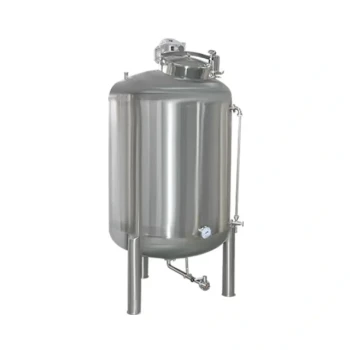
A centralizing decanter serves as the critical first line of defense in honey purification. It utilizes the natural density differences between pure honey and foreign particles to execute a preliminary separation immediately after extraction. By allowing specific layering to occur, the device effectively isolates suspended wax debris and trapped air bubbles from the raw liquid.
The decanter bridges the gap between raw extraction and a shelf-ready product. By relying on sedimentation to remove bulk impurities, it establishes the essential foundation required for fine filtration and eventual bottling.
The Mechanics of Purification
Leveraging Density Differences
The core function of a centralizing decanter is based on physics rather than mechanical screening.
Because honey acts as a dense medium, lighter impurities naturally rise while heavier particulates settle. The decanter creates a controlled environment where this separation can occur undisturbed.
Sedimentation and Layering
Through a process of sedimentation, the machine allows the honey to stratify.
This layering process separates the liquid into distinct zones. The usable honey settles, while lighter contaminants are forced out of the main volume.
Optimizing the Processing Workflow
Removal of Physical Impurities
Raw honey exiting an extractor is rarely clean; it is often filled with debris.
The decanter specifically targets suspended wax caps and other physical impurities introduced during the harvest. It also effectively removes air bubbles, which can spoil the aesthetic of the final jarred product.
Foundation for Fine Filtration
The decanter does not replace filtration; it makes filtration possible.
By performing this "bulk" cleaning first, the decanter reduces the load on subsequent high-precision filtering equipment. Without this step, fine filters would clog rapidly with wax and debris, halting production and increasing maintenance requirements.
Understanding the Trade-offs
The Scope of Separation
While essential, the decanter is a preliminary tool, not a total solution.
It relies on density and gravity principles, meaning it is excellent for removing wax and air, but it cannot remove microscopic particulates. It must always be followed by fine filtration to ensure the visual clarity and stability against crystallization required by industry standards.
Processing Time
The sedimentation process is thorough but can introduce a bottleneck if not sized correctly for your volume.
Unlike a pump which moves fluid instantly, a decanter requires time for the physics of separation to take effect. Operators must account for this dwell time when planning their total production throughput.
Making the Right Choice for Your Goal
To integrate a centralizing decanter effectively, consider your specific production targets:
- If your primary focus is Production Efficiency: Ensure the decanter's capacity matches your extractor's output to prevent it from becoming a bottleneck before the fine filtration stage.
- If your primary focus is Product Quality: Prioritize the decanter's ability to remove air bubbles, as this significantly improves the visual appeal and shelf stability of the bottled honey.
A well-integrated decanter transforms raw harvest into a manageable fluid, protecting your downstream equipment and ensuring a professional final product.
Summary Table:
| Feature | Primary Function | Key Benefit |
|---|---|---|
| Density Separation | Isolates wax and foreign particles | Ensures a clean raw honey base |
| Air Removal | Forces air bubbles to the surface | Enhances visual clarity and shelf appeal |
| Pre-Filtration | Performs bulk impurity removal | Prevents fine filter clogging and downtime |
| Sedimentation | Stratifies honey into distinct zones | Establishes a foundation for professional bottling |
Elevate Your Honey Production with HONESTBEE
Are you looking to scale your commercial apiary or distribution business? HONESTBEE provides the professional-grade machinery and specialized hardware you need to ensure peak product quality. From centralizing decanters that protect your equipment to industrial-scale honey-filling and hive-making machines, we offer a comprehensive wholesale portfolio for the global beekeeping industry.
Why partner with us?
- Full Spectrum Supply: Access everything from specialized machinery to essential industry consumables.
- Commercial Expertise: We cater specifically to the needs of large-scale apiaries and distributors.
- Quality Assurance: Durable equipment designed to optimize your post-harvest workflow and maximize efficiency.
Contact our experts today to streamline your production and secure your supply of premium beekeeping tools!
References
- Sara Imène Betina, Naima Benkenana. Survey on the Situation of the Beekeeping Sector in Two Localities in Northeastern Algeria. DOI: 10.18805/ajdfr.drf-550
This article is also based on technical information from HonestBee Knowledge Base .
Related Products
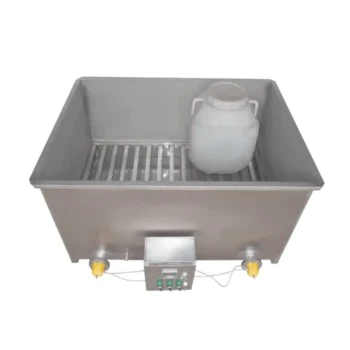
- Heavy Duty Stainless Steel Honey Processing Machine Decrystallizing Tank
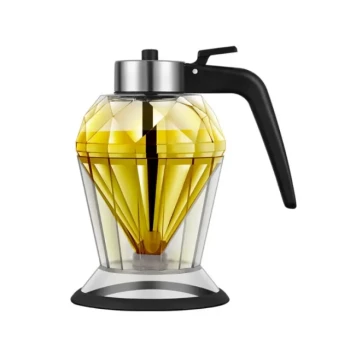
- Premium Diamond-Faceted Glass Honey Dispenser
- Economy Small Scale Honey Dryer Dehumidifier Thickening Machine
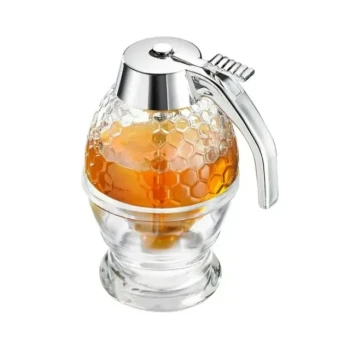
- Honeycomb Style Drip Free Honey Dispenser
- Professional Thermostatic Conical Honey Melter
People Also Ask
- What are the features of the processing tanks offered? Engineered for Purity and Efficiency
- What types of stainless steel processing tanks are used for honey? Essential Equipment for Quality Honey Production
- What design options are available for honey processing tanks? Optimize Efficiency with Custom Geometries
- What types of stainless steel are used for honey processing? Ensure Food Safety with 304 & 316 Grade Equipment
- Why is industrial-grade stainless steel processing equipment required for honey harvesting? Ensure Purity & Compliance