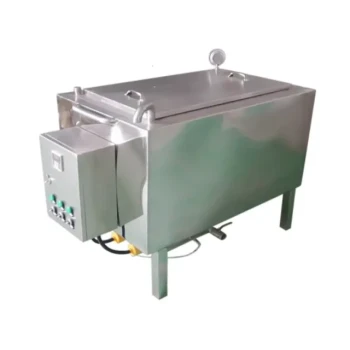
A controlled-temperature drying oven is required for processing raw beeswax combs to maintain a precise thermal environment, specifically between 70–75°C. This range is critical to ensure the wax completely liquefies for filtration without subjecting it to excessive heat. By strictly limiting the temperature, the oven prevents the thermal degradation of natural hydrocarbons, preserving the beeswax's chemical integrity while allowing for the removal of mechanical impurities.
Processing raw beeswax requires a delicate balance between fluidity and stability. A controlled oven ensures the material becomes liquid enough to release trapped debris, yet remains cool enough to prevent the volatilization of its essential chemical compounds.
The Role of Precision Heating
Achieving Complete Liquefaction
Raw beeswax combs are often filled with physical contaminants and mechanical impurities. To separate the wax from this debris, the material must be fully melted into a liquid state.
A controlled drying oven provides the stable heat necessary to transition the wax from solid to liquid. Maintaining the temperature between 70–75°C ensures the viscosity is low enough for impurities to settle or be filtered out effectively.
Protecting Chemical Composition
Beeswax is a complex mixture of organic compounds, including hydrocarbons that determine its quality and characteristics. These compounds are sensitive to thermal stress.
If the temperature exceeds the safe processing range, these hydrocarbons can volatilize or degrade. A precision oven eliminates the temperature spikes common in other heating methods, ensuring the natural chemical makeup of the wax remains unaltered.
Understanding the Trade-offs
The Risk of Thermal Degradation
While it might be tempting to increase temperatures to speed up the melting process, doing so compromises the product. Excessive heat causes the breakdown of the wax's molecular structure.
Once thermal degradation occurs, the wax loses its natural properties and value. The controlled oven acts as a safeguard, capping the temperature to prevent this irreversible damage.
Consistency vs. Speed
Using a controlled oven is often slower than direct high-heat methods. However, this slower, regulated approach is necessary for uniformity.
Rapid, uncontrolled heating creates "hot spots" that burn specific portions of the batch while leaving others solid. The oven ensures the entire mass reaches the target temperature simultaneously, resulting in a consistent, high-quality output.
Making the Right Choice for Your Goal
When configuring your processing equipment for raw beeswax, consider your primary objectives:
- If your primary focus is chemical purity: Maintain the oven strictly between 70–75°C to liquefy the wax without evaporating volatile hydrocarbons.
- If your primary focus is impurity removal: Ensure the wax is held at the target temperature long enough to fully liquefy, allowing mechanical debris to separate completely from the wax matrix.
Precision in temperature control is the single most important factor in transforming raw comb into high-grade commercial beeswax.
Summary Table:
| Feature | Temperature Range | Purpose in Processing | Risk of Non-Compliance |
|---|---|---|---|
| Optimal Melting | 70–75°C | Ensures complete liquefaction for filtration | Incomplete melting or wax damage |
| Chemical Integrity | < 75°C | Preserves natural hydrocarbons and aroma | Volatilization and thermal degradation |
| Heating Method | Uniform/Regulated | Eliminates hot spots for batch consistency | Localized burning and loss of value |
| Impurity Removal | Sustained Heat | Allows mechanical debris to settle/separate | Trapped contaminants in final product |
Elevate Your Wax Processing with HONESTBEE
Maximize the value of your apiary's output by utilizing professional-grade processing equipment. At HONESTBEE, we specialize in supporting commercial apiaries and distributors with high-performance tools and machinery designed for precision.
Whether you need specialized hive-making machinery, honey-filling systems, or high-quality beeswax processing equipment, our comprehensive wholesale catalog has you covered. Partner with us to ensure your beeswax maintains its chemical integrity and market premium.
Contact us today to explore our industrial solutions and scale your production!
References
- Ewa Waś, H. Rybak-Chmielewska. Hydrocarbon Composition of Beeswax (Apis Mellifera) Collected from Light and Dark Coloured Combs. DOI: 10.2478/jas-2014-0026
This article is also based on technical information from HonestBee Knowledge Base .
Related Products
- Electric Commercial Beeswax Melter for Factory Use
- Solar Beeswax Melter Easy Solar Wax Melter for Beeswax
- Steam Beeswax Melter Wax Warmer for Wax Processing
- Electric Beeswax Flat Sheet Machine with Operating Tray for Wax Processing
- Manual Beeswax Flat Sheet Machine for Beeswax Processing
People Also Ask
- Why might a commercial beekeeper prefer an electric beeswax melter? Maximize Profit with Speed & Scale
- What safety precautions should be taken when melting beeswax? A Guide to Flammable Wax Handling
- What types of beeswax melters are available for different scales of beekeeping? Solar vs. Electric Melters Compared
- What are the three popular methods for melting beeswax? Safely Process Your Wax with Ease
- How do you melt beeswax without making a mess? Master Safe & Clean Techniques