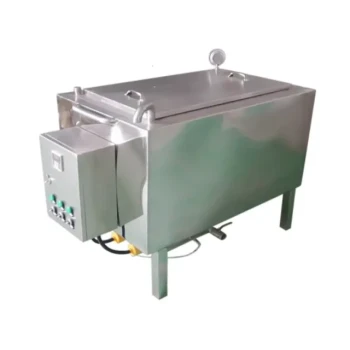
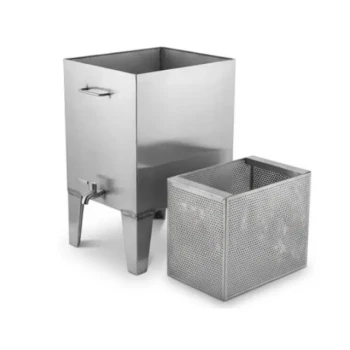
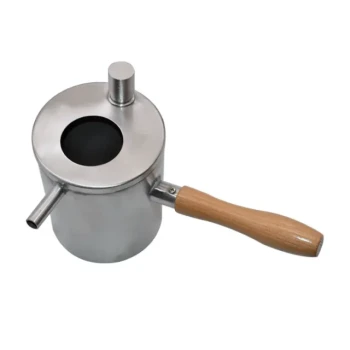
Precision is the cornerstone of successful queen rearing. A digital temperature-controlled wax melter is necessary to maintain beeswax at exact temperatures—specifically between 85°C and 105°C—to achieve the ideal fluidity required for molding. By rigorously preventing the wax from exceeding 140°C, this equipment ensures the material retains its physical integrity, resulting in cell cups with the uniform thickness and smooth surfaces required for high acceptance rates by worker bees.
By preventing thermal degradation and ensuring consistent viscosity, digital temperature control transforms variable raw beeswax into uniform, biologically acceptable cell cups that maximize queen rearing success.
The Physics of Wax Management
Achieving Ideal Fluidity
To mold high-quality cups, beeswax must be heated to a specific viscosity that allows it to flow evenly without running too thin.
Traditional molding methods typically require a steady temperature of 85°C.
Specialized molding techniques may require higher temperatures, up to 105°C, to achieve the necessary flow rate for complex shapes.
Preventing Thermal Degradation
Beeswax is an organic material that is highly sensitive to overheating.
If the temperature exceeds 140°C, the wax begins to degrade, permanently altering its chemical and physical properties.
A digital melter eliminates this risk by automatically cutting off heat before the wax reaches this critical threshold, preserving the natural quality of the material.
Structural Integrity and Biological Success
Ensuring Uniform Wall Thickness
The primary goal of controlling fluidity is to ensure the wax coats the mold evenly.
When the temperature fluctuates, the wax viscosity changes, leading to cups with uneven, lumpy, or fragile walls.
Precise digital regulation ensures that every dip into the wax results in a cup with consistent wall thickness.
Surface Smoothness and Acceptance
Worker bees are highly selective when accepting artificial cups for rearing new queens.
Rough surfaces or chemical changes caused by burnt wax can lead to rejection.
A digitally controlled process produces cups with smooth surfaces, which directly improves the acceptance rate of the artificial cells by the colony.
Understanding the Limits of Temperature Control
Temperature vs. Dimensional Accuracy
While a digital melter ensures the material is perfect, it does not automatically guarantee the dimensions of the final product are correct.
Temperature prepares the wax, but mechanical consistency determines the physical shape.
The Necessity of Verification
Even with perfect wax consistency, variations in dipping depth or timing can alter critical dimensions.
Queen cell cup height is a vital metric that significantly influences queen rearing success, including biological markers like body weight and the number of ovarioles.
To ensure true high quality, the use of a digital melter should be paired with quantitative analysis using digital calipers to verify the cup height meets professional standards.
Optimizing Your Production Process
To manufacture queen cell cups that meet high professional standards, consider your specific production goals:
- If your primary focus is traditional molding: Set your digital controller to exactly 85°C to maintain standard fluidity without overheating.
- If your primary focus is specialized or thin-wall molding: Increase the temperature to 105°C to achieve lower viscosity for finer detailing.
- If your primary focus is biological quality assurance: Pair your temperature controls with post-production inspections using digital calipers to verify cup height and consistency.
Mastering temperature regulation is the fundamental step in producing artificial cells that the colony accepts as their own.
Summary Table:
| Feature | Temperature Range | Impact on Quality |
|---|---|---|
| Traditional Molding | 85°C | Standard fluidity for uniform wall thickness |
| Specialized Molding | 105°C | Low viscosity for complex shapes and fine details |
| Thermal Threshold | < 140°C | Prevents chemical degradation and burnt wax rejection |
| Digital Control | Precise +/- | Ensures smooth surfaces and consistent biological acceptance |
Elevate Your Queen Rearing Productivity with HONESTBEE
At HONESTBEE, we understand that precision in beekeeping equipment is the difference between success and failure for commercial apiaries and distributors. We provide a comprehensive wholesale range of professional-grade tools, including specialized wax processing machinery and hive-making equipment designed to meet the highest industry standards.
Whether you are scaling your commercial queen rearing operations or seeking a reliable partner for global distribution, our portfolio of beekeeping hardware and essential consumables offers the reliability your business demands. Contact us today to discuss how our high-precision machinery and wholesale solutions can optimize your production and drive your business forward.
References
- Slobodan Dolašević, Ružica Ždero Pavlović. Comparison of time consumption between traditional and innovative methods of producing Queen cell cups. DOI: 10.5937/animtrend25200d
This article is also based on technical information from HonestBee Knowledge Base .
Related Products
- Electric Commercial Beeswax Melter for Factory Use
- Professional Electric Honey Uncapping Knife with Heated Digital Temperature Control for Beekeeping
- Solar Beeswax Melter Easy Solar Wax Melter for Beeswax
- Steam Beeswax Melter Wax Warmer for Wax Processing
- Professional Stainless Steel Wax Melter for Beekeeping and Crafts
People Also Ask
- Why might a commercial beekeeper prefer an electric beeswax melter? Maximize Profit with Speed & Scale
- What safety precautions should be taken when melting beeswax? A Guide to Flammable Wax Handling
- What types of beeswax melters are available for different scales of beekeeping? Solar vs. Electric Melters Compared
- What are the three popular methods for melting beeswax? Safely Process Your Wax with Ease
- How do you melt beeswax without making a mess? Master Safe & Clean Techniques