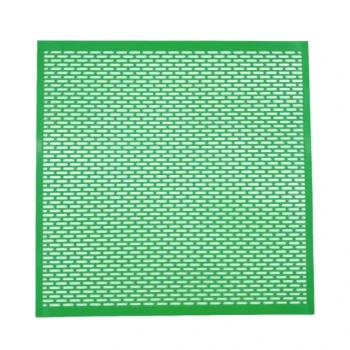
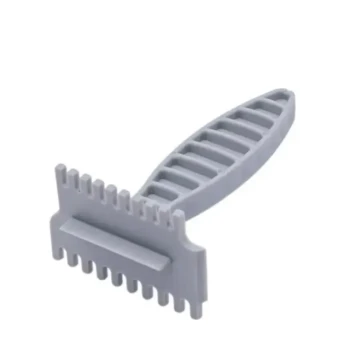
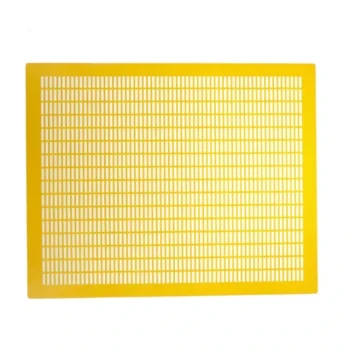
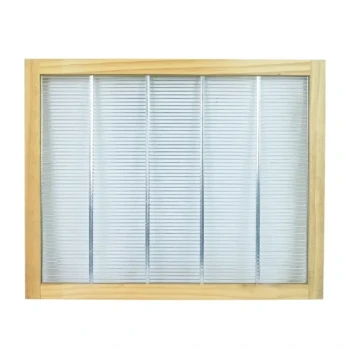
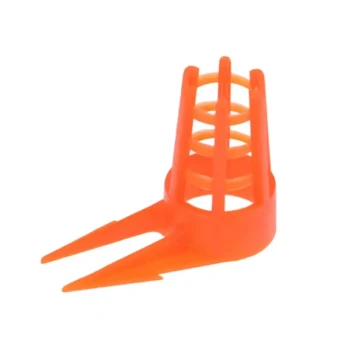
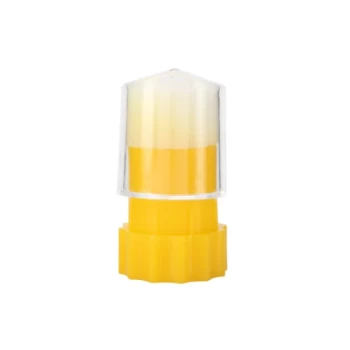
A Queen Excluder is the cornerstone of precision colony management. It acts as a selective filter, leveraging the distinct size difference between the queen and worker bees to restrict the queen's movement without halting the colony's workflow. By confining the queen to a specific egg-laying zone, apiarists can maintain absolute control over where larvae are reared and ensure the integrity of the hive's internal structure.
The Queen Excluder transforms a chaotic biological environment into a controlled setting. By strictly isolating the queen, it ensures the uniformity of larval age and protects sensitive grafting areas from interference.
The Principles of Precision Management
To understand the necessity of the Queen Excluder, one must first understand the mechanics of hive control. It is not simply about stopping the queen; it is about organizing the colony's labor and development.
Leveraging Physical Dimorphism
The device functions on a simple but effective biological principle: size disparity. Queen bees are physically larger than the worker bees that support the colony.
The excluder consists of a grid with spacing precisely calibrated to allow smaller workers to pass through freely. However, the spacing is too narrow for the queen's larger body, effectively containing her in a designated area.
Zoning the Hive
This physical barrier allows the beekeeper to define specific zones within the hive structure. It separates the "brood nest" (where the queen lays eggs) from the "honey supers" or rearing areas.
Without this separation, the queen would roam freely, laying eggs indiscriminately throughout the hive.
The Critical Role in Queen Rearing
For breeders and researchers, the excluder is not optional; it is the tool that standardizes biological variables.
Achieving Age Uniformity
In breeding and research, the age of the larvae is a critical variable. Successful grafting and behavioral research require larvae that are at the exact same developmental stage.
By restricting the queen to a specific area for a set time, the breeder creates a "cohort" of eggs laid within a known window. This eliminates variables caused by age differences, ensuring experimental or grafting populations are uniform.
Protecting the Nursery
When rearing new queens, specific larvae are moved to honey supers to be nurtured by nurse bees. These larvae are intended for grafting—the process of transferring larvae to queen cells.
The excluder prevents the reigning queen from entering these supers. If she were to access this area, she could interfere with the developing larvae or lay new eggs that would confuse the rearing process.
Common Pitfalls to Avoid
While the Queen Excluder is a powerful tool, it requires correct implementation to be effective.
The Risk of Equipment Failure
The system relies entirely on the precise physical dimensions of the barrier. A damaged excluder with bent wires or warped plastic can create gaps large enough for a queen to slip through.
If the physical integrity of the device is compromised, the isolation fails. This results in the queen entering restricted areas, ruining the uniformity of the brood and disrupting the rearing timeline.
Misunderstanding the Barrier
It is important to remember that the excluder restricts the queen, not the workers. Workers must still be able to traverse the barrier effortlessly to feed larvae and store resources.
If the excluder becomes clogged with burr comb or propolis, it can impede worker movement. This turns a management tool into a colony bottleneck, potentially stressing the hive.
Making the Right Choice for Your Goal
The use of a Queen Excluder should be dictated by the specific outcomes you need to achieve in your apiary.
- If your primary focus is Queen Rearing: Use the excluder to isolate the queen from honey supers, ensuring your grafting material remains undisturbed and pure.
- If your primary focus is Scientific Research: Utilize the excluder to tightly control egg-laying windows, guaranteeing a population of uniform age for your data sets.
Precision in beekeeping is impossible without controlling the movement of the queen.
Summary Table:
| Feature | Function in Breeding | Primary Benefit |
|---|---|---|
| Physical Barrier | Restricts larger queen based on size | Confines egg-laying to designated brood zones |
| Zoning Strategy | Separates brood nest from honey/rearing supers | Protects grafting areas from queen interference |
| Age Synchronization | Controls timing of egg-laying windows | Produces uniform larval cohorts for grafting/research |
| Worker Access | Allows free passage of smaller worker bees | Maintains colony workflow and larval nourishment |
Elevate Your Apiary’s Precision with HONESTBEE
At HONESTBEE, we understand that professional queen rearing and commercial honey production require more than just basic tools—they require precision-engineered solutions. As a dedicated partner to commercial apiaries and global distributors, we offer a comprehensive wholesale range, from high-durability Queen Excluders to advanced honey-filling machines and hive-making equipment.
Whether you are scaling your breeding operation or stocking essential consumables, our portfolio is designed to enhance your efficiency and yield. Contact us today to discuss your wholesale needs and discover how our specialized beekeeping hardware and industry expertise can grow your business.
References
- Peter Njukang Akongte, Yong‐Soo Choi. Honey Bee Colonies (Apis mellifera L.) Perform Orientation Defensiveness That Varies among Bred Lines. DOI: 10.3390/insects14060546
This article is also based on technical information from HonestBee Knowledge Base .
Related Products
- High Performance Plastic Queen Excluder for Beekeeping and Apiary Management
- Lightweight Durable Plastic Queen Excluder Scraper for Beekeeping
- Professional Plastic Queen Excluder for Modern Beekeeping
- Metal Queen Bee Excluder for Beekeeping
- Premium Wood Framed Metal Wire Queen Bee Excluder
People Also Ask
- What are the characteristics of a plastic queen excluder? Key Benefits for Cost-Effective Beekeeping
- What are the operational and cost advantages of using plastic queen excluders over metal or wire excluders in commercial hive management? Discover how they reduce labor, prevent wing damage, and lower total costs.
- What types of queen excluders are available for beekeepers? Choose the Right Tool for Your Hive
- Why are standardized hive frames and queen excluders essential for maintaining honey purity and quality? Scale Your Purity
- Do plastic queen excluders work? A Cost-Effective Solution for Modern Apiaries