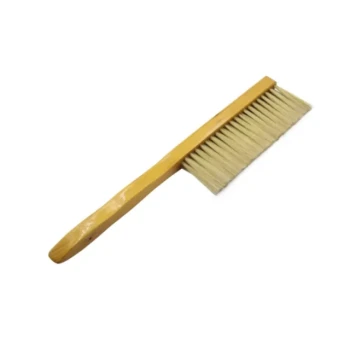
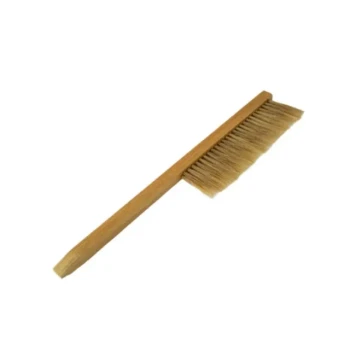
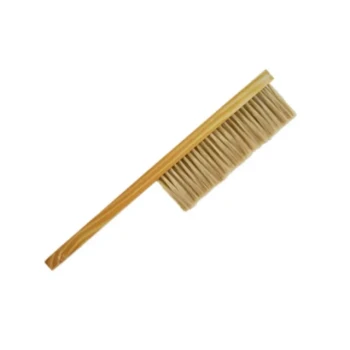
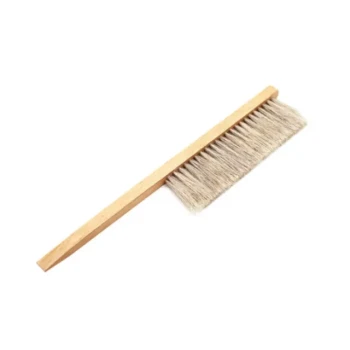
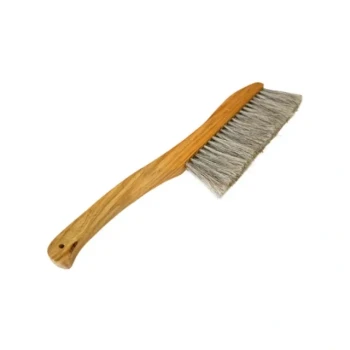
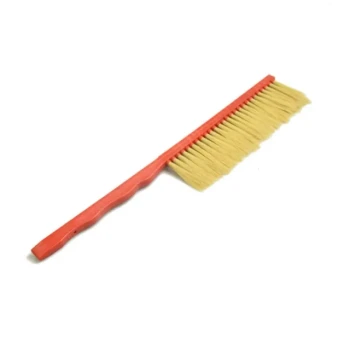
A specialized bee brush is essential for safely removing honeybees from honeycomb frames during inspections or harvest operations. Unlike standard brushes, this tool features specifically designed soft bristles that dislodge bees without causing physical injury or inciting aggressive defensive behavior.
Core Takeaway A bee brush acts as a crucial buffer between the beekeeper's goals and the colony's stability. Its primary function is to clear frames for extraction or inspection while preventing insect mortality and keeping the honey free of organic impurities.
The Mechanics of Gentle Removal
Designed for Softness
Standard brushes are often too abrasive for the delicate bodies of insects. A specialized bee brush utilizes soft bristles engineered to interact gently with the bee's exoskeleton.
This physical property ensures that bees are swept away rather than crushed. Preserving the physical integrity of the bee is critical for maintaining the overall population of the hive.
Maintaining Colony Stability
Rough handling triggers alarm pheromones within the hive, which can rapidly turn a docile colony into an aggressive one.
By using a tool designed to minimize impact, you ensure the bees are cleared without being agitated. This keeps the colony stable and calm, significantly reducing the risk of stinging incidents during management operations.
Impact on Harvest Quality
Ensuring Purity
Before honey extraction begins, the honeycomb frames must be completely clear of insects.
The bee brush allows for the precise separation of bees from the honey. This ensures that the raw materials entering the processing stage are free from bee impurities, protecting the quality of the final harvest.
Preventing Contamination
Injured bees can release bodily fluids or venom that may contaminate the frame surface.
By removing bees gently, the brush prevents these contaminants from coming into contact with the honey. This maintains the sanitary standards required for food production.
Common Pitfalls to Avoid
Misinterpreting "Gentle"
While the tool is designed for gentleness, it relies on the user's technique. Brushing too vigorously or applying too much pressure can still roll and injure the bees, negating the brush's design benefits.
Over-reliance on the Tool
The brush is intended for clearing frames, not for managing massive clusters of bees. Overusing the brush on dense populations can eventually provoke the colony regardless of bristle softness; it is most effective when used for final clearing operations.
Making the Right Choice for Your Goal
To maximize the effectiveness of a bee brush, tailor your approach to your specific objective.
- If your primary focus is Colony Health: Prioritize slow, rhythmic sweeping motions to prevent injury and avoid triggering the release of alarm pheromones.
- If your primary focus is Honey Quality: Ensure every frame is meticulously cleared before leaving the apiary to prevent biological matter from entering the extraction equipment.
By combining the right tool with the correct technique, you ensure a safe harvest that respects the biological needs of the colony.
Summary Table:
| Feature | Specialized Bee Brush | Standard Brush/Improvised Tool |
|---|---|---|
| Bristle Type | Ultra-soft, flexible bristles | Often too stiff or abrasive |
| Bee Safety | Prevents crushing & exoskeleton damage | High risk of injury and mortality |
| Hive Temperament | Minimizes alarm pheromone release | Likely to provoke defensive behavior |
| Harvest Quality | Ensures zero biological impurities | Risk of contamination from injured bees |
| Primary Use | Final frame clearing for inspection/harvest | General cleaning; unsuitable for live insects |
Elevate Your Apiary Operations with HONESTBEE
At HONESTBEE, we understand that professional beekeeping requires precision tools that respect both your harvest and your hive. As a premier provider for commercial apiaries and distributors, we offer a comprehensive wholesale range of high-quality beekeeping equipment—from specialized bee brushes and protective gear to industrial honey-filling and hive-making machinery.
Whether you are scaling your honey production or stocking your distribution warehouse, our durable consumables and hardware are designed to maximize efficiency while preserving colony health. Contact us today to discuss our wholesale offerings and discover how our expertise can streamline your honey production workflow.
References
- Asfaw Albore, Daniel Abraham. Adoption and intensity of adoption of beekeeping technology by farmers: The case of Sheko Woreda of Bench-Maji Zone, South West Ethiopia. DOI: 10.15421/2019_716
This article is also based on technical information from HonestBee Knowledge Base .
Related Products
- Wooden Bee Brush with Triple Row Artificial Fiber for Beekeeping
- Classic Wooden Bee Brush with Double-Row Boar Bristles
- Double Row Artificial Fiber Bee Brush for Beekeeping
- Wooden Bee Brush with Double-Row Horsehair Bristles
- Premium Triple-Row Horsehair Bee Brush
People Also Ask
- What is the specific function of a bee brush? Ensure Pure Harvests and Colony Welfare During Honey Extraction
- What are the key characteristics of the bristles on a bee brush? Master Gentle and Efficient Bee Removal
- What is the purpose of using a bee brush during the inspection of hive components? Safe & Precise Hive Management
- What problem does a bee brush solve? Protect Your Colony with Gentle Precision Tools
- Why is a bee brush necessary when extracting honeybee hive frames that contain larvae? Protect Your Brood and Colony