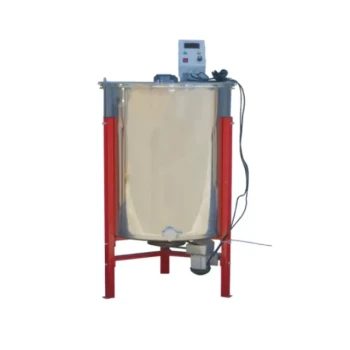
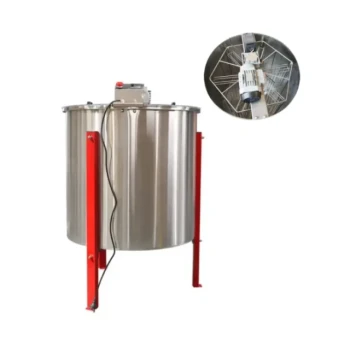
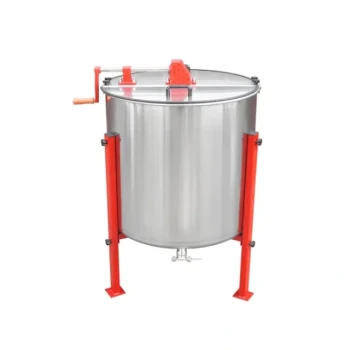
A specialized honey centrifuge is the definitive tool for balancing high-yield extraction with hive sustainability. It functions by spinning uncapped honeycomb frames at high speeds, generating centrifugal force that expels the honey outward. This mechanical process is strictly necessary because it is the only method that removes the honey effectively without crushing or destroying the fragile beeswax structure.
The centrifuge solves the critical conflict between harvest volume and colony health. By separating honey physically rather than destructively, it drastically improves clarity and recovery rates while preserving the drawn comb for the bees to reuse, saving the colony significant energy.
The Mechanics of Preservation
Protecting the Beeswax Structure
The primary advantage of a centrifuge over manual pressing is the preservation of the honeycomb. Manual methods often involve crushing the comb to squeeze out fluids, which destroys the structure. The centrifuge uses rotational physics to drain the cells while keeping the fragile beeswax lattice intact.
Energy Efficiency for the Colony
Preserving the comb is not just a matter of convenience; it is a biological asset. When the physical structure of the honeycomb is saved, bees can reuse the "drawn comb" in future seasons. This spares the colony the massive resource expenditure required to secrete new wax, allowing them to focus energy on nectar collection and brood rearing.
Maximizing Yield and Quality
Superior Recovery Rates
Reliance on gravity draining alone leaves a significant amount of viscous liquid trapped in the cells. The high-speed rotation of a centrifuge overcomes surface tension, forcing out residual honey that other methods miss. This results in a significantly higher honey recovery rate, maximizing the return on every harvested frame.
Enhancing Clarity and Texture
Extraction via crushing often mixes excessive wax particles and debris into the final product. Centrifugal separation ensures the honey is expelled cleanly, resulting in a product free from excessive wax residue. This mechanical purity improves both the visual clarity and the sensory quality of the bottled honey.
Preserving Nutritional Integrity
The centrifuge relies on physical force rather than thermal processing to move the honey. This "cold" extraction method is critical for maintaining heat-sensitive components. It protects vital proteins and natural enzymes, ensuring the honey retains its original physicochemical properties and nutritional value.
Understanding the Trade-offs
The Necessity of Preparation
While efficient, a centrifuge is not a "drop-in" solution; it requires precise preparation. Frames must be manually or mechanically uncapped (the wax seal removed) before spinning, or the honey cannot exit. Failing to uncap fully will result in uneven spinning and poor extraction.
Operational Precision
The equipment requires careful management of speed and balance. If a centrifuge is spun too fast or if the frames are not balanced by weight, the force can damage the very comb you are trying to save. Operators must optimize rotation speed and direction to ensure thorough extraction without structural failure.
Making the Right Choice for Your Goal
To select the right extraction strategy, you must identify your primary operational constraint.
- If your primary focus is Commercial Scalability: Prioritize industrial electric centrifuges to maximize hygiene standards and production efficiency.
- If your primary focus is Colony Health: Use a centrifuge to ensure drawn combs are returned to the hive intact, reducing the biological stress on your bees.
- If your primary focus is Product Purity: Rely on centrifugal extraction to separate honey without heat, preserving natural enzymes and minimizing wax contamination.
Ultimately, the honey centrifuge is essential not just for how much honey it takes out, but for the structural integrity it leaves behind.
Summary Table:
| Feature | Centrifugal Extraction | Manual/Press Extraction |
|---|---|---|
| Comb Preservation | Intact (Reusable) | Destroyed (Crushed) |
| Honey Recovery Rate | High (Maximum extraction) | Moderate (Residual honey left) |
| Product Clarity | High (Minimal wax debris) | Low (High wax contamination) |
| Nutritional Value | Preserved (Cold process) | Variable (Often requires heat) |
| Labor for Bees | Low (Reuse existing comb) | High (Must rebuild wax) |
Elevate Your Honey Production with HONESTBEE
Maximize your harvest efficiency and ensure colony sustainability with professional-grade equipment from HONESTBEE. As a leading supplier for commercial apiaries and distributors, we provide a complete range of beekeeping tools, from industrial honey centrifuges and hive-making machinery to honey-filling systems and premium consumables.
Why partner with HONESTBEE?
- High-Yield Technology: Our specialized centrifuges ensure maximum recovery while keeping your drawn combs intact.
- Comprehensive Wholesale Range: Access everything from heavy-duty hardware to honey-themed cultural merchandise.
- Expert Support: We help you scale your operations with reliable, industrial-strength solutions.
Ready to upgrade your extraction process? Contact us today to discuss your wholesale needs and see how our machinery can transform your business!
References
- Janaína Tayna Silva, Hellén Felicidade Durães. Use of beekeeping as a source of income for small producers. DOI: 10.30612/realizacao.v7i13.11258
This article is also based on technical information from HonestBee Knowledge Base .
Related Products
- electric honey extractor honey centrifuge 3 frame honey extractor stainless steel honey frame extractor
- Manual Hand Crank 4 Frame Honey Extractor Centrifuge for Beekeeping
- Professional 4 Frame Self Reversing Electric Honey Extractor for Beekeeping
- Honey Concentrating and Filtering Dehumidifier Machine 2T Capacity for Honey
- Honey Concentrating Vacuum Heating Thickening Machine Dehumidifier for Honey
People Also Ask
- What are the characteristics of electric honey extractors? Boost Your Apiary Efficiency with Automated Technology
- What are the disadvantages of using an electric honey extractor? Weighing Cost, Power, and Comb Safety
- What are the advantages of an electric honey extractor? Boost Efficiency and Scale Your Honey Production
- What are the technical advantages of electric honey extractors? Maximize Yield and Protect Your Bee Colony
- How does an electric honey extractor affect the quality of honey? Preserve Flavor & Purity with Precision Extraction