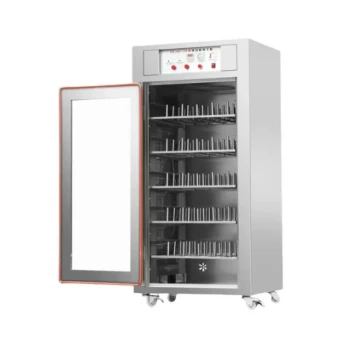
A specialized Pollen Drying Machine is the critical link between harvesting raw material and producing a viable commercial product. Its primary function is to utilize controlled airflow and precise heat regulation to aggressively reduce moisture content, thereby inhibiting the microbial growth that rapidly destroys fresh pollen. By stabilizing the environment, these machines ensure the preservation of essential proteins, vitamins, and antioxidants that would otherwise be lost to decay or uncontrolled overheating.
Core Insight: The value of a specialized drying machine lies not just in removing water, but in doing so without "cooking" the product. It maintains a delicate balance: lowering moisture enough to prevent mold (target 6-12%) while keeping temperatures low enough (42-45°C) to preserve bio-active nutrients.
Mechanisms of Preservation
Inhibiting Microbial Growth
Fresh bee pollen is naturally high in moisture, making it an ideal breeding ground for bacteria and mold. If left untreated, the pollen will spoil rapidly.
A specialized drying machine combats this by providing controlled airflow and heat to lower the moisture content. By removing the water available for biological reactions, the machine effectively halts mold formation and stabilizes the product for long-term storage.
Achieving Specific Moisture Targets
To guarantee shelf life, the drying process must be precise, not random. The goal is to reach a residual moisture range of 6% to 12%.
This specific range is critical; it is dry enough to prevent microbial activity but retains enough internal structure to prevent the pollen from turning to dust. Specialized equipment includes sensors and regulators to hit this target consistently.
Protecting Nutritional Integrity
Precision Temperature Control
The most significant advantage of specialized equipment over generic ovens is the ability to maintain a gentle thermal environment, typically between 42°C and 45°C.
Bee pollen is heat-sensitive. Standard heating methods often exceed these temperatures, which can inadvertently degrade the product. Specialized machines ensure the temperature never spikes, protecting the commercial value of the pollen.
Preventing Nutrient Decomposition
Excessive heat does more than just dry the pollen; it denatures proteins and destroys enzymes.
High temperatures significantly reduce the levels of sugars, free sulfhydryl groups (active amino acids), and antioxidants. By strictly limiting heat exposure, specialized drying machines preserve the biological activity required for high-quality nutritional supplements.
Advanced Drying Technologies
Microwave-Assisted Dehydration
For larger-scale operations, some specialized machines utilize microwave-assisted technology. This method uses electromagnetic waves to vibrate water molecules inside the pollen.
This generates heat from the internal structure outwards, leading to rapid dehydration. This significantly shortens the drying cycle compared to conventional convection drying, improving overall production efficiency.
Simultaneous Sterilization
Beyond simple drying, microwave technologies can achieve sterilization and moisture balance simultaneously.
Because the process is fast and penetrates the pollen grain deeply, it effectively eliminates pathogens without requiring the prolonged heat exposure that often degrades nutrient quality.
Understanding the Trade-offs
Temperature vs. Processing Time
There is an inherent conflict between speed and quality. Higher temperatures dry pollen faster but risk destroying the very nutrients (antioxidants and proteins) that make the product valuable.
While a laboratory oven set to 60°C can dry samples quickly for grinding and testing, this higher temperature renders the pollen brittle and may degrade its nutritional profile. For commercial preservation, you must accept a slower drying time at lower temperatures (42-45°C) to maintain quality.
Consistency vs. Complexity
Specialized machines offer superior consistency, but they introduce operational complexity. Achieving the perfect moisture balance (6-12%) requires careful calibration.
If the pollen is under-dried (above 12%), mold risks return. If over-dried (below 6%), the pollen may crumble during packaging or lose its palatable texture. The operator must strictly monitor these parameters to avoid product loss.
Making the Right Choice for Your Goal
To maximize the value of your bee pollen processing, align your equipment settings with your specific objectives:
- If your primary focus is Maximum Nutrient Retention: Operate specialized convection equipment strictly between 42°C and 45°C to protect heat-sensitive enzymes and antioxidants.
- If your primary focus is Industrial Efficiency: Consider microwave-assisted drying technology to rapidly dehydrate and sterilize large volumes of pollen from the inside out.
- If your primary focus is Sample Analysis: Use a laboratory oven at 60°C to quickly render the pollen brittle for effective physical grinding and homogenization.
Ultimately, the specialized drying machine is an investment in product integrity, transforming a perishable raw material into a stable, nutrient-dense superfood.
Summary Table:
| Key Feature | Target Parameter | Benefit for Bee Pollen |
|---|---|---|
| Temperature Control | 42°C – 45°C | Prevents nutrient loss and protein denaturation |
| Moisture Level | 6% – 12% | Inhibits mold growth while preventing brittleness |
| Technology Type | Convection / Microwave | Ensures uniform drying and optional sterilization |
Elevate Your Beekeeping Business with HONESTBEE
Scaling a commercial apiary requires industrial-grade precision. HONESTBEE specializes in supporting commercial apiaries and distributors with a comprehensive wholesale offering. We supply the full spectrum of beekeeping tools, machinery, and essential industry consumables.
From specialized hardware like pollen dryers, hive-making machines, and honey-filling systems to unique honey-themed cultural merchandise, we provide the tools you need to maximize efficiency and product value.
Ready to upgrade your production? Contact us today to explore our full equipment catalog!
References
- Sahin Aydin, Serhat Solmaz. An Ontology for Apiculture Practices (Onto4API): Towards Semantic Interoperability and Knowledge Sharing in the Apiculture Community. DOI: 10.18615/anadolu.1749470
This article is also based on technical information from HonestBee Knowledge Base .
Related Products
- High Quality Honey Dehumidifier Dryer Thickening Machine for Beekeeping
- Heavy-Duty Ergonomic Stainless Steel Pollen Shovel
- Heavy-Duty Ergonomic Grip Galvanized Pollen Shovel
- 0.5T Capacity Honey Dehumidifier Dryer with Vacuum Heating and Thickening Filtering Machine
- Economy Small Scale Honey Dryer Dehumidifier Thickening Machine
People Also Ask
- Can you dehumidify honey? A Beekeeper's Guide to Preventing Fermentation
- How to dry up honey? The Safe Guide to Stabilizing Honey and Preventing Fermentation
- How can the moisture content of honey be reduced? A Guide to Safe, Effective Drying Methods
- How to remove humidity from honey? Protect Your Harvest from Fermentation
- What is the process for using a dehumidifier to lower honey's moisture content? Expert Drying Techniques