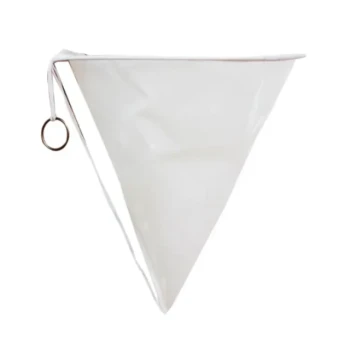
The primary function of an 80-micron precision filter is to act as a critical physical barrier against organic debris during honey processing. It specifically targets and intercepts wax residue, bee fragments, larvae debris, and hive particles to significantly reduce water-insoluble solids in the final product.
By removing these impurities, the 80-micron filter ensures the honey complies with strict international purity standards, such as those from the Codex Alimentarius Commission, without stripping the honey of its essential character.
The Mechanics of Physical Interception
Targeting Specific Contaminants
Raw honey naturally contains various byproducts from the hive environment.
The 80-micron filter is calibrated to capture specific organic matter, including wax residue, bee fragments, and larvae debris.
This specific micron rating is effective because it catches these macroscopic particles while allowing the viscous liquid honey to pass through efficiently.
Reducing Water-Insoluble Solids
The presence of "water-insoluble solids" is a key metric in defining honey quality.
High levels of these solids indicate poor processing or contamination.
Using an 80-micron filter directly reduces this content, ensuring the liquid is chemically and physically cleaner.
Regulatory Compliance and Market Value
Meeting International Standards
For professional producers, compliance is not optional.
The 80-micron filtration process is central to meeting the rigorous requirements set by the Codex Alimentarius Commission and EU directives.
Adhering to these standards is often a prerequisite for entering international markets and avoiding regulatory penalties.
Enhancing Product Aesthetics
Beyond regulation, consumer perception drives market value.
Filtration significantly enhances the transparency of the honey.
A clear, debris-free product commands a higher price point and is more attractive to consumers who associate clarity with purity.
Understanding the Trade-offs
Filtration vs. Moisture Control
While an 80-micron filter excels at removing solids, it does not address chemical stability or water content.
Moisture content directly influences fermentation risks and product viscosity.
Therefore, physical filtration must often be paired with a precision moisture control system to regulate moisture levels in real-time, ensuring the honey is stable enough for long-term storage.
Identification vs. Processing
It is important to distinguish between processing filtration and testing filtration.
In laboratory settings, filter paper is used to capture impurities from diluted honey for microscopic analysis and quantitative classification.
While this helps identify foreign matter for quality control, the industrial 80-micron filter is the tool used for the actual bulk purification of the product.
Making the Right Choice for Your Goal
To optimize your honey processing line, align your filtration strategy with your specific market objectives.
- If your primary focus is International Export: Prioritize the 80-micron precision filter to strictly meet Codex Alimentarius and EU mandates regarding water-insoluble solids.
- If your primary focus is Shelf Stability: Ensure your filtration setup is integrated with a moisture control system to mitigate fermentation risks caused by excess water content.
Effective filtration is the bridge between raw hive output and a premium, compliant commercial product.
Summary Table:
| Feature | Specification/Benefit | Impact on Quality |
|---|---|---|
| Filter Rating | 80-Micron Precision | Captures wax, bee fragments, and larvae debris |
| Compliance | Codex Alimentarius / EU | Meets international purity and water-insoluble solid standards |
| Aesthetics | High Transparency | Increases market value through enhanced product clarity |
| Process Goal | Physical Interception | Reduces contaminants without stripping natural honey character |
| Synergy | Pairs with Moisture Control | Prevents fermentation while maintaining physical purity |
Elevate Your Honey Production with HONESTBEE Professional Solutions
At HONESTBEE, we specialize in empowering commercial apiaries and distributors with the high-performance tools needed to dominate the global market. Whether you are scaling up your processing line or seeking to meet rigorous international export standards, our comprehensive wholesale portfolio has you covered.
How we add value to your business:
- Advanced Machinery: From precision honey-filling machines to industrial-grade filtration systems and hive-making equipment.
- Essential Consumables: A full spectrum of beekeeping tools and hive components designed for durability.
- Market Appeal: Unique honey-themed cultural merchandise to diversify your retail offering.
Ready to optimize your efficiency and product purity? Contact our expert team today to discuss your wholesale needs and let HONESTBEE be your partner in beekeeping excellence.
References
- Genet Gebremedhin, Ewonetu Kebede Senbeta. Physiochemical characteristics of honey obtained from traditional and modern hive production systems in Tigray region, northern Ethiopia. DOI: 10.4314/mejs.v5i1.85335
This article is also based on technical information from HonestBee Knowledge Base .
Related Products
- Professional Stainless Steel Honey Filter with Support Handle
- Professional Cone-Shaped Honey Filter with Reinforced Steel Ring
- Professional Honey Filter with Tripod Support Stand
- Professional Stainless Steel Honey Filtering Machine with Water Bath Heating for Beekeeping
- Honey Concentrating and Filtering Dehumidifier Machine 2T Capacity for Honey
People Also Ask
- Why are stainless steel filters essential during the initial purification phase of honey processing? Ensure Purity
- What are the benefits of using a high-quality honey filter? Elevate Purity and Preserve Natural Flavor
- What is the primary purpose of honey filters? Achieve Professional Clarity & Pure Honey Quality
- What micron filter should I use for honey? Choose the Right Filter for Sales or Competitions
- Why do people filter honey? For Clarity, Stability, and Consumer Appeal