Climate-controlled storage equipment acts as the definitive safeguard for honey quality immediately following extraction. By precisely regulating temperature and humidity, this equipment prevents the fermentation, color degradation, and flavor loss that occur when honey is exposed to unstable environments. It serves as a necessary barrier against chemical changes, ensuring the product retains its original biological value before packaging.
Core Takeaway
The primary function of climate-controlled storage is to arrest the natural degradation processes of honey. By maintaining a stable environment, you inhibit the activity of osmophilic yeasts and slow the formation of hydroxymethylfurfural (HMF), thereby preserving the honey's active enzymes and nutritional profile for the long term.
Preserving Biological and Chemical Integrity
The most significant value of climate-controlled storage lies in its ability to freeze the biological "clock" of the honey, maintaining its status as a bioactive product.
Inhibiting Yeast Activity
Honey naturally contains osmophilic yeasts which can thrive if storage conditions are uncontrolled.
Climate control regulates humidity and temperature to inhibit the activity of these yeasts. This effectively prevents the honey from fermenting, a process that would otherwise spoil the batch and render it unsellable.
Slowing HMF Formation
Heat and time naturally lead to the formation of hydroxymethylfurfural (HMF), a compound used as an indicator of honey freshness and overheating.
Storage equipment that maintains a consistent, cool temperature significantly slows down HMF production. Keeping HMF levels low is essential for validating the freshness and high quality of the final product.
Protecting Active Enzymes
The market value of premium honey often relies on its nutritional components and active enzymes.
These components are heat-sensitive and easily denatured. Controlled storage ensures these delicate elements remain intact, preserving the honey's original nutritional and biological value.
Ensuring Commercial Viability
Beyond chemistry, climate control is an asset management strategy that ensures product consistency and prevents financial loss.
Preventing Sensory Degradation
Fluctuating environments cause honey to darken in color and lose its distinct floral notes.
A systematic, constant temperature environment eliminates these fluctuations. This preserves the honey’s visual appeal and flavor profile, ensuring it reaches the consumer exactly as it was extracted.
Minimizing Inventory Losses
Improper storage conditions are a leading cause of inventory loss in the post-harvest supply chain.
By utilizing moisture-proof and pest-resistant facilities, producers protect their assets from environmental damage. This reduces waste and maximizes the volume of saleable product.
Understanding the Trade-offs
While climate control is essential for quality, it requires a comprehensive approach to infrastructure.
The Necessity of Specialized Infrastructure
Climate control is not just about a single machine; it requires a facility designed to support it.
To effective prevent crystallization or fermentation caused by environmental shifts, the surrounding infrastructure must be moisture-proof and pest-resistant. Relying on equipment without a supporting facility seal can compromise the "controlled" aspect of the environment.
The Cost of Consistency
Achieving a "systematic constant temperature" requires investment in specialized facilities.
However, failing to invest in this stability leads to the negative effects of environmental fluctuations on chemical stability. The trade-off is an upfront infrastructure cost versus the long-term risk of product spoilage and inconsistent quality across the distribution chain.
Making the Right Choice for Your Goal
To maximize the value of your extracted honey, align your storage strategy with your specific quality targets.
- If your primary focus is Biological Value: Prioritize temperature stability to inhibit HMF formation and protect delicate enzymes from denaturing.
- If your primary focus is Commercial Distribution: Focus on humidity control and pest resistance to prevent fermentation and minimize inventory loss during long-term holding.
Climate control is not merely storage; it is an active preservation strategy that bridges the gap between extraction and the consumer.
Summary Table:
| Key Feature | Impact on Honey Quality | Commercial Benefit |
|---|---|---|
| Temperature Regulation | Inhibits HMF formation & protects enzymes | Validates freshness for premium pricing |
| Humidity Control | Prevents osmophilic yeast activity | Eliminates fermentation & product spoilage |
| Stable Environment | Stops color darkening & flavor loss | Ensures sensory consistency for consumers |
| Pest & Moisture Resistance | Prevents external contamination | Minimizes inventory loss & protects assets |
Maximize Your Honey Quality with HONESTBEE
As a leading supplier for commercial apiaries and distributors, HONESTBEE understands that your honey's value depends on its biological integrity. We provide a comprehensive range of professional beekeeping tools, machinery, and climate-stable equipment designed to safeguard your harvest. From specialized hive-making hardware to advanced honey-filling solutions, our wholesale offerings empower you to maintain premium standards across your entire distribution chain.
Ready to upgrade your storage and processing infrastructure?
References
- Svitlana Koval, Volodymyr Rossokha. Theoretical Approaches to Determining the Essence of Management of Control Systems and Quality of Production of Beekeeping Products. DOI: 10.12958/1817-3772-2022-1(67)-41-51
This article is also based on technical information from HonestBee Knowledge Base .
Related Products
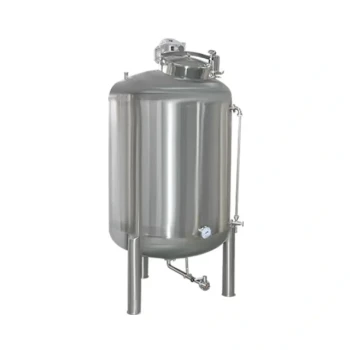
- Professional Honey Storage Tank with Agitation System
- Stainless Steel Honey Storage and Settling Tank with Double Strainer
- Stainless Steel Honey Storage Tank with Lid for Honey
- Classic Glass Honey Jar with Metal Lug Cap for Beehive Storage
- Classic Drum Shaped Glass Honey Jar with Airtight Lid
People Also Ask
- What economic role do honey storage tanks play? Boost Your Revenue Through Strategic Inventory Management
- What roles do industrial honey storage tanks and filtration meshes play in processing? Ensure Purity & Consistency
- What is the purpose of a honey storage tank? Streamline Your Honey Processing for Quality & Efficiency
- What are honey storage tanks used for? Essential Features for Quality Preservation and Profit
- How do large honey storage tanks and gravity fall filling systems improve honey packaging efficiency and safety?