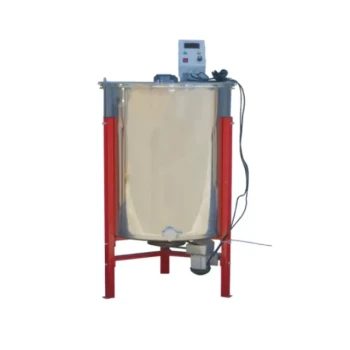
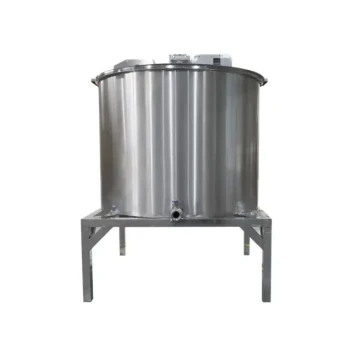
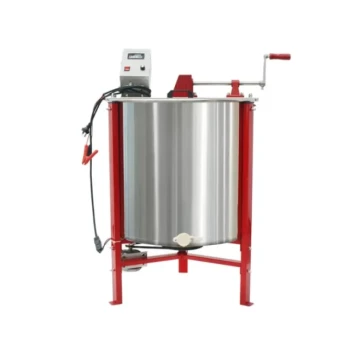
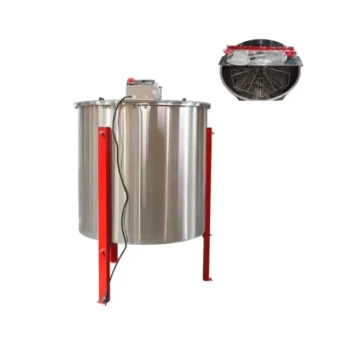
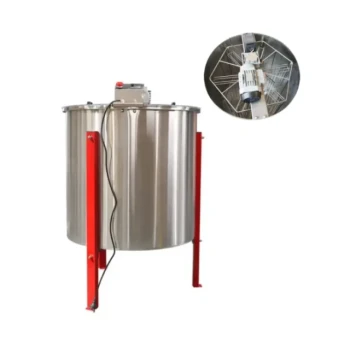
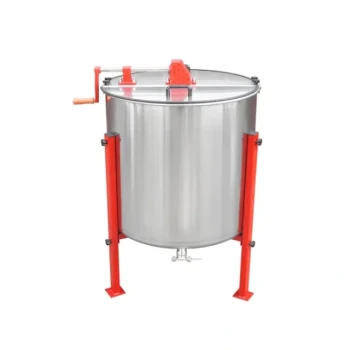
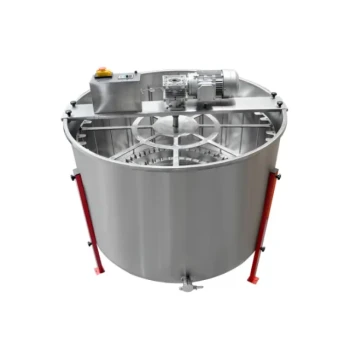
Efficient centrifugal extraction technology is the linchpin of accurate environmental risk assessment because it enables the collection of representative honey samples containing pesticide residues without destroying the colony's infrastructure. By using precisely controlled force, these machines provide the physical data necessary to verify mathematical models regarding honeybee health, specifically the correlation between oral exposure and population decline.
Core Takeaway To accurately evaluate the impact of pesticides, researchers need reliable data derived from the hive itself. Efficient centrifugal extraction provides a "pure" sample for laboratory analysis while ensuring the colony remains viable, allowing scientists to correlate actual residue levels with the Potentially Affected Fraction (PAF) of the bee population.
The Science of Sample Integrity
Obtaining Representative Data
To understand the honeybee life cycle in the context of pesticide exposure, you cannot rely on theoretical models alone. You need physical proof of residues within the food supply.
Isolating Residues for Analysis
Efficient extraction machines rapidly separate honey from the comb. Crucially, this process captures the honey containing residues, providing a comprehensive sample for laboratory testing.
Validating Mathematical Correlations
Risk assessments rely on complex mathematical formulas. The actual production data derived from these samples allows researchers to verify the link between oral exposure within the hive and the Potentially Affected Fraction (PAF) of the population.
Preserving the Hive Ecosystem
Protecting the Honeycomb Structure
A primary function of the centrifuge is to fling honey out of uncapped frames while keeping the wax "drawn comb" intact. This is not merely a production benefit; it is a biological necessity for long-term observation.
Reducing Energy Expenditure
When the comb is preserved, bees can reuse the structure rather than secreting new wax. This saves the colony significant energy and resources.
Eliminating Confounding Variables
If the extraction process destroys the comb, the colony suffers stress from rebuilding. This stress could impact the bee life cycle, making it difficult to distinguish whether population issues are caused by pesticides or habitat destruction.
Understanding the Trade-offs
The Balance of Speed and Force
The term "efficient" is critical here. If the centrifugal force is too weak, residue-laden honey may remain trapped, skewing the sample data.
Risk of Structural Damage
Conversely, if the rotation is too aggressive or uncontrolled, it can fracture the wax frames. This damages the colony's future viability and invalidates the study of the colony's ongoing life cycle.
Making the Right Choice for Your Goal
To select the right technology for your specific needs, consider your primary objective:
- If your primary focus is Environmental Risk Assessment: Prioritize machines with precise speed controls to ensure complete extraction of residue-laden honey for the most accurate PAF correlations.
- If your primary focus is Colony Sustainability: Ensure the equipment is calibrated to preserve drawn comb, allowing the colony to conserve energy and maintain a natural life cycle for long-term study.
Precision in extraction translates directly to precision in science.
Summary Table:
| Feature | Impact on Research & Assessment | Biological Benefit to Colony |
|---|---|---|
| Precise Centrifugal Force | Ensures 100% extraction of residue-laden honey for accurate PAF data. | Prevents honey fermentation and bacterial growth within the hive. |
| Structural Preservation | Maintains intact combs for long-term observation of life cycle variables. | Saves bee energy by removing the need to secrete new wax. |
| Rapid Processing | Provides real-time physical samples to validate mathematical exposure models. | Minimizes colony stress and avoids habitat destruction variables. |
| Speed Control | Prevents sample contamination and ensures data integrity. | Protects delicate wax frames from fracturing during extraction. |
Elevate Your Beekeeping Operations with HONESTBEE
At HONESTBEE, we understand that precision in extraction is the foundation of both scientific integrity and commercial success. Whether you are conducting critical environmental assessments or managing a large-scale commercial apiary, our professional-grade centrifugal honey extractors and honey-filling machinery provide the control you need to preserve your colony's health and maximize your yield.
As a leading global supplier for commercial apiaries and distributors, we offer a comprehensive wholesale portfolio—from specialized hive-making hardware and industrial extraction equipment to essential consumables and honey-themed cultural merchandise.
Ready to upgrade your infrastructure with industry-leading technology?
Contact us today to discuss your wholesale needs
References
- Eleonora Crenna, Peter Fantke. Characterizing honey bee exposure and effects from pesticides for chemical prioritization and life cycle assessment. DOI: 10.1016/j.envint.2020.105642
This article is also based on technical information from HonestBee Knowledge Base .
Related Products
- electric honey extractor honey centrifuge 3 frame honey extractor stainless steel honey frame extractor
- Manual Hand Crank 4 Frame Honey Extractor Centrifuge for Beekeeping
- HONESTBEE 72 Frame Industrial Electric Honey Extractor for Beekeeping
- Professional 4 Frame Self Reversing Electric Honey Extractor for Beekeeping
- 24 Frame Honey Extractor Commercial Radial Honey Frame Extraction Machine
People Also Ask
- What are the characteristics of electric honey extractors? Boost Your Apiary Efficiency with Automated Technology
- What are the disadvantages of using an electric honey extractor? Weighing Cost, Power, and Comb Safety
- What are the advantages of an electric honey extractor? Boost Efficiency and Scale Your Honey Production
- What are the technical advantages of electric honey extractors? Maximize Yield and Protect Your Bee Colony
- How does an electric honey extractor affect the quality of honey? Preserve Flavor & Purity with Precision Extraction