Food-grade copolyester is selected primarily for its exceptional optical clarity and rigorous chemical safety profile. It allows beekeepers to visually inspect the hive without intrusion while ensuring the honey remains free from harmful contaminants like Bisphenol A (BPA) and Bisphenol S (BPS).
This material choice bridges the gap between functionality and food safety, providing a clear window into the hive while guaranteeing the honey remains free from estrogenic or androgenic activity.
The Necessity of Optical Clarity
Non-Invasive Hive Inspection
The primary functional reason for using copolyester in observation ends and tubes is transparency. Beekeepers must assess the fullness of the honeycomb and the maturity of the honey to determine the right harvest time.
Minimizing Hive Disturbance
High-clarity materials allow this assessment to happen without opening the hive. Opening a hive disrupts the colony's temperature and stress levels; clear copolyester eliminates this need during inspection.
Prioritizing Chemical Safety
Eliminating Endocrine Disruptors
Honey is a raw food product, making chemical safety paramount. Food-grade copolyester is explicitly verified to be free from Bisphenol A (BPA) and Bisphenol S (BPS).
Advanced Safety Testing
Beyond standard BPA-free claims, this material undergoes rigorous testing to ensure no estrogenic or androgenic activity. This prevents the leaching of chemicals that could mimic hormones and contaminate the honey supply.
Structural Stability
Rigid Component Design
Unlike moving parts that require flexibility, observation ends and tubes are generally static, structural components. Copolyester provides excellent structural stability.
Maintaining Shape
This rigidity ensures the tubes and observation windows maintain their shape and seal over time. They must withstand the internal pressures of the hive without warping.
Understanding Material Distinctions
Why Different Materials are Used
It is important to understand why the entire frame is not made of a single plastic type. While copolyester is ideal for static, clear parts, it is not the standard choice for moving mechanisms.
The Trade-off: Clarity vs. Fatigue Resistance
Food-grade polypropylene is typically used for the moving parts of the frame due to its superior toughness and resistance to fatigue damage. However, polypropylene lacks the glass-like transparency of copolyester. Therefore, engineers use a hybrid approach: Copolyester for visibility and Polypropylene for movement.
Making the Right Choice for Your Goal
To select the correct material for automated hive components, you must align the material properties with the specific function of the part:
- If your primary focus is visual monitoring: Prioritize food-grade copolyester for its superior optical clarity and structural rigidity.
- If your primary focus is mechanical movement: Prioritize food-grade polypropylene for its ability to withstand frequent opening and closing without fatigue.
Ultimately, the selection of copolyester for observation ends ensures that the convenience of automation never comes at the cost of the honey's purity.
Summary Table:
| Feature | Food-Grade Copolyester | Food-Grade Polypropylene |
|---|---|---|
| Primary Function | Visual observation & honey flow tubes | Moving mechanisms & frame cells |
| Transparency | High (Glass-like clarity) | Low (Translucent/Opaque) |
| Chemical Safety | BPA/BPS-free, No EA/AA activity | Food-safe, chemical resistant |
| Physical Property | Rigid and structurally stable | Tough and fatigue-resistant |
| Best Used For | Non-invasive hive inspection | Mechanical movement & durability |
Elevate Your Beekeeping Operations with HONESTBEE
At HONESTBEE, we understand that high-quality honey production starts with the right equipment. As a leading partner for commercial apiaries and distributors, we provide a comprehensive wholesale range of professional-grade beekeeping tools. From automated harvesting frames made with premium food-safe materials to advanced honey-filling machines and hive-making hardware, we supply the full spectrum of equipment needed to scale your business.
Why partner with us?
- Comprehensive Catalog: One-stop shop for machinery, consumables, and cultural merchandise.
- Quality Assured: We prioritize food-grade safety and structural durability in every product.
- Wholesale Expertise: Tailored solutions designed to meet the demands of large-scale operations.
Ready to enhance your efficiency and product purity? Contact us today to explore our wholesale offerings!
References
- Troy Donovan. Harvesting Urban Honey with Modern Technology. DOI: 10.31542/j.ecj.1268
This article is also based on technical information from HonestBee Knowledge Base .
Related Products
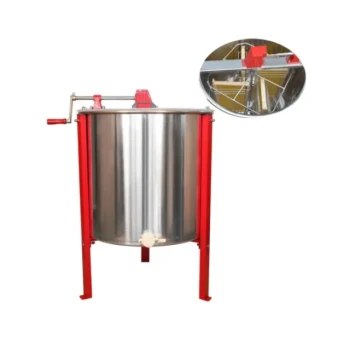
- HONESTBEE 4 Frame Manual Self Reversing Honey Extractor for Beekeeping
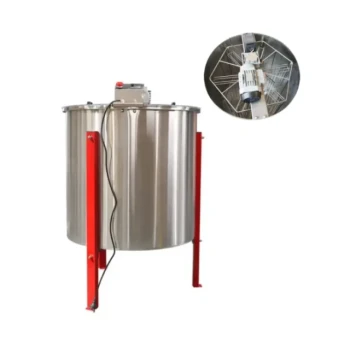
- HONESTBEE 6 Frame Self Reversing Electric Honey Extractor for Beekeeping
- HONESTBEE 3-Frame Manual Acrylic Honey Extractor
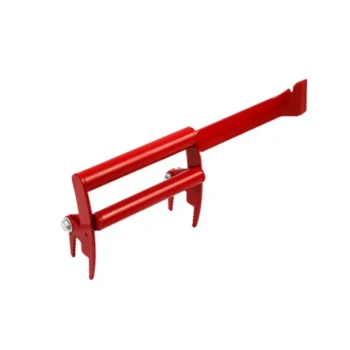
- Ergonomic Plastic Frame Spacer Tool for Rapid Hive Management Beekeeping
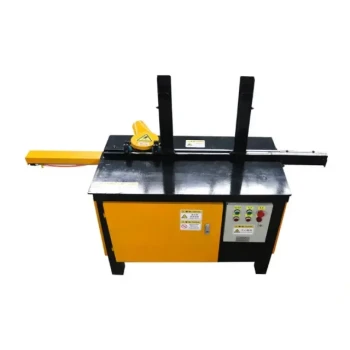
- Mini Desktop Bee Hive Frame Forming Making Machine
People Also Ask
- What is the primary function of a DC motor in a self-reversing honey extractor? Master Precision Honey Extraction
- What are the disadvantages of a manual honey extractor? Overcome Efficiency Bottlenecks in Your Apiary
- What is a manual honey extractor? The Essential Guide to Cost-Effective Beekeeping for Beginners
- Why are manual extractors popular among beginner beekeepers? A Guide to Starting Simple & Saving Money
- Which type of honey extractor is generally more durable? Focus on Material & Build Quality for Longevity