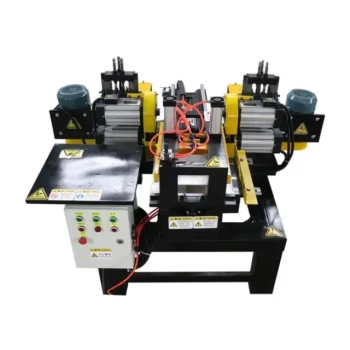
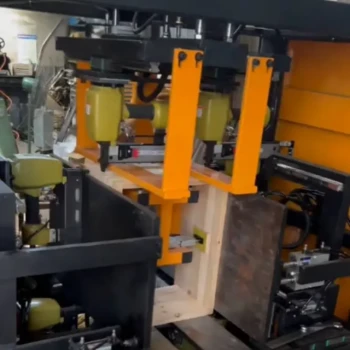
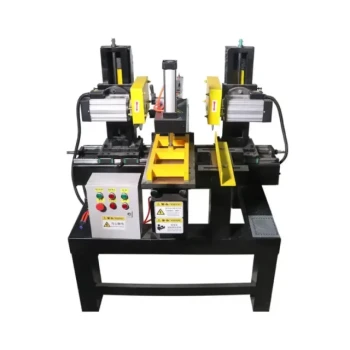
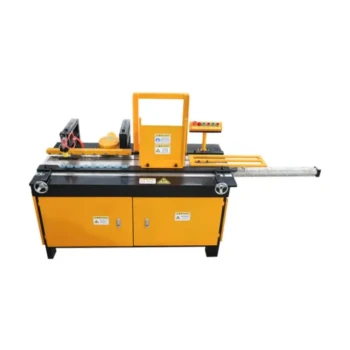
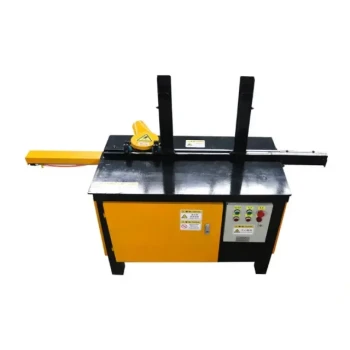
Industrial-grade machinery is the fundamental catalyst for transforming beekeeping from a fragmented craft into a scalable industry. By enabling high-precision mass production, this machinery ensures that beehive components are consistent and interchangeable. This standardization lowers the entry barrier for farmers transitioning to modern techniques and provides the essential material foundation required to establish organized, regional honey production bases.
The Core Insight: The primary obstacle to regional beekeeping development is the inconsistency and high cost of manual hive production. Industrial machinery solves this by guaranteeing structural uniformity, which is the prerequisite for component interchangeability, automated processing, and the economic viability of large-scale apiaries.
The Strategic Value of Standardization
Achieving Component Interchangeability
The most critical advantage of industrial manufacturing is the elimination of dimensional variance. In traditional woodworking, slight irregularities make parts incompatible.
Industrial machinery utilizes CNC milling and standardized molds to ensure tight tolerances. This allows frames, hive bodies, and bases to be swapped seamlessly between different colonies. This interchangeability is non-negotiable for modern management, allowing for efficient resource balancing between strong and weak hives.
Enabling Advanced Disease Control
Precision manufacturing directly impacts biological security. When hive components fit perfectly, quarantine procedures become more efficient.
Standardized equipment allows for the rapid isolation and transfer of frames without physical modification. This reduces the risk of disease transmission between colonies and streamlines the management of pests, improving the overall hygiene of the apiary.
Economic Implications for Regional Growth
Reducing Barriers for Farmers
For a region to develop a beekeeping industry, local farmers must be able to afford the transition. Manual production is labor-intensive and results in higher per-unit costs.
Industrial machinery leverages economies of scale to mass-produce equipment. This significantly reduces the initial infrastructure investment required for farmers, accelerating the adoption of modern beekeeping techniques across a region.
The Foundation for Commercial Scale
A regional industry cannot rely on small-scale, sideline operations. It requires professional, commercial bases.
Automated machinery addresses the supply bottleneck found in traditional regions, where manual output cannot meet commercial demand. It provides a stable, high-volume supply of infrastructure, allowing operations to expand from hobbyist levels to large-scale commercial enterprises.
Operational and Biological Efficiencies
Pre-requisites for Automation
Standardization is the "key" that unlocks downstream automation. Mechanized honey extraction lines, automatic filling equipment, and pollination transport systems all rely on uniform dimensions.
Without industrial-grade hives, these advanced processing technologies cannot function, as they require precise physical compatibility. Therefore, the machinery used to build the hive directly dictates the potential speed and scale of the honey harvest.
Improving Colony Survival
Beyond logistics, machine-made hives offer superior structural stability. Precision joints and seals improve temperature control and pest resistance.
This structural integrity is vital for overwintering success, directly increasing honeybee survival rates. A stable, standardized environment maximizes the biological efficiency of the colony, leading to higher honey yields and better economic returns.
Understanding the Trade-offs
High Initial Capital vs. Long-term OpEx
While industrial machinery reduces the per-unit cost of a beehive, it shifts the financial burden to the upstream supply chain.
Implementing this solution requires significant upfront capital investment in machinery and facilities. Regional planners must weigh this initial expenditure against the long-term savings in operational execution (OpEx) and replacement costs.
The Shift in Skill Requirements
Adopting industrial manufacturing changes the human resource requirement. The reliance shifts from skilled carpentry to machine operation and maintenance.
Regions must ensure they have the technical expertise to maintain these complex machines. A lack of maintenance infrastructure can lead to production stoppages that are more improved than the slow pace of manual production.
Making the Right Choice for Your Goals
To determine how to deploy this technology in your region, consider your immediate objectives:
- If your primary focus is rapid industry adoption: Prioritize machinery that maximizes output volume to drive down unit costs, making hives affordable for new farmers.
- If your primary focus is automation and export: Prioritize high-precision machinery (CNC) that guarantees the strict tolerances required for automated extraction lines and transport logistics.
- If your primary focus is self-sufficiency: Select machinery capable of processing local materials to create a circular economy that is less dependent on external supply chains.
Ultimately, industrial-grade machinery is not just about building boxes; it is about building a predictable, scalable infrastructure that allows the biology of the bee and the technology of the processor to work in perfect synchronization.
Summary Table:
| Key Benefit | Impact on Regional Industry | Strategic Advantage |
|---|---|---|
| Standardization | Guarantees component interchangeability | Enables automated honey processing |
| Cost Reduction | Lowers entry barriers for local farmers | Mass production through economies of scale |
| Precision Design | Enhances disease control & hive hygiene | Perfect fit reduces pest & thermal issues |
| Scalability | Shifts from hobbyist to commercial bases | Consistent supply of high-volume infrastructure |
Revolutionize Your Beekeeping Operation with HONESTBEE
At HONESTBEE, we specialize in empowering commercial apiaries and distributors with the industrial-grade tools necessary for global competitiveness. From high-precision hive-making and honey-filling machines to a full spectrum of wholesale beekeeping equipment and consumables, we provide the material foundation for your regional growth.
Partner with HONESTBEE to:
- Access professional-grade machinery for mass production.
- Standardize your infrastructure for maximum operational efficiency.
- Source reliable, high-volume supplies tailored for commercial scale.
Ready to transform your beekeeping business? Contact us today to discuss your wholesale needs!
References
- Melaku Melese Haile. FACTORS INFLUENCING HONEY MARKETING IN CASE OF GIMBO WOREDA; KAFA ZONE. DOI: 10.46281/ijmri.v5i1.1474
This article is also based on technical information from HonestBee Knowledge Base .
Related Products
- High-Efficiency Pneumatic Bee Hive Making Machine for Rapid Box Assembly
- HONESTBEE Top Bar & Bottom Bar Forming Machine | Bee Frame Machine
- Automatic High-Speed Bee Hive Box Stapling Machine
- Mini Desktop Bee Hive Frame Forming Making Machine
- Beehive Machine Double End Saw for Precision Hive Component Manufacturing
People Also Ask
- How does the introduction of professional beehive-making machinery benefit sustainable beekeeping? Scale Your Apiary
- Why is specialized beehive-making machinery critical for low-defense breeding? Enhance Selection with Precision Tools
- How does the introduction of specialized beehive making machinery contribute to increasing the scale of regional beekeeping industries?
- What is the importance of specialized beehive making machinery in a circular bio-economy? Build Local Sustainability
- Why is specialized beehive-making machinery essential? Scale Your Apiary with Precision Industrial Standards