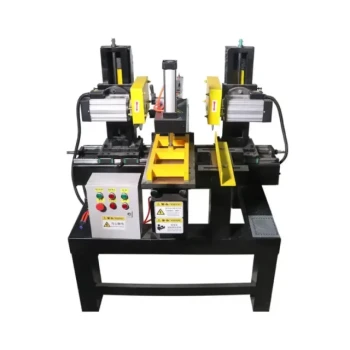
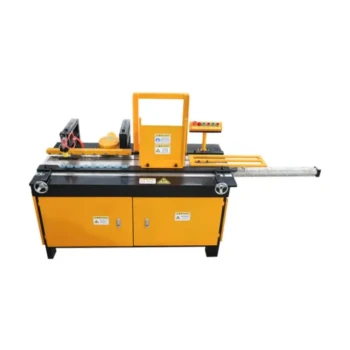
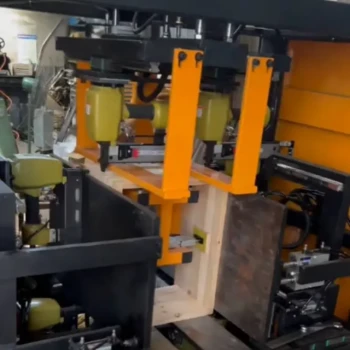
Industrial-grade hive manufacturing machinery is the cornerstone of modern, scalable beekeeping infrastructure. It enables the standardized, large-scale production of hive components, ensuring that critical specifications—such as a precise 1.5 cm entrance diameter—are consistently met. This manufacturing capability accelerates infrastructure construction, streamlines farm management, and directly contributes to improved colony survival rates through structural consistency.
Modern beekeeping bases cannot rely on variable, hand-crafted equipment if they aim to scale efficiently. Industrial machinery provides the strict standardization required to ensure equipment interchangeability, lower long-term costs, and create a stable biological environment for the bees.
The Role of Standardization in Colony Health
Precision as a Biological Necessity
In modern beekeeping, dimensions are not arbitrary; they dictate colony health. Industrial machinery ensures that critical measurements, such as the 1.5 cm entrance diameter, are exact across thousands of units.
Maintaining the "Bee Space"
Bees require a specific amount of space to move between combs. Deviations cause bees to build burr comb or propolis seals, making inspections difficult. Industrial precision guarantees the internal dimensions required to maintain this exact bee space.
Enhancing Colony Survival
A tightly sealed, structurally uniform hive protects the colony from pests and environmental stress. By producing components that fit together perfectly without gaps, these machines improve the overall resilience and survival rates of the bee population.
Operational Efficiency and Scalability
Achieving Total Interchangeability
For a large-scale base, every frame must fit every box, and every box must stack on every bottom board. Industrial manufacturing creates universal compatibility, allowing beekeepers to rotate equipment effortlessly between colonies.
Accelerating Infrastructure Speed
Manual construction acts as a bottleneck during expansion phases. Industrial-grade machinery enables the rapid mass production of components, removing hardware limitations and allowing the operation to scale up quickly to meet demand.
Enabling Advanced Management Workflows
Standardized equipment is the foundation for scientific colony splitting and systematic management. When all equipment is identical, workflows become repeatable and predictable, significantly increasing the operational efficiency of the beekeeping team.
Economic and Strategic Advantages
Lowering Infrastructure Costs
While the initial machinery investment is significant, it reduces the per-unit cost of hives over time. Mass production creates a cost-effective material foundation, reducing the overall financial burden of expanding the apiary.
Supporting Migratory Beekeeping
Modern beekeeping often involves moving colonies across regions for pollination. Machine-made hives offer the structural durability and tight seals necessary to withstand the rigors of transport without damaging the colony.
Facilitating Self-Sufficiency
Owning industrial machinery allows a base to achieve independence. Operators can process local materials tailored to their specific climate and bee species, fostering a circular economy model that reduces reliance on external suppliers.
Understanding the Trade-offs
High Initial Capital Expenditure
Transitioning to industrial-grade manufacturing requires a substantial upfront investment in hardware. This is a barrier to entry for smaller operations that do not yet have the volume to justify the cost.
Maintenance and Technical Expertise
Unlike simple carpentry tools, industrial machinery requires specialized maintenance and skilled operators. A beekeeping base must ensure it has the technical personnel to keep the production line running, or the efficiency gains will be lost to downtime.
Rigid Standardization
While standardization is generally a benefit, it can be a drawback if the environmental conditions change drastically. Once a production line is set for specific dimensions, retooling for a different hive style or size can be time-consuming and costly.
Making the Right Choice for Your Base Development
To determine if industrial manufacturing is the right step for your operation, consider your primary strategic goals.
- If your primary focus is rapid expansion: Prioritize machinery that maximizes production speed to eliminate infrastructure bottlenecks.
- If your primary focus is migratory pollination: Ensure the machinery produces high-precision interlocking components to guarantee structural stability during transport.
- If your primary focus is cost reduction: Leverage the machinery to process local raw materials, achieving self-sufficiency and reducing procurement expenses.
Precision manufacturing is not merely a production method; it is the fundamental hardware requirement for transforming a traditional apiary into a scientifically managed, industrial-scale enterprise.
Summary Table:
| Key Benefit | Impact on Modern Beekeeping | Strategic Advantage |
|---|---|---|
| Structural Precision | Guaranteed 1.5 cm entrance & exact bee space | Improved colony survival & pest resistance |
| Standardization | Total equipment interchangeability | Streamlined workflows & easier management |
| Mass Production | Rapid infrastructure development | Eliminates growth bottlenecks for scaling |
| Economic Efficiency | Lower per-unit cost over time | Long-term self-sufficiency & cost control |
| Durability | High-precision interlocking components | Ideal for the rigors of migratory pollination |
Transform Your Apiary into a High-Efficiency Enterprise with HONESTBEE
Building a modern, scalable beekeeping operation requires more than just tools—it requires industrial-grade precision. HONESTBEE specializes in empowering commercial apiaries and distributors with the robust machinery needed to lead the industry.
Our comprehensive wholesale portfolio includes:
- Automated Hive-Making Machines: Achieve perfect standardization and rapid infrastructure growth.
- Professional Honey-Filling Lines: Streamline your processing with industrial-grade efficiency.
- Full-Spectrum Equipment: From specialized hardware and beekeeping tools to essential industry consumables.
- Cultural Merchandise: Expand your brand with a wide array of honey-themed retail products.
Whether you are expanding your own production base or supplying the global market, we provide the hardware and expertise to reduce your costs and increase your operational resilience.
Ready to scale? Contact our specialists today to discuss how HONESTBEE can power your growth!
References
- Eduardo Negrín Muñoz, Laura Elena Sotelo Santos. Abejas nativas, señoras de la miel. Patrimonio cultural en el estado de Campeche / Native bees, honey ladies. Cultural heritage in the State of Campeche. DOI: 10.23913/ricsh.v5i9.69
This article is also based on technical information from HonestBee Knowledge Base .
Related Products
- High-Efficiency Pneumatic Bee Hive Making Machine for Rapid Box Assembly
- Beehive Machine Double End Saw for Precision Hive Component Manufacturing
- Beehive Handle and Frame Rest Cutting Machine: Your Specialized Hive Machine
- Mini Desktop Bee Hive Frame Forming Making Machine
- Automatic High-Speed Bee Hive Box Stapling Machine
People Also Ask
- How does the introduction of professional beehive-making machinery benefit sustainable beekeeping? Scale Your Apiary
- Why is specialized beehive-making machinery critical for low-defense breeding? Enhance Selection with Precision Tools
- How does the introduction of specialized beehive making machinery contribute to increasing the scale of regional beekeeping industries?
- What is the importance of specialized beehive making machinery in a circular bio-economy? Build Local Sustainability
- Why is specialized beehive-making machinery essential? Scale Your Apiary with Precision Industrial Standards