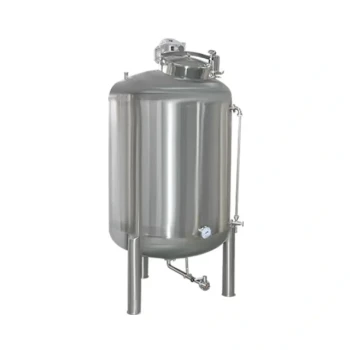
Establishing centralized collection and processing centers is the critical bridge between artisanal beekeeping and commercial viability. These facilities provide the necessary infrastructure to standardize raw honey through professional filtration and sedimentation, removing impurities and ensuring consistent chemical indicators. Without them, producers remain trapped in small-scale operations, unable to meet the quality and volume requirements for broader market access.
Core Insight: While raw honey varies significantly at the source, centralized facilities transform it into a stable, high-value commodity. By aggregating volume and applying industrial-grade processing, these centers solve the twin challenges of inconsistent quality and inefficient logistics, enabling access to premium and international markets.
Ensuring Consistency and Quality
Standardizing Physical and Chemical Indicators
Raw honey collected directly from apiaries is often inconsistent in texture and purity. Collection centers equipped with processing facilities use professional filtration and sedimentation technologies to remove physical impurities such as beeswax particles and debris. This standardization ensures that every batch meets specific physical and chemical criteria before it reaches the consumer.
Controlling Moisture to Prevent Spoilage
One of the greatest risks to raw honey is fermentation caused by excess moisture. Industrial facilities utilize vacuum dehydration equipment to precisely control moisture content. This mechanized process creates a stable product that resists spoilage, a level of preservation that is difficult to achieve with manual processing methods.
Separation Efficiency
Specialized machinery, such as industrial-grade centrifuges or presses, separates honey from beeswax far more efficiently than traditional manual squeezing. This maximizes the yield of both products and ensures the beeswax byproduct is clean enough for further processing and sale, adding an additional revenue stream.
Unlocking Market Value and Logistics Efficiency
Reducing Logistics Costs
Transporting small batches of raw honey from individual beekeepers to distant markets is inefficient and expensive. Centralized centers act as logistical hubs, consolidating produce from remote regions. This large-scale handling significantly lowers per-unit transportation costs and bridges the physical gap between rural production sites and urban markets.
Transitioning to Commercial Scale
Small-scale production lacks the volume consistency required by major retailers. By aggregating supply, collection centers create the infrastructure needed for commercial distribution. This allows producers to bypass low-value local sales and connect directly with larger cooperatives or distributors who require bulk quantities.
Enhancing Product Value
Unprocessed honey commands a lower price due to its variability. By processing honey into a high-purity, standardized liquid, these facilities increase the product's market entry standards. This value-added step is essential for positioning regional honey as a premium product rather than a raw agricultural commodity.
Meeting International Safety Standards
Implementing HACCP Protocols
To export honey, producers must prove their product is safe. Modern processing facilities are designed to implement Hazard Analysis and Critical Control Points (HACCP) management. This ensures that contamination risks are monitored and controlled throughout the extraction and filtration process.
Ensuring Hygiene and Compliance
Industrial filling lines and sterile environments reduce the human contact inherent in manual processing. This hygiene control is a prerequisite for obtaining quality certifications. Without the controlled environment of a processing center, it is nearly impossible to meet the strict food safety regulations required by high-end international markets.
Understanding the Trade-offs
Capital Investment vs. Operational Efficiency
Establishing these centers requires significant upfront capital for industrial filtration, dehydration, and packaging machinery. While this acts as a barrier to entry, the trade-off is a massive increase in processing efficiency and output consistency that manual labor cannot match.
Aggregation vs. Traceability
Centralization involves mixing honey from various sources, which can complicate traceability if not managed correctly. Effective centers must balance large-scale aggregation with standardized grading systems to filter out unqualified products before they enter the general pool, ensuring that high-quality inputs are not diluted by inferior batches.
Making the Right Choice for Your Goal
To determine how to prioritize your facility's capabilities, consider your end-market:
- If your primary focus is International Export: Prioritize HACCP-compliant machinery and vacuum dehydration systems to ensure the shelf-stability and safety certifications required by foreign regulators.
- If your primary focus is Local Market Expansion: Focus on high-volume filtration and logistical consolidation to reduce transportation costs and ensure a consistent supply for major domestic retailers.
Ultimately, a processing-equipped collection center is not just a building; it is the industrial engine that converts raw agricultural potential into a globally competitive business.
Summary Table:
| Feature | Benefit of Centralized Processing | Impact on Value Chain |
|---|---|---|
| Filtration & Sedimentation | Removes impurities and ensures consistent texture | Meets premium market standards |
| Vacuum Dehydration | Precise moisture control to prevent fermentation | Extends shelf life and stability |
| Industrial Consolidation | Aggregates volume from multiple small apiaries | Reduces per-unit logistics costs |
| HACCP Compliance | Ensures sterile environments and hygiene control | Enables international export access |
| Efficient Separation | Maximizes yield of both honey and beeswax | Increases secondary revenue streams |
Scale Your Honey Business with HONESTBEE
Transition from artisanal harvesting to a high-output commercial operation with HONESTBEE. As a premier partner for commercial apiaries and distributors, we provide the full spectrum of industrial solutions needed to build world-class collection centers.
From advanced honey-filling and hive-making machinery to essential industry consumables and honey-themed cultural merchandise, our wholesale offering is designed to enhance your efficiency and market competitiveness.
Ready to modernize your honey value chain? Contact us today to discover how our specialized beekeeping tools and hardware can drive your success.
References
- Abujere Mubarik, Mukadasi Buyinza. Drivers of honey production and its effects on rural livelihoods in Odravu Sub-country, Yumbe district, Northern Uganda. DOI: 10.5281/zenodo.3692403
This article is also based on technical information from HonestBee Knowledge Base .
Related Products
- Electric Double Wall Honey Filtering Machine Purifier Equipment for Honey Processing Plant
- Heavy Duty Stainless Steel Honey Processing Machine Decrystallizing Tank
- Double Wall Honey Heating Stirring Homogenizer Mixing Machine with Various Capacity
- 0.5T Capacity Honey Dehumidifier Dryer with Vacuum Heating and Thickening Filtering Machine
- Honey Concentrating and Filtering Dehumidifier Machine 2T Capacity for Honey
People Also Ask
- What is the process of filtering honey? A Guide to Clean, Pure, and Market-Ready Honey
- What types of equipment are used in honey filtering? Build an Efficient System for Pure, Marketable Honey
- What is the overall importance of using the right equipment in honey filtering? Boost Quality & Marketability
- What steps are involved in maintaining honey filtering equipment? A Guide to Protecting Your Honey Quality
- How should honey filtering equipment be properly maintained? Extend Equipment Life & Protect Honey Purity