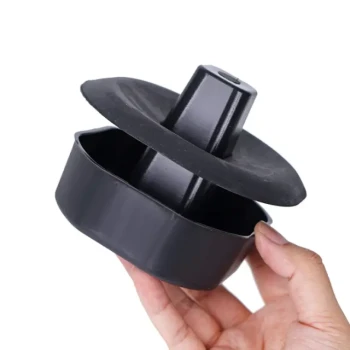
The primary function of specialized beehive stands with oil or water barriers is to physically block scavenging insects from altering your data. By placing fluid-filled troughs at the base of the hive legs, you create an impassable moat that prevents ants and other predators from reaching the bottom board. This ensures that every Varroa mite that falls is preserved for counting, rather than being carried away as food by scavengers.
Accurate pest management relies entirely on the quality of your statistical data. If scavengers remove mite samples before you count them, your infestation estimates will be artificially low, potentially leading to a failure to treat the colony in time.
Preserving Data Integrity
The Threat of Data Distortion
In scientific colony management, decisions are driven by numbers. The count of fallen mites on a monitoring board is the standard metric for assessing infestation levels.
However, ants and other scavenging insects view these fallen mites as a food source. Without protection, these scavengers can invade the bottom area of the hive and strip the monitoring board clean.
Securing Long-Term Observations
This protection is particularly critical for observation periods lasting 10 days or longer.
Over these extended periods, the cumulative loss of samples to scavengers can be significant. Specialized stands ensure that the final count reflects the true total of mite fall, rather than just what the ants left behind.
The Mechanics of Accurate Monitoring
Creating a Physical Moat
The stands utilize oil pools or water troughs integrated into the leg bases.
This creates a simple but highly effective physical barrier. While flying insects (like bees) can enter the hive, crawling predators cannot cross the fluid to access the hive structure.
Synergy with Sticky Boards
These stands work in tandem with petroleum jelly-coated plastic sheets (sticky boards).
While the sticky board immobilizes the mites to prevent them from drifting or re-attaching to bees, the stand protects the board itself from external intrusion. Together, these tools provide a closed loop of security for your data.
Understanding the Trade-offs
Maintenance Requirements
Barriers are not "set and forget" solutions. Water troughs can evaporate quickly in heat or overflow during heavy rain, breaking the barrier.
Oil creates a more durable barrier but can accumulate dust and debris over time. To maintain the integrity of the barrier, these troughs require regular inspection and refilling.
Scope of Protection
It is important to understand that these stands protect the data, not necessarily the bees inside the hive from all pests.
While they stop crawling insects from entering, they do not treat the Varroa infestation itself. They are a diagnostic tool intended to validate the effectiveness of other medical interventions.
Ensuring Precision in Colony Management
If your primary focus is Scientific Research:
- Use oil-based barriers to ensure absolute consistency in sample volume over long-duration studies where daily checking is impossible.
If your primary focus is Commercial Apiculture:
- Implement these stands to validate the efficacy of chemical treatments, ensuring you are not wasting resources on ineffective dosing due to misleading low mite counts.
Reliable data is the foundation of sustainable beekeeping; by securing your samples, you secure the future health of your colony.
Summary Table:
| Feature | Oil-Based Barriers | Water-Based Barriers |
|---|---|---|
| Primary Function | Blocks crawling scavengers (ants) | Blocks crawling scavengers (ants) |
| Evaporation Rate | Low - long-lasting | High - requires frequent refills |
| Durability | High, but can collect dust | Moderate, affected by rain/heat |
| Monitoring Period | Ideal for 10+ days | Best for short-term checks |
| Maintenance | Occasional debris removal | Regular topping up required |
Optimize Your Apiary with HONESTBEE Precision Equipment
Accurate data is the cornerstone of successful commercial beekeeping. At HONESTBEE, we understand the needs of professional apiaries and distributors. We provide a comprehensive range of professional beekeeping tools, machinery, and essential consumables designed to maximize efficiency and colony health.
Whether you need specialized hive-making machinery, honey-filling equipment, or durable hardware to protect your monitoring data, we have the wholesale solutions for you. Boost your apiary's productivity and data accuracy today—contact us now to discuss our wholesale offerings!
References
- Marco Pietropaoli, Giovanni Formato. Evaluation of Two Commonly Used Field Tests to Assess Varroa destructor Infestation on Honey Bee (Apis mellifera) Colonies. DOI: 10.3390/app11104458
This article is also based on technical information from HonestBee Knowledge Base .
Related Products
- Professional Ant-Proof Beehive Stand with Integrated Moat for Beekeeping
- Plastic Bee Hive Stand for Beekeeping
- Metal Hive Feet Bee Hive Stand for Ant Protection
- Metal Bee Hive Stand Bee Box Stand for Beekeeping
- Professional Adjustable Stainless Steel Honeycomb Display Stand
People Also Ask
- What physical protection advantages do individual hive stands provide against Small Hive Beetles? Secure Your Apiary
- Why are specialized ant-proof stands necessary for Africanized honeybee apiaries? Prevent Absconding in Semi-Arid Regions
- Why are specialized beehive stands or protective barriers necessary for pest management in apiaries? Secure Your Colony
- What are the benefits of elevating a bee hive with a stand or base? Protect Your Colony and Your Back
- What to stand a beehive on? The Best Foundation for a Healthy, Manageable Apiary