Managing hive space is critical because the physical volume of the hive directly dictates the colony's energy expenditure and stress levels. An improperly sized hive forces bees to divert energy away from vital tasks like foraging and brood rearing to compensate for environmental inefficiencies, such as poor temperature regulation or overcrowding.
Effective hive management is a balancing act: the space must be expansive enough to prevent disease transmission and allow for growth, yet compact enough to ensure the colony can efficiently retain heat and conserve energy.
The Dangers of Overcrowding
When a colony outgrows its physical environment, the resulting density creates immediate biological stress.
Accelerated Disease Transmission
In a tightly packed hive, contact between bees increases significantly. This density facilitates the rapid spread of pathogens and parasites, making the colony more susceptible to disease outbreaks that can decimate the population.
Reduced Productivity
Stress impacts the colony's collective work ethic. Overcrowded colonies often produce lower honey yields because the bees are preoccupied with managing the stress of the environment rather than foraging and processing nectar.
Mitigation Strategies
To alleviate this pressure, you must actively monitor population growth. Beekeepers should introduce additional brood boxes or split the hive entirely if the colony becomes too large for its current configuration.
The Risks of Excessive Space
While overcrowding is a danger, providing too much space—such as placing a small colony in a triple deep box setup—is equally detrimental.
Thermal Inefficiency
Honey bees rely on clustering to maintain the hive's internal temperature. If the box configuration is too large for the colony size, the bees must work significantly harder to generate and retain heat within the cluster.
Energy Waste
The effort required to heat excess empty space results in wasted energy. Instead of using resources for growth or storage, the bees burn through their energy reserves just to maintain a survivable temperature.
Understanding the Trade-offs
Proper hive management requires understanding that "optimal space" is a moving target that changes with the seasons and the colony's lifecycle.
The Winter Storage Dilemma
A distinct trade-off occurs when preparing for winter. While a compact hive is better for heat retention, a hive that is too small may lack the physical volume required to store sufficient food reserves.
Balancing Heat vs. Food
You must ensure the hive is large enough to hold the honey stores needed to survive the winter, but not so large that the bees cannot keep the cluster warm. Proper sizing maximizes heat retention relative to the energy the bees must expend.
Making the Right Choice for Your Colony
To prevent stress, your management strategy must adapt to the colony's immediate needs and the environmental context.
- If your primary focus is Disease Prevention: Monitor for high density and add space immediately to reduce contact rates and lower stress.
- If your primary focus is Winter Survival: Ensure the hive configuration is compact enough for thermal efficiency but voluminous enough to hold essential food stores.
- If your primary focus is Productivity: aggressive space management prevents the stagnation associated with overcrowding, leading to higher honey yields.
The goal is to match the box configuration to the colony size, minimizing the energy the bees spend on survival so they can focus on thriving.
Summary Table:
| Factor | Overcrowded Hive (Too Small) | Excessive Space (Too Large) | Optimal Managed Space |
|---|---|---|---|
| Disease Risk | High (Rapid transmission via contact) | Low | Controlled |
| Energy Use | High (Stress from congestion) | High (Wasted on heating empty space) | Efficient (Conserved for foraging) |
| Temperature | Risk of overheating/poor ventilation | Difficult to maintain cluster heat | Stable and regulated |
| Productivity | Reduced (Focus on space management) | Reduced (Focus on survival/heating) | Maximized (Focus on brood & honey) |
| Best For | Early spring growth monitoring | N/A (Avoid this setup) | Winter survival & peak harvest |
Maximize Your Colony’s Potential with HONESTBEE
Efficient hive management requires the right tools to balance space and productivity. At HONESTBEE, we specialize in supporting commercial apiaries and distributors with high-quality, professional-grade beekeeping solutions. Whether you need specialized hive-making machinery, precision honey-filling machines, or a full spectrum of beekeeping tools and consumables, our comprehensive wholesale offering is designed to scale your operations.
Don't let improper spacing stress your colonies or cut into your yields. Partner with HONESTBEE to access the hardware and cultural merchandise your business needs to thrive. Contact us today to explore our full equipment catalog and see how we can streamline your honey production.
Related Products
- Ergonomic Plastic Frame Spacer Tool for Rapid Hive Management Beekeeping
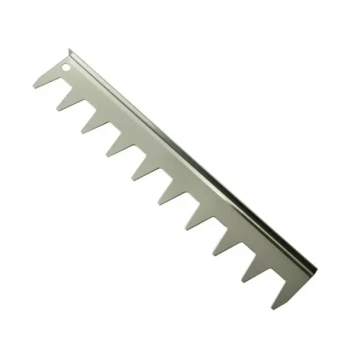
- Stainless Steel 9 Frame Hive Spacer Durable Precise for Commercial Beekeeping
- Professional Reversible Beehive Hive Entrance
- Multi-Functional Sliding Hive Entrance for Beekeeping
- Professional Large-Format Hive Number Set for Beekeeping
People Also Ask
- What specific challenges do beekeeping hive tools address during hive maintenance? Essential Solutions for Apiaries
- How do specialized beehive management tools support high-purity honey production? Master Monofloral Isolation
- How do specialized beehive management tools assist in the routine maintenance of bee colonies? Boost Hive Efficiency
- What are the approximate costs of basic beekeeping tools? Start Your Apiary for Under $85
- How do traditional harvesting tools like axes and machetes negatively affect bee colonies? Upgrade to Professional Gear