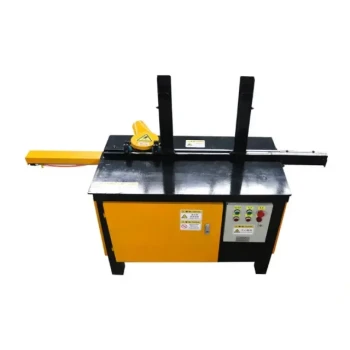
Natural bee pollination is usually the more economical choice because bees provide repeated, scalable pollination as part of their normal foraging activity, while artificial pollination requires specialized techniques, labor, timing, and crop-by-crop management. Commercial apiaries improve this economics further by automating hive production and honey processing, allowing them to reduce overhead and generate revenue from honey and beeswax alongside pollination services.
The core business model is integrated: bees deliver high-value pollination services, while machinery makes hive expansion and honey sales efficient enough to sustain the colonies, labor, and equipment required.
Why Natural Pollination Has the Economic Advantage
Bees provide continuous field coverage
Honeybees visit large numbers of flowers while collecting nectar and pollen. This creates repeated pollination activity across agricultural fields without requiring an operator to manually treat each flower or coordinate every transfer.
Artificial pollination is more dependent on labor availability, crop conditions, application timing, and specialized equipment. Those requirements make it technically complex and difficult to scale economically across large or dispersed growing areas.
Pollination creates value beyond honey sales
Honey and beeswax are important commercial products, but the crop yield supported by pollination can represent a much larger economic value for agriculture. This gives managed colonies a dual role: they are both production assets and agricultural service assets.
For commercial beekeepers, pollination contracts can therefore provide a major revenue opportunity. Honey sales remain essential because they help finance colony maintenance, replenishment, transport, and seasonal operating costs.
Managed colonies address agricultural demand
Modern agriculture depends heavily on insect pollination for many fruit, vegetable, seed, and flowering crops. Where natural wild pollinator populations are insufficient or unreliable, managed honeybee colonies provide a deployable and scalable service.
This creates an incentive for apiaries to expand colony numbers and improve operational efficiency. The more efficiently an operator can produce equipment, manage colonies, and commercialize hive products, the more viable pollination services become.
How Hive-Making Machinery Supports Apiary Expansion
Standardized hive production reduces operating friction
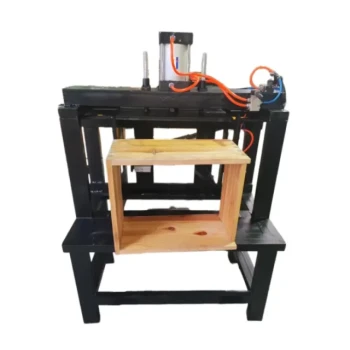
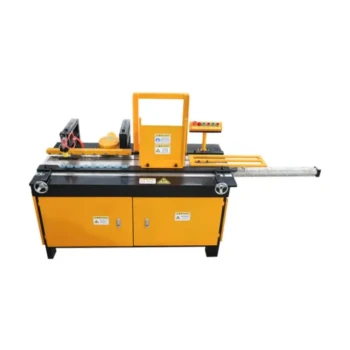
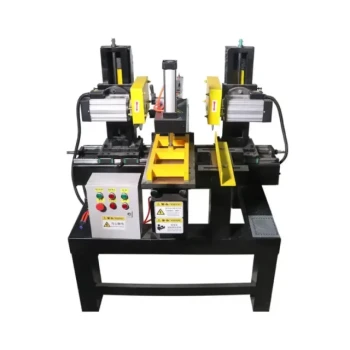
Industrial hive-making machinery enables the consistent production of hive bodies, frames, covers, and related components. Standardization makes it easier to assemble, maintain, transport, and replace equipment across a large apiary.
Consistent dimensions also support interchangeable parts and more predictable maintenance. This is particularly valuable for distributors, wholesalers, and commercial beekeepers managing multiple apiary locations.
Automation lowers labor requirements
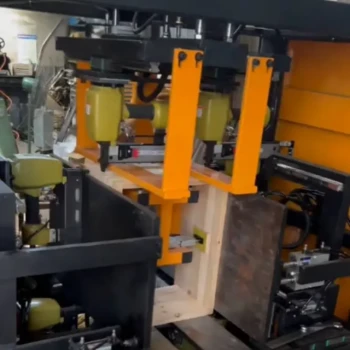
Manual hive construction can consume substantial time and introduce variations in dimensions, joinery, and finish quality. Automated cutting, forming, drilling, and assembly processes reduce repetitive labor and improve production consistency.
The result is not simply faster equipment production. It allows skilled personnel to focus more of their time on colony health, movement, inspection, and pollination logistics.
Scalable equipment supports colony growth
A commercial pollination business needs sufficient hive infrastructure before it can expand colony numbers. Machinery allows operators to produce or source standardized equipment at a scale that would be difficult to achieve through manual fabrication alone.
This supports more predictable expansion planning and reduces the risk that equipment shortages will limit pollination capacity during critical agricultural seasons.
How Honey-Filling Machinery Strengthens Apiary Viability
Honey provides essential secondary cash flow
Honey sales help apiaries monetize colony output between or alongside pollination engagements. That revenue can offset expenses such as feed, transportation, labor, disease management, queen replacement, and colony losses.
This secondary income is strategically important because pollination operations can involve high seasonal and logistical costs. A reliable honey-processing system helps convert harvested honey into market-ready products more quickly.
Automated filling improves productivity
Automatic honey-filling machines use controlled dosing to fill containers consistently and at higher throughput than manual methods. They reduce repetitive labor, improve net-weight consistency, and support more efficient packaging operations.
For high-volume apiaries and contract packers, this can shorten processing cycles and improve order fulfillment. It also helps wholesalers and distributors obtain consistent product quantities and packaging specifications.
Hygienic processing protects commercial value
Honey filtration, dehydration where appropriate, filling, and sealing must be managed carefully to preserve product quality. Automated equipment reduces unnecessary handling and helps minimize the risk of secondary contamination during packaging.
Consistent filling and sealing also support commercial food-safety requirements. Better process control can protect the reputation of the apiary and improve the marketability of premium honey products.
Better packaging can increase product value
Honey is not only a bulk commodity; it can also be sold through differentiated packaging, controlled portions, private labels, and premium product lines. Precision filling reduces material waste and improves presentation consistency across these formats.
The machinery does not create market value by itself. Its contribution is operational: it helps preserve quality, reduce loss, and produce a consistent product that can command stronger commercial acceptance.
The Integrated Apiary Economics
Hive equipment enables the service
Hive-making machinery supports the physical infrastructure required to maintain and expand colonies. Without sufficient standardized hives and replacement components, an apiary cannot reliably increase its pollination capacity.
This makes hive production an enabling function rather than merely a manufacturing activity. Efficient equipment supply directly affects how quickly an operator can respond to agricultural demand.
Honey equipment monetizes the output
Honey extraction, filtration, and filling machinery convert colony output into sellable inventory. This creates a complementary income stream that helps stabilize the business when pollination income is seasonal or when colony-management costs increase.
The combined model is stronger than either activity alone: pollination creates agricultural service value, while honey processing creates product revenue.
Equipment efficiency supports broader food production
When apiaries can expand responsibly and maintain financial stability, more managed colonies remain available for agricultural pollination. This can support crop productivity and contribute to the resilience of food supply chains.
For suppliers, the opportunity extends across the full operating cycle: hive production equipment, honey-processing systems, packaging machinery, replacement parts, and general apiary supplies.
Understanding the Trade-offs
Natural pollination still requires substantial management
Bee pollination is economically preferable to artificial methods in many commercial settings, but it is not cost-free. Apiaries must manage colony health, transport, seasonal availability, nutrition, pests, diseases, weather, and compliance requirements.
Automation reduces operating pressure, but it does not replace competent beekeeping. Machinery should be viewed as a force multiplier for a well-managed operation.
Automation requires capital and technical support
Hive-making and honey-filling equipment involve upfront investment, installation requirements, maintenance, operator training, and spare-parts planning. A low-cost machine that is difficult to service can create more downtime than it eliminates.
Purchasers should evaluate throughput, product compatibility, cleaning requirements, local service availability, and delivery reliability rather than comparing purchase prices alone.
Standardization must match the market
Standardized hives and packaging improve efficiency, but specifications differ by region, bee-management system, container format, and customer requirement. Equipment that does not match local dimensions or packaging standards can create avoidable conversion costs.
Distributors and resellers should therefore confirm technical specifications, customization options, documentation, and replacement-part availability before committing to a product range.
Honey revenue should not obscure colony economics
Honey is an important financial support for pollination operations, but it does not eliminate the costs of maintaining healthy colonies. Excessive focus on honey extraction can conflict with colony strength if management decisions are not balanced with pollination requirements.
The strongest model treats honey as a complementary revenue stream that supports, rather than undermines, the primary biological asset: healthy and productive colonies.
Choosing Equipment for Commercial Apiary Operations
The right equipment strategy should connect production capacity with the apiary’s actual business model.
- If your primary focus is pollination capacity: Prioritize standardized, scalable hive-making equipment and dependable apiary supplies that allow rapid colony expansion, replacement, and field deployment.
- If your primary focus is honey revenue: Prioritize extraction, filtration, precision filling, and sealing equipment that improves hygiene, throughput, weight consistency, and product presentation.
- If your primary focus is distribution or resale: Build a full-spectrum product portfolio covering hive infrastructure, honey-processing machinery, packaging formats, spare parts, and technical support.
- If your primary focus is operational reliability: Select suppliers that can provide responsive service, clear specifications, efficient order fulfillment, and fast delivery of machinery and replacement components.
A coordinated equipment and sourcing strategy helps apiaries turn natural bee pollination into a more scalable, resilient, and commercially sustainable operation.
Summary Table:
| Aspect | Natural Bee Pollination | Artificial Pollination |
|---|---|---|
| Cost | Lower overall; bees pollinate as they forage | Higher; requires specialized labor and equipment |
| Scalability | Scales with colony size and placement | Difficult to scale economically across large areas |
| Labor | Minimal; bees do the work | Labor-intensive; manual or specialized application |
| Time | Continuous throughout bloom | Timing is critical; must be repeated |
| Value | Provides pollination plus honey and beeswax | Only pollination benefit |
| Machinery Support | Enhanced with hive-making and honey-filling equipment | N/A |
Ready to optimize your apiary's profitability? HONESTBEE offers a comprehensive range of beekeeping equipment and machinery, from hive-making and honey-filling lines to essential consumables. Our full-spectrum portfolio supports commercial apiaries and distributors with fast delivery, dedicated service, and OEM/ODM support. Whether you're expanding pollination capacity or streamlining honey processing, we're here to help you grow. Contact us today to discuss your needs and get a tailored quote!
Related Products
- High-Efficiency Pneumatic Bee Hive Making Machine for Rapid Box Assembly
- Beehive Handle and Frame Rest Cutting Machine: Your Specialized Hive Machine
- Mini Desktop Bee Hive Frame Forming Making Machine
- Automatic High-Speed Bee Hive Box Stapling Machine
- Beehive Machine Double End Saw for Precision Hive Component Manufacturing
People Also Ask
- How does the introduction of professional beehive-making machinery benefit sustainable beekeeping? Scale Your Apiary
- Why is specialized beehive-making machinery critical for low-defense breeding? Enhance Selection with Precision Tools
- How does the introduction of specialized beehive making machinery contribute to increasing the scale of regional beekeeping industries?
- What is the importance of specialized beehive making machinery in a circular bio-economy? Build Local Sustainability
- Why is specialized beehive-making machinery essential? Scale Your Apiary with Precision Industrial Standards