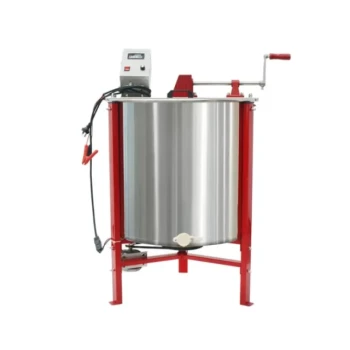
Precise speed control is the governing factor in the successful operation of a centrifugal honey extractor. It allows the operator to generate sufficient centrifugal force to separate the honey from the comb while strictly limiting that force to prevent the destruction of the delicate wax structure.
Core Takeaway: The primary function of speed control is to balance extraction efficiency with asset preservation. It ensures the honeycomb remains intact for reuse by the colony, while simultaneously preventing wax debris from contaminating the purity of the harvested honey.
Balancing Extraction Force with Structural Integrity
The fundamental challenge in honey extraction is removing a viscous fluid from a fragile container—the honeycomb—without breaking the container.
Preventing Comb Distortion
The wax comb is structurally delicate. As the extractor spins, centrifugal force pulls the honey outward.
If the rotation speed is too high, this force exceeds the structural limits of the wax. This causes the combs to distort, collapse, or shatter entirely inside the drum.
Ensuring Product Purity
Precise speed regulation is essential for maintaining the hygiene and quality of the final product.
When speed is uncontrolled and combs fracture, particles of wax and other hive debris mix with the honey. This degrades the purity of the honey and necessitates additional filtration steps that are otherwise avoidable.
The Economic and Biological Value of Intact Combs
The reason speed control focuses so heavily on preserving the comb is rooted in the biology of the hive. The honeycomb is a reusable asset, not a disposable byproduct.
Conserving Colony Energy
Bees must consume significant amounts of honey and energy to secrete the beeswax needed to build combs.
By using controlled speeds to keep combs intact, you allow the beekeeper to return undamaged frames to the hive. This saves the colony the immense metabolic cost of rebuilding the wax matrix.
Shortening the Production Cycle
When bees do not have to rebuild their infrastructure, they can immediately focus on nectar collection.
This drastic reduction in "construction time" significantly shortens the honey production cycle. It allows for faster turnover and higher yields, particularly during short flowering periods.
Understanding the Trade-offs
Operating an extractor requires navigating a narrow window of optimal speed. Failing to maintain this precision results in two distinct negative outcomes.
The Risk of Excessive Speed
Running the machine too fast is the most common error. While it extracts honey quickly, it destroys the frames.
The immediate result is contaminated honey full of wax shards. The long-term result is a reduction in the next harvest's yield, as bees must waste time rebuilding the destroyed combs.
The Cost of Insufficient Speed
Conversely, if the speed is too low to protect the comb overly cautiously, the centrifugal force will be insufficient to dislodge the honey.
This results in waste, leaving valuable product stuck in the cells. It reduces the overall efficiency of the harvest and fails to maximize the utility of the mechanized process.
Making the Right Choice for Your Goal
To optimize your extraction process, you must adjust your approach based on the specific condition of your frames and your production goals.
- If your primary focus is Maximum Yield: Gradually increase speed until you reach the maximum velocity the wax can withstand without fracturing to ensure every drop is extracted.
- If your primary focus is Long-Term Colony Health: Prioritize a lower, stable speed to guarantee 100% of combs are returned to the hive intact, even if a small percentage of honey remains unharvested.
Mastering speed control converts the extractor from a simple separator into a tool for sustainable hive management.
Summary Table:
| Factor | High Speed Impact | Low Speed Impact | Precise Control Benefit |
|---|---|---|---|
| Comb Integrity | Distortion or shattering | Remains intact | Zero damage; reusable asset |
| Honey Purity | High wax contamination | Clean but incomplete | Premium purity; minimal filtering |
| Colony Energy | High (must rebuild wax) | Low (reusable) | Conserved for honey production |
| Extraction Yield | Maximum (at risk of debris) | Poor (honey stays in cells) | Optimized balance & efficiency |
Scale Your Apiary Operations with HONESTBEE Professional Equipment
At HONESTBEE, we understand that precision is the difference between a damaged harvest and a record-breaking yield. We specialize in serving commercial apiaries and distributors with a comprehensive wholesale selection of high-performance beekeeping machinery.
From advanced centrifugal honey extractors with precision speed regulation to industrial-grade honey-filling machines and specialized hive-making hardware, our tools are designed to maximize your efficiency and protect your colony's assets. Whether you are outfitting a large-scale commercial operation or stocking essential industry consumables, HONESTBEE delivers the quality and reliability you need to succeed.
Ready to upgrade your honey production workflow? Contact our expert team today to discuss your wholesale needs
References
- Delfy Lensari, Jun Harbi. Honeybee Cultivation Training Apis Mellifera with Forest Farmers Group (KTH) Wana Lestari, Rejo Sari Village, Megang Sakti District, Musi Rawas Regency. DOI: 10.32502/altifani.v5i1.268
This article is also based on technical information from HonestBee Knowledge Base .
Related Products
- electric honey extractor honey centrifuge 3 frame honey extractor stainless steel honey frame extractor
- Manual Hand Crank 4 Frame Honey Extractor Centrifuge for Beekeeping
- Professional 4 Frame Self Reversing Electric Honey Extractor for Beekeeping
- 24 Frame Honey Extractor Commercial Radial Honey Frame Extraction Machine
- Electric 4 Frame Tangential Honey Extractor
People Also Ask
- What are the characteristics of electric honey extractors? Boost Your Apiary Efficiency with Automated Technology
- What are the disadvantages of using an electric honey extractor? Weighing Cost, Power, and Comb Safety
- What are the advantages of an electric honey extractor? Boost Efficiency and Scale Your Honey Production
- What are the technical advantages of electric honey extractors? Maximize Yield and Protect Your Bee Colony
- How does an electric honey extractor affect the quality of honey? Preserve Flavor & Purity with Precision Extraction