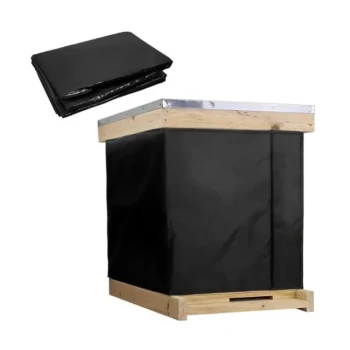
Proper ventilation is the critical mechanism that prevents an insulated beehive from becoming a fatal environment for the colony. Its primary function is to exhaust the significant moisture generated by the bees' respiration and the consumption of honey stores. Without this airflow, warm, moist air becomes trapped, creating damp conditions that compromise the colony's ability to regulate temperature.
The survival of a winter colony depends on a delicate balance: insulation must retain the heat generated by the cluster, while ventilation must evacuate the metabolic moisture. Failure to maintain this balance results in condensation dripping onto the bees, leading to fatal hypothermia.
The Lethal Physics of Moisture
The Source of Humidity
Bees generate heat by consuming honey and vibrating their wing muscles. This metabolic process produces significant amounts of water vapor as a byproduct.
The Condensation Trap
In a sealed, insulated hive, this warm, moisture-laden air rises to the top. If it cannot escape, it hits the cold inner surface of the hive cover and condenses back into liquid water.
The "Cold and Wet" Danger
This condensation accumulates and eventually rains down directly onto the winter cluster. While bees are remarkably resilient to dry cold, they cannot survive being cold and wet, which leads to rapid heat loss and death.
Mechanics of Effective Airflow
The Chimney Effect
Warmer air naturally rises, carrying moisture with it. Effective ventilation utilizes this upward pressure to push humid air out through the top of the hive.
Intake and Exhaust
To facilitate this rising column of air, the hive requires a small upper opening for exhaust. This works in tandem with a reduced lower entrance, which allows fresh, drier air to enter without creating a strong draft.
Preventing Mold and Pathogens
Beyond immediate survival, ventilation prevents the long-term buildup of stagnant, damp air. This reduces the risk of mildew growth and diseases that thrive in high-humidity environments.
Understanding the Trade-offs
The Risk of Over-Insulation
A common mistake is assuming that "warmer is better" and sealing the hive completely to prevent heat loss. This converts the hive into a moisture trap, causing the very death the insulation was meant to prevent.
The Risk of Over-Ventilation
Conversely, excessive ventilation creates wind tunnels that strip away the heat "bubble" the bees have worked hard to generate. The goal is controlled airflow, not a draft.
Monitoring is Essential
Insulation is not a "set it and forget it" solution. You must verify that your ventilation strategy is working by checking for signs of condensation under the top cover during the winter.
Ensuring Colony Survival
To effectively manage your winter hive setup, apply these principles:
- If your primary focus is moisture control: Ensure you have established a top entrance or vent to allow the rising, humid air to escape before it condenses.
- If your primary focus is heat retention: Insulate the hive walls and top, but never seal the hive completely; a small airway is mandatory for survival.
- If your primary focus is maintenance: regularly check the underside of the inner cover; if it is wet or icy, you must immediately increase ventilation.
Ultimately, a dry colony in a cold hive has a fighting chance, but a wet colony in a warm hive will not survive the winter.
Summary Table:
| Feature | Function in Winter | Risk of Neglect |
|---|---|---|
| Insulation | Retains cluster-generated heat | Overheating & moisture trapping |
| Top Ventilation | Exhausts metabolic water vapor | Condensation "rain" & hypothermia |
| Bottom Entrance | Allows intake of fresh, dry air | Stagnant air & mold growth |
| The Cluster | Generates heat via honey consumption | Starvation if heat loss is too rapid |
Maximize Overwintering Success with HONESTBEE
Don't let moisture compromise your colony's survival. HONESTBEE provides commercial apiaries and distributors with high-performance, insulated hive solutions designed for perfect ventilation. From advanced hive-making machinery to professional-grade beekeeping tools and industry consumables, we offer the comprehensive wholesale support your business needs to thrive.
Partner with HONESTBEE to equip your clients with the best in bee health technology.
Contact Our Wholesale Experts Today
Related Products
- Professional Insulated Plastic Bee Hives
- Professional Insulated Winter Hive Wrap for Beekeeping
- Inner Beehive Cover for Beekeeping Bee Hive Inner Cover
- Stainless Steel Round Beehive Air Vents for Ventilation
- In-Hive Dual Compartment Frame Bee Feeder for Targeted Colony Nutrition
People Also Ask
- What are the advantages of plastic bee hives? Boost Efficiency & Durability for Your Apiary
- Are plastic bee hives any good? Unlock Durability & Efficiency for Your Apiary
- How do plastic bee hives compare to wooden hives in handling? Reduce Strain & Boost Efficiency
- Are plastic bee hives good? Durable, Low-Maintenance Hives for Modern Apiaries
- What are the disadvantages of plastic beehives? Key Operational and Environmental Risks Exposed