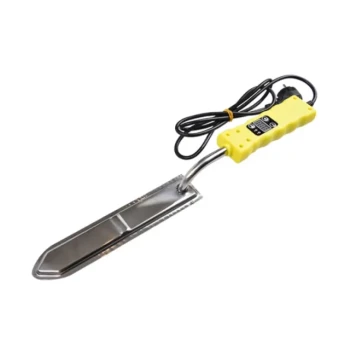
Temperature is the governing factor in essential oil efficacy. Essential oil treatments for mites rely entirely on volatilization—the process of turning liquid into vapor—to be effective. In cold climates, natural evaporation rates drop precipitously, failing to create a vapor concentration strong enough to kill mites. Temperature-controlled evaporation equipment solves this by applying regulated heat, ensuring the medicinal vapors are generated and distributed regardless of the freezing external environment.
Core Takeaway Relying on passive evaporation in cold climates is a recipe for treatment failure because the ambient heat is insufficient to volatilize essential oils. Temperature-controlled devices are not a luxury but a technical necessity in these regions, ensuring consistent therapeutic dosages even when temperatures drop below 15°C.
The Challenge of Cold-Weather Treatment
The Physics of Volatilization
The effectiveness of natural essential oils is highly dependent on ambient temperature. These substances do not work through contact alone; they must evaporate to permeate the hive.
When the air is cold, the energy required to turn these oils into vapor is absent. Consequently, the volatilization rate slows down significantly.
The Failure of Passive Evaporation
In cold northern climates, natural evaporation often fails to maintain an effective concentration for mite control.
A treatment that works perfectly in a warm summer environment becomes inert in the cold. The oil remains liquid rather than becoming the vapor needed to treat the colony.
How Temperature Control Solves the Problem
Regulated Heating Mechanism
Temperature-controlled equipment provides regulated heat to the essential oils. This artificial energy source replaces the missing ambient heat.
By actively warming the oil, the device forces volatilization to occur at a predictable rate. This ensures the medicine is released even if the air outside is freezing.
Ensuring Uniform Distribution
These devices ensure that medicinal vapors are uniformly distributed inside the beehive.
Without active regulation, vapor distribution can be patchy and ineffective. Controlled heating ensures every part of the hive receives the necessary coverage.
Overcoming the 15°C Threshold
The primary reference indicates that natural efficacy drops significantly when external temperatures fall below 15 degrees Celsius.
Temperature-controlled devices bypass this environmental limitation. They solve the technical challenge of climate restriction, allowing for effective mite treatments in weather conditions where passive methods are useless.
Understanding the Limitations
The Risks of Environmental Reliance
The most common pitfall in mite treatment is assuming that a method that works in one season will work in another.
Natural evaporation is inconsistent. It fluctuates with the weather, making it an unreliable variable in a precise medical treatment plan.
The Trade-off of Complexity
To gain consistency, one must move away from simple, passive methods.
Using temperature-controlled equipment introduces a layer of technical complexity compared to passive strips or pads. However, this is a necessary trade-off to guarantee medicine efficacy in environments that are hostile to natural volatilization.
Making the Right Choice for Your Goal
To ensure your mite treatment strategy is effective, align your equipment choice with your environmental reality:
- If your primary focus is treating in cold or northern climates: You must use temperature-controlled equipment to artificially drive volatilization, as natural evaporation will not reach lethal concentrations for mites.
- If your primary focus is treatment consistency: You should utilize regulated heating devices to ensure uniform vapor distribution, eliminating the variability caused by fluctuating daily temperatures.
Control the temperature, and you control the efficacy of your treatment.
Summary Table:
| Feature | Passive Evaporation | Temperature-Controlled Equipment |
|---|---|---|
| Energy Source | Ambient heat (unreliable) | Regulated internal heating |
| Efficacy < 15°C | Fails; low volatilization | High; forces medicinal vapor |
| Distribution | Inconsistent/Patchy | Uniform and predictable |
| Reliability | Weather-dependent | Consistent regardless of climate |
| Primary Use | Warm, stable environments | Cold northern climates & professional apiaries |
Scale Your Apiary Success with HONESTBEE
Ensure your mite treatments never fail due to climate challenges. HONESTBEE empowers commercial apiaries and distributors with a comprehensive wholesale portfolio of professional-grade beekeeping tools and machinery.
Whether you need specialized honey-filling machines, hive-making hardware, or essential industry consumables, we provide the technical solutions required for large-scale efficiency.
Ready to upgrade your equipment? Contact us today to discuss our wholesale offerings and how we can support your commercial growth with high-performance beekeeping technology.
References
- Qodratollah Sabahi, Ernesto Guzmán‐Novoa. Continuous release of oregano oil effectively and safely controls Varroa destructor infestations in honey bee colonies in a northern climate. DOI: 10.1007/s10493-017-0157-3
This article is also based on technical information from HonestBee Knowledge Base .
Related Products
- Heavy Duty 12V Oxalic Acid Evaporator Vaporizer for Bee Varroa Mite Treatment Beekeeping Fumigator Atomizer
- 12V Bee Mite Removal Evaporator Oxalic Acid Vaporizer for Bee Fumigation Treatment 180W Atomization
- Durable 12V Oxalic Acid Vaporizer for Varroa Mite Treatment Beehive Beekeeping Tool
- Oxalic Acid Vaporizer 12V for Bee Varroa Mite Treatment
- Adjustable Formic and Acetic Acid Dispenser for Bee Mite Treatment
People Also Ask
- How can oxalic acid treatment be applied effectively when capped brood is present? Master the 3-Stage Vapor Protocol
- What are the main advantages of using oxalic acid vaporization for Varroa mite control? Achieve 90%+ Efficacy Safely
- What is the process of using an oxalic acid vaporizer? A Step-by-Step Guide to Safe Varroa Control
- How can oxalic acid vaporization be used effectively in a hive that contains brood? Master Multi-Stage Mite Control
- Why is it necessary to control varroa mite infestations? Protect Your Colony with Oxalic Acid Vaporizers