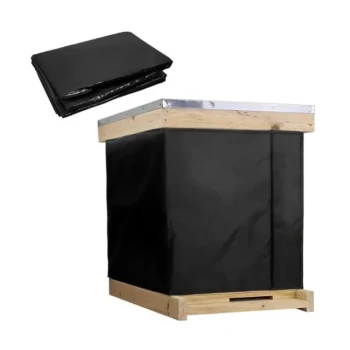
The application of professional overwintering materials is a critical investment in the biological and economic stability of a commercial apiary. While specific breeds like Caucasian honeybees possess natural cold resistance, they remain highly sensitive to environmental fluctuations; professional insulation and ventilation systems stabilize the hive environment, directly preserving the colony’s energy reserves for the critical spring season.
Core Takeaway Relying solely on a honeybee's natural cold resistance is often insufficient for commercial productivity. Professional auxiliary materials reduce the metabolic stress of winter, allowing colonies to conserve energy and accelerate spring brood rearing—the fundamental driver of total annual honey output.
The Biological Necessity of Thermal Regulation
Sensitivity Despite Resistance
Caucasian honeybees are biologically equipped with inherent cold resistance. However, this natural hardiness does not make them immune to the stress of poor overwintering conditions.
Without assistance, the colony must expend significant effort to counteract external temperature drops. This sensitivity means that unmanaged environmental exposure can degrade colony health even if survival is achieved.
Stabilizing the Nest Environment
The primary function of professional thermal insulation is to decouple the internal hive climate from external weather patterns.
By applying these materials, you ensure the colony can maintain a constant nest temperature. This stability is the baseline requirement for minimizing stress on the bees during the winter months.
The Link Between Insulation and Productivity
Reducing Energy Consumption
When a colony struggles to maintain heat, it consumes its honey stores at an accelerated rate.
Professional insulation acts as an energy multiplier. By retaining heat more efficiently, the bees significantly reduce their energy consumption. This preserves their physiological resources rather than burning them solely for survival.
The Role of Ventilation
Temperature control must be paired with air management. Professional ventilation regulation equipment is necessary to balance heat retention with air quality.
Proper ventilation prevents the stagnation of air, which can be just as detrimental as the cold itself.
Securing the Spring Harvest
Rapid Recovery of Brood Rearing
The true commercial value of overwintering materials is realized in the spring. A colony that has conserved energy through the winter is primed for immediate growth.
The preservation of energy ensures a rapid recovery of brood rearing. Instead of spending weeks recovering from winter stress, the colony can immediately redirect its resources toward population growth.
Securing Annual Honey Output
Productivity is a function of timing. The earlier and stronger a colony can rear brood, the larger the workforce will be for the honey flow.
Therefore, the use of auxiliary materials is fundamental to securing the total annual honey output. It bridges the gap between winter survival and the peak performance required for a profitable harvest.
Understanding the Trade-offs
The Risk of Passive Management
The primary trade-off is the initial investment in materials versus the risk of reduced yield.
Choosing not to use professional materials forces the bees to rely entirely on metabolic heat generation. While they may survive, they often emerge from winter in a weakened state, leading to a "lag phase" in spring that directly reduces potential honey production.
Making the Right Choice for Your Goal
To maximize the potential of your apiary, align your overwintering strategy with your production targets:
- If your primary focus is Colony Survival: Prioritize thermal insulation to protect sensitive breeds from extreme temperature fluctuations.
- If your primary focus is Maximum Honey Yield: Invest in both insulation and ventilation equipment to conserve energy reserves, ensuring the explosive spring growth necessary for a full harvest.
Professional auxiliary materials are not merely protective gear; they are production tools that convert winter energy conservation into spring profitability.
Summary Table:
| Factor | Passive Management (Natural Resistance) | Professional Auxiliary Materials |
|---|---|---|
| Energy Consumption | High; bees burn honey stores for heat | Low; insulation retains metabolic heat |
| Colony Stress | High metabolic stress & fluctuations | Low; stable internal micro-climate |
| Spring Recovery | Lag phase; slow brood rearing growth | Rapid; immediate population expansion |
| Annual Output | Unpredictable; lower honey yields | Secured; maximized for peak honey flow |
| Air Quality | Risk of moisture & stagnation | Optimized via regulated ventilation |
Maximize Your Colony’s Potential with HONESTBEE
Transition from simple survival to peak profitability. HONESTBEE empowers commercial apiaries and distributors with the specialized tools needed to safeguard honeybee health and boost annual yields.
Our comprehensive wholesale portfolio includes:
- Advanced Overwintering Solutions: Professional insulation and precision ventilation systems.
- Industrial Machinery: Hive-making and honey-filling machines to scale your operations.
- Complete Equipment Range: From specialized beekeeping hardware to essential industry consumables.
Don't let winter stress deplete your spring profits. Contact us today to learn how our hardware and industry expertise can strengthen your beekeeping business.
References
- G. Gumbatova. Development Peculiarities in Azerbaijan Apis mellifera subsp. caucasica Gorbachev, 1916. DOI: 10.33619/2414-2948/103/20
This article is also based on technical information from HonestBee Knowledge Base .
Related Products
- Economy Polyester Beekeeping Jacket with Veil and Hat
- Professional 600D Oxford Cloth Beekeeping Tool Bag with 8 Pockets and Elastic Loops
- Professional Insulated Winter Hive Wrap for Beekeeping
- Premium Cotton Beekeeper Suit with Reinforced Fencing Veil
- Professional Beekeeper Suit with Square Folding Cotton Veil
People Also Ask
- When is a beekeeping jacket considered a more suitable choice than a full suit? Optimize Your Apiary Mobility
- What are the advantages of a beekeeping jacket? Superior Mobility & Comfort for Routine Hive Inspections
- What are the features of an economical beekeeping jacket? Essential Protection for Budget-Conscious Beekeepers
- What factors should a new beekeeper consider when choosing between a jacket and a full suit? Security vs. Comfort
- What are the pros of using a beekeeping jacket? Unlock Superior Comfort and Mobility for Your Apiary