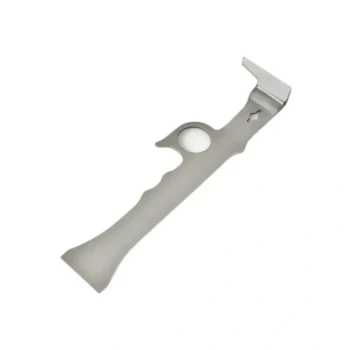
The reliable availability of specialized tools is the critical variable that separates industrial-scale beekeeping from subsistence farming. It ensures that improved beehive systems function as designed, allowing for high-efficiency maintenance and harvesting. Without a consistent supply of these input accessories, apiaries face immediate operational bottlenecks that can force a regression to inefficient traditional methods, effectively negating the economic advantages of modern technology.
The core success factor in modern apiary management is not just the equipment itself, but the continuity of its operation. A stable supply chain for tools and consumables prevents the idle time and equipment failures that destroy allocative efficiency and long-term profitability.
Preserving Economic Integrity
Preventing Operational Regression
The primary risk in modern apiary management is the forced reversion to traditional methods due to equipment failure. When specialized tools or consumables are unavailable, operators cannot maintain the integrity of improved beehives.
This regression eliminates the efficiency gains provided by modern technology. To secure long-term economic benefits, the supply of accessories must remain stable to support the advanced infrastructure already in place.
Maximizing Allocative Efficiency
The inefficient use of beehives and consumables is a leading cause of low economic performance in apiaries. When production materials sit idle or are lost due to a lack of supporting accessories, the "allocative efficiency" drops precipitously.
By optimizing the distribution and precise use of these inputs, beekeepers can maintain high output levels with fewer resources. This redistribution strategy is essential for achieving substantial cost reductions.
Enabling Scientific Management
Aligning with Biological Cycles
Modern beekeeping relies on complete sets of machinery—from hive-making to honey-filling—to scientifically allocate resources. This is particularly critical during specific nectar and pollen collection cycles, such as peak periods from December to May.
Access to specialized hardware ensures that workflows are optimized to match these natural windows. This systematic application guarantees maximum output when the environment is most productive.
Standardization for Biodiversity
Standardized tools, such as modern hives, allow for rational colony management that respects local ecosystems. These tools increase honey collection efficiency while minimizing the disturbance to bee colonies.
This precision allows beekeepers to utilize ecosystem biodiversity without over-exploiting plant resources. It promotes a balance where commercial harvesting coexists with the restoration of natural vegetation.
Safety as an Operational Standard
Ensuring Precision Under Pressure
Professional protective equipment is not merely for comfort; it is a prerequisite for operational precision. High-quality suits and veils provide a biosafety barrier that neutralizes the risk of stings, allowing operators to remain composed during periods of high bee activity.
Facilitating Complex Interventions
With the physical security provided by puncture-resistant materials and enclosed vision windows, workers can perform complex tasks effectively. This includes thorough colony inspections, pest control, and the removal of burr combs.
Without this protection, inspections become rushed and superficial. Proper gear ensures that necessary interventions are performed with the calm and detail required for colony health.
Understanding the Trade-offs
The Maintenance Imperative
Reliance on specialized tools introduces a dependency on strict maintenance routines. Unlike traditional methods, modern machinery requires regular servicing to remain "ready for immediate use."
Neglecting maintenance leads to equipment failure, which can halt the smooth operation of the entire apiary. The efficiency of the system is only as good as the condition of its individual components.
The Cost of Idle Resources
While specialized tools increase potential output, they represent a significant capital investment. If these tools are not utilized efficiently—or if supply chain gaps leave them unusable—they become a financial drain.
Beekeepers must balance the acquisition of advanced tools with their ability to keep them active. Idle high-tech equipment reduces overall economic efficiency faster than low-tech alternatives.
How to Apply This to Your Project
To maximize the return on investment in your apiary, align your equipment strategy with your specific operational goals:
- If your primary focus is maximizing yield: prioritize the acquisition of complete machinery sets (filling, extraction) to capitalize on peak foraging windows between December and May.
- If your primary focus is operational stability: establish a robust supply chain for consumables and spare parts to prevent a forced regression to traditional, inefficient methods.
- If your primary focus is colony health: invest heavily in standardized hives and professional protective gear to minimize colony disturbance and allow for precise, stress-free inspections.
Ultimately, the value of modern beekeeping technology lies not in its possession, but in the consistency of its application.
Summary Table:
| Key Aspect | Impact on Apiary Management | Primary Benefit |
|---|---|---|
| Supply Chain Stability | Prevents regression to inefficient traditional methods | Long-term economic integrity |
| Scientific Allocation | Aligns workflows with peak biological nectar cycles | Maximized honey yield |
| Standardized Tools | Enables rational colony management and biodiversity | Sustainable ecosystem balance |
| Professional Gear | Provides biosafety barriers for complex interventions | Operational safety and precision |
| Resource Utilization | Minimizes idle time of high-capital machinery | Improved allocative efficiency |
Scale Your Beekeeping Business with HONESTBEE
At HONESTBEE, we understand that for commercial apiaries and distributors, the difference between profit and loss lies in the reliability of your supply chain. We provide a comprehensive wholesale offering designed to keep your operations running at peak capacity without interruption.
Our Value to You:
- Complete Machinery Solutions: From hive-making to honey-filling machines, we supply the specialized hardware needed for scientific management.
- Full Spectrum of Supplies: Access a wide array of essential industry consumables and high-quality beekeeping tools.
- Global Distribution Expertise: We cater specifically to the needs of large-scale honey producers and equipment distributors.
Don't let equipment failure or supply gaps stall your growth. Partner with a supplier that values the continuity of your operation as much as you do.
Contact HONESTBEE Today to Secure Your Supply Chain
References
- Tegegn Defar Mosisa, Dereje Fedasa Hordofa. The impact of improved beehive technology adoption on rural household income, consumption expenditure and asset wealth in Wonchi districts, Ethiopia. DOI: 10.1007/s44282-024-00061-9
This article is also based on technical information from HonestBee Knowledge Base .
Related Products
- HONESTBEE 15-in-1 Beekeeper Multi-Tool with Hammer and Pliers for Beekeeping
- Stainless Steel J Hook Hive Tool for Beekeeping
- HONESTBEE Advanced Ergonomic Stainless Steel Hive Tool for Beekeeping
- Stainless Steel Queen Grafting Tool for Beekeeping and Bee Queen Grafting
- Ergonomic Plastic Frame Spacer Tool for Rapid Hive Management Beekeeping
People Also Ask
- What is the recommended method for storing beekeeping tools? Expert Vertical Storage Solutions for Your Apiary
- How does a favorable microclimate interact with beekeeping tools? Boost Overwintering Success and Equipment Longevity
- Why is the treatment of beekeeping tools with high-concentration chemical disinfectants necessary for preventing AFB?
- Why design beekeeping tools with ergonomics in mind? Empowering All Beekeepers with Inclusive Equipment
- How do specialized beekeeping tools and high-specification protective equipment assist in colony health management?