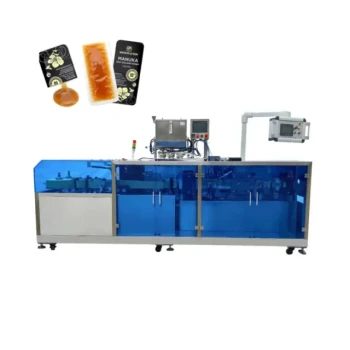
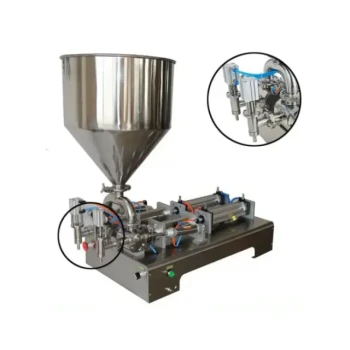
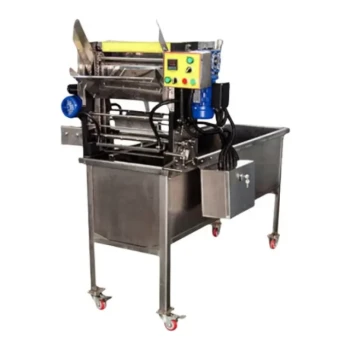
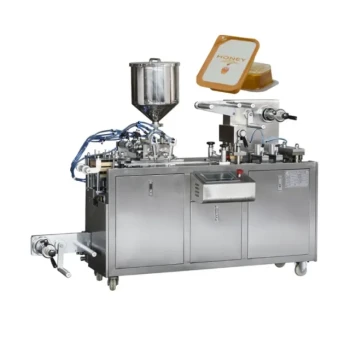
The preservation of volatile aromas and chemical stability is the fundamental reason professional machinery is required for high-value honey production. These systems allow producers to can honey quantitatively in a sterile environment, rigorously sealing the product to prevent the ingress of impurities and the loss of the unique flavor profiles that define premium varieties.
Core Insight
High-value honey is a living, chemically active product that degrades quickly when exposed to air and moisture. Professional packaging machinery is not just about speed; it is a preservation technology that locks in sensory characteristics and medicinal properties by minimizing oxidation and maximizing seal integrity.
Protecting the Unique Profile of Specialty Honey
The primary value of specialty honey lies in its nuanced flavor and aroma. Professional machinery is designed specifically to protect these fleeting characteristics.
Locking in Volatile Aromas
Specialty honey contains delicate volatile compounds that give it a distinct scent and taste. Rigorous sealing processes used in professional machinery are essential to prevent these compounds from evaporating. Without this barrier, the honey loses its "signature" profile and becomes generic.
Controlling Chemical Degradation (HMF)
Exposure to air accelerates the production of Hydroxymethylfurfural (HMF), a compound used to indicate honey age and heat damage. Automated filling lines significantly reduce the time honey is exposed to air. This effective control of oxidation preserves the honey’s freshness and ensures it meets the strict chemical criteria for premium grading.
Preserving Bioactive Components
Many high-value honeys are prized for medicinal ingredients, such as pollen and propolis. High-precision sealing technology minimizes secondary contamination risks. This preserves the nutritional integrity and bioactive components, ensuring the product delivers the health benefits consumers expect from a high-cost item.
Managing Physical Properties and Consistency
Honey is a physically difficult substance to handle due to its viscosity and reaction to the environment. Professional equipment manages these physical challenges better than manual methods.
Combating Hygroscopy
Honey is hygroscopic, meaning it naturally absorbs moisture from the air, which can lead to fermentation and spoilage. Modern packaging systems use materials like sealing gaskets and airtight containers to block moisture infiltration. This extends shelf life and prevents the physical degradation of the product on retail shelves.
Handling High Viscosity with Precision
The thickness of honey makes consistent manual filling nearly impossible. Industrial-grade machinery employs precision piston or weighing systems to manage high viscosity. This ensures consistent product weight (quantitative canning), which is critical for complying with trade standards and maintaining consumer trust.
Ensuring Hygiene and Market Compliance
For specialty honey to command a high price, it must meet rigorous international safety standards.
The Sterile Processing Environment
Professional machinery creates a closed, sterile environment for the filling process. This effectively removes impurities via standardized filtration and sterilization before the honey enters the jar. It prevents external contaminants from compromising the product's microbial safety.
Standardization for Export
Premium markets require uniformity in packaging and hygiene. Automated machinery produces standardized packaging that meets international trade requirements. This consistency allows producers to scale from local sales to global export markets without sacrificing quality control.
Understanding the Trade-offs
While professional machinery offers undeniable quality benefits, producers must weigh the operational implications.
Capital Investment vs. Volume
The initial cost of high-precision filling and sealing equipment is significant. For very small-batch apiaries, the ROI may take years to realize. The technology is best leveraged when there is sufficient raw material volume or a need to compensate for raw material shortages through high-efficiency processing.
Maintenance and Technical Skill
Automated lines require regular calibration and maintenance to handle sticky substances without clogging. Operators must be trained to manage precise metering systems. A lack of technical maintenance can lead to downtime that negates the efficiency gains of the machinery.
Making the Right Choice for Your Goal
Investing in packaging technology should align with your specific market position.
- If your primary focus is Flavor Preservation: Prioritize machinery with advanced sealing technologies and gaskets to lock in volatile aromatic components.
- If your primary focus is Export Markets: Focus on systems that offer sterile environments and precise metering to meet international hygiene and weight standards.
- If your primary focus is Medicinal Value: Ensure the machinery emphasizes speed and reduced air exposure to minimize HMF levels and oxidation.
Ultimately, professional packaging machinery transforms raw honey from a simple agricultural commodity into a stable, standardized, and high-value commercial asset.
Summary Table:
| Key Benefit | Professional Machinery Function | Impact on Specialty Honey |
|---|---|---|
| Aroma Preservation | High-integrity rigorous sealing | Locks in delicate volatile compounds and flavor profiles. |
| Chemical Stability | Reduced air exposure & oxidation control | Minimizes HMF production and preserves bioactive components. |
| Shelf Life | Moisture-blocking gaskets & airtight seals | Prevents hygroscopic fermentation and physical degradation. |
| Consistency | Precision piston/weighing systems | Ensures quantitative canning and uniform weight standards. |
| Hygiene | Sterile, closed-loop environment | Eliminates contaminants and meets international export standards. |
Elevate Your Honey Brand with HONESTBEE Precision Equipment
Transitioning from raw honey to a premium, high-value commercial asset requires the right technology. HONESTBEE specializes in supporting commercial apiaries and distributors with high-performance honey-filling machines, hive-making equipment, and essential beekeeping tools.
Whether you are scaling production for export or looking to preserve the medicinal integrity of specialty varieties, our wholesale solutions are designed to maximize your efficiency and market value.
Ready to professionalize your production? Contact our experts today to find your perfect machinery solution!
References
- Abdülkadır Gündüz, Hikmet Öksüz. The Honey, The Poison, The Weapon. DOI: 10.1016/j.wem.2011.01.006
This article is also based on technical information from HonestBee Knowledge Base .
Related Products
- Precision Automated Packaging Turntable Honey Spoon Filling Sealing Packing Machine
- Double Nozzle Small Honey Filling Machine Honey Sachet Packing Packaging Equipment
- Fully Automatic Honey Filling Packaging Machine for Processing Line
- Small Honey Filling Machine Sachet Packing Equipment Single Nozzle
- Automatic Single-Dose Snap & Squeeze Honey Sachets Packing Machine
People Also Ask
- What role do automated filling and packaging machines play in the honey supply chain? Scale Your Retail Distribution
- What are the benefits of automated honey filling and packaging? Scale Your Apiary with Industrial Precision
- What role do professional automated filling and packaging machines play in honey processing? Boost Efficiency & Value
- How do automated honey filling and packaging machines contribute to the market value of honey products? Maximize Your ROI
- How do industrial-grade automated honey filling and packaging machines mitigate the risk of physical contamination?