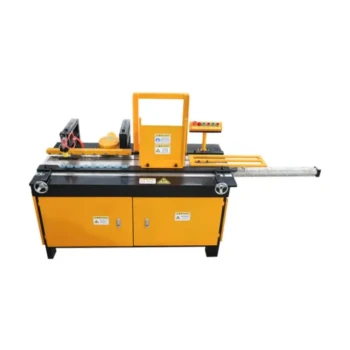
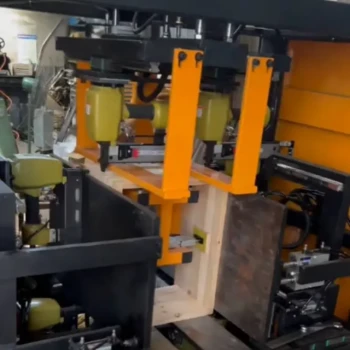
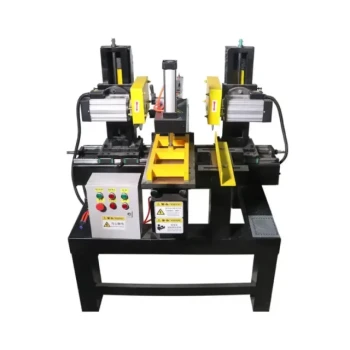
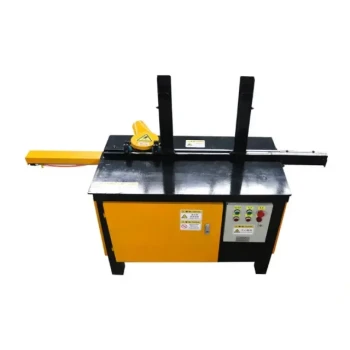
Specialized hive-making machinery is the critical infrastructure behind modern industrial beekeeping. It enables the mass production of standardized hive components—specifically hive bodies, frames, and bottom boards—with exact, uniform specifications. For large-scale operations, this precision is mandatory to ensure complete interchangeability of parts, streamlined transportation across distributed locations, and full compatibility with automated honey extraction lines.
The Core Insight In commercial apiaries, operational friction destroys profitability. Specialized machinery eliminates this friction by ensuring every piece of hardware is identical, transforming beekeeping from a manual craft into a scalable, integrated industrial process.
The Operational Impact of Standardization
Achieving Complete Interchangeability
The primary value of specialized machinery is the creation of uniform hardware. When managing thousands of colonies, operators must be able to swap frames or hive bodies between any two units without hesitation.
This uniformity eliminates the bottleneck of sorting and matching incompatible parts. It ensures that maintenance, such as replacing a damaged bottom board, can be performed instantly in the field.
Optimizing Logistics and Transportation
Large-scale operations often involve migratory beekeeping, where hives are moved vast distances for pollination or nectar flows. Machine-produced hives are built to precise dimensions that fit standard pallet footprints and warehousing logic.
This standardization allows for the efficient stacking and securing of hives on industrial transport platforms. It maximizes the number of units that can be moved per trip, directly reducing fuel and labor costs.
Streamlining Colony Management
Routine tasks such as colony splitting and inspections rely on hardware consistency. When equipment is uniform, beekeepers can manipulate hive configurations rapidly without physical resistance or fitment issues.
Precise manufacturing also maintains accurate "bee space"—the critical gap required for bees to move freely. This reduces the construction of unwanted burr comb, making inspections faster and less disruptive to the colony.
Integration with Automation
Enabling Mechanized Extraction
Modern honey harvesting relies on automated uncapping and spinning lines. These machines require frames with exact dimensions to function correctly; a warped or oversized frame can jam an entire processing line.
Specialized hive-making machinery produces frames with tight structural tolerances. This ensures seamless integration with downstream extraction equipment, significantly increasing daily throughput during harvest season.
Facilitating Industrial Scalability
To expand operations, apiaries need to deploy new infrastructure quickly. Automated hive manufacturing allows operators to produce robust, standardized hives in-house or source them reliably at a lower unit cost.
This capability reduces the capital investment required for expansion. It creates a stable infrastructure that supports mass production, even in remote or developing agricultural regions.
Understanding the Trade-offs
High Initial Capital Expenditure
While unit costs decrease over time, the upfront investment in specialized woodworking and molding machinery is significant. Smaller operations may find the ROI difficult to justify compared to buying pre-made components or using manual tools.
Maintenance and Calibration Dependencies
The benefit of precision is lost if the machinery is not maintained. Operators must commit to regular calibration and maintenance of the equipment to prevent "drift" in specifications, which would reintroduce the very variability the machines are meant to solve.
Making the Right Choice for Your Goals
If you are evaluating the role of automation in your apiary infrastructure, consider these strategic priorities:
- If your primary focus is rapid expansion: Invest in machinery to lower the unit cost of hives and ensure new inventory is immediately compatible with existing stock.
- If your primary focus is operational efficiency: Prioritize machinery that guarantees frame precision to eliminate jams and downtime in your honey extraction lines.
- If your primary focus is migratory beekeeping: Ensure your equipment produces robust, pallet-compatible components that can withstand the physical stress of frequent transport.
Standardized infrastructure is the silent engine of commercial beekeeping, turning biological potential into reliable, scalable production.
Summary Table:
| Key Benefit | Impact on Commercial Operations | Operational Advantage |
|---|---|---|
| Interchangeability | All parts fit any hive unit | Eliminates sorting; speeds up field maintenance |
| Logistical Efficiency | Standardized pallet footprints | Optimizes transport capacity; reduces labor/fuel costs |
| Bee Space Precision | Accurate manufacturing tolerances | Minimizes burr comb; faster, less disruptive inspections |
| Automation Readiness | Exact frame dimensions | Prevents jams in automated honey extraction lines |
| Scalability | Lower unit cost at volume | Reduces capital barrier for rapid apiary expansion |
Revolutionize Your Apiary Infrastructure with HONESTBEE
Transitioning from manual craft to industrial-scale production requires the right partner. HONESTBEE specializes in empowering commercial apiaries and distributors with the high-performance tools needed to dominate the market.
We provide a comprehensive wholesale portfolio, including:
- Advanced Machinery: Precision hive-making and honey-filling machines for seamless production.
- Standardized Hardware: A full spectrum of beekeeping tools and equipment built for durability.
- Industry Consumables: Every essential item to keep your large-scale operations running smoothly.
Ready to eliminate operational friction and maximize your throughput? Contact HONESTBEE today to discuss our wholesale offerings and discover how our integrated equipment solutions can scale your business.
References
- Luciana Porter‐Bolland. La apicultura y el paisaje maya. Estudio sobre la fenología de floración de las especies melíferas y su relación con el ciclo apícola en La Montaña, Campeche, México. DOI: 10.1525/msem.2003.19.2.303
This article is also based on technical information from HonestBee Knowledge Base .
Related Products
- High-Efficiency Pneumatic Bee Hive Making Machine for Rapid Box Assembly
- Beehive Handle and Frame Rest Cutting Machine: Your Specialized Hive Machine
- Mini Desktop Bee Hive Frame Forming Making Machine
- Automatic High-Speed Bee Hive Box Stapling Machine
- Beehive Machine Double End Saw for Precision Hive Component Manufacturing
People Also Ask
- How does the introduction of professional beehive-making machinery benefit sustainable beekeeping? Scale Your Apiary
- Why is specialized beehive-making machinery critical for low-defense breeding? Enhance Selection with Precision Tools
- How does the introduction of specialized beehive making machinery contribute to increasing the scale of regional beekeeping industries?
- What is the importance of specialized beehive making machinery in a circular bio-economy? Build Local Sustainability
- Why is specialized beehive-making machinery essential? Scale Your Apiary with Precision Industrial Standards