To ensure scientific rigor in apiculture, using a queen excluder is mandatory. When evaluating honey production, the excluder functions as a critical filter that physically segregates the colony's reproductive activities from its resource storage. This separation ensures that the weight recorded in honey supers represents pure honey yield, rather than a mix of honey and the significant, variable mass of developing brood (larvae and pupae).
The queen excluder guarantees that honey yield metrics are not contaminated by biological variables like brood weight. It isolates the queen to the lower chambers, ensuring that upper supers are strictly for honey storage, providing a clean baseline for performance analysis.
The Mechanics of Isolation
A Selective Physical Barrier
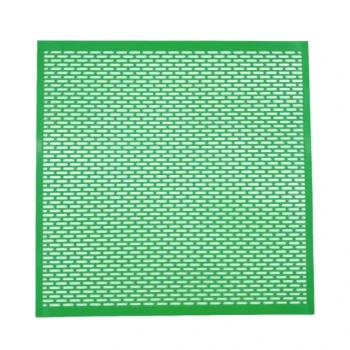
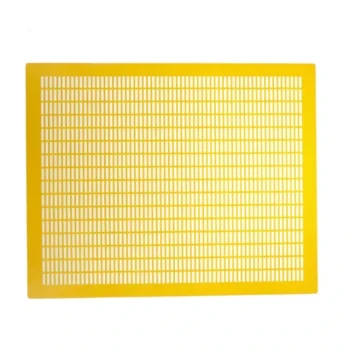
The fundamental function of a queen excluder relies on precise aperture sizes. These gaps are calibrated to be large enough for worker bees to pass through freely but small enough to block the larger abdomen of the queen bee.
Protecting the Honey Supers
By placing this barrier between the brood chamber (bottom) and the honey supers (top), you dictate the movement of the queen. This ensures she cannot enter the upper boxes to lay eggs, keeping the honey supers free of brood.
The Critical Role in Data Accuracy
Eliminating Weight Distortion
In honey production analysis, weight is the primary metric. If a queen is allowed to lay eggs in the honey supers, the resulting frames will contain honey, pollen, larvae, and pupae.
Because brood has significant mass, weighing these frames would result in data inaccuracies. You would be measuring the weight of the colony's population growth rather than its honey productivity.
Ensuring Purity of Yield
To evaluate the true performance of a colony, the variable being measured must be isolated. The excluder ensures that the contents of the super are restricted to stored resources.
This allows for a direct correlation between the weight gained and the foraging efficiency of the worker bees, without the confounding variable of reproductive output.
Common Pitfalls to Avoid
The Risk of Mixed Variables
Failing to use an excluder introduces uncontrolled variables into your dataset. Without this barrier, you cannot distinguish whether a heavy super is the result of exceptional nectar gathering or a prolific queen expanding the nest.
Contextualizing with Genetic Background
While the excluder controls physical variables, it is helpful to remember that biological variables also impact production. As noted in supplementary methodologies, different subspecies (e.g., Italian vs. Carniolan bees) have different foraging behaviors.
Using an excluder standardizes the physical measurement environment, allowing you to accurately assess how these specific genetic backgrounds perform without data contamination.
Making the Right Choice for Your Goal
To obtain reliable data on colony performance, you must control the environment within the hive.
- If your primary focus is accurate data collection: Install queen excluders to ensure that all weight measured in the supers is attributable solely to honey production, not brood rearing.
- If your primary focus is comparative analysis: Use excluders to standardize conditions across all colonies, ensuring that differences in yield reflect worker efficiency rather than nest expansion patterns.
By standardizing the contents of your hive supers, you turn a complex biological process into measurable, actionable data.
Summary Table:
| Feature | Function in Evaluation | Impact on Data Accuracy |
|---|---|---|
| Aperture Size | Blocks queen, allows workers | Ensures honey-only storage in supers |
| Weight Control | Eliminates brood mass | Prevents yield inflation from larvae/pupae |
| Space Management | Segregates reproduction & storage | Standardizes honey supers across colonies |
| Purity of Yield | Restricts queen to brood chamber | Isolates foraging efficiency as a variable |
Scale Your Apiary Efficiency with HONESTBEE
To achieve precise production metrics and maximize your honey yield, you need reliable tools that professional beekeepers trust. HONESTBEE specializes in supporting commercial apiaries and distributors with high-performance beekeeping machinery and essential hardware.
From precision-calibrated queen excluders to industrial honey-filling machines and hive-making equipment, we provide the full spectrum of tools needed to turn your biological data into commercial success.
Ready to upgrade your wholesale supply? Contact us today to explore our comprehensive product catalog
References
- James Sainsbury, Ferenc Jeanplong. Marker assisted selection for Varroa destructor resistance in New Zealand honey bees. DOI: 10.1371/journal.pone.0273289
This article is also based on technical information from HonestBee Knowledge Base .
Related Products
- High Performance Plastic Queen Excluder for Beekeeping and Apiary Management
- Lightweight Durable Plastic Queen Excluder Scraper for Beekeeping
- Premium Wood Framed Metal Wire Queen Bee Excluder
- Professional Plastic Queen Excluder for Modern Beekeeping
- Metal Queen Bee Excluder for Beekeeping
People Also Ask
- What are the characteristics of a plastic queen excluder? Key Benefits for Cost-Effective Beekeeping
- What are the operational and cost advantages of using plastic queen excluders over metal or wire excluders in commercial hive management? Discover how they reduce labor, prevent wing damage, and lower total costs.
- What types of queen excluders are available for beekeepers? Choose the Right Tool for Your Hive
- Why are standardized hive frames and queen excluders essential for maintaining honey purity and quality? Scale Your Purity
- Do plastic queen excluders work? A Cost-Effective Solution for Modern Apiaries