The Unseen Battle in Every Jar
The harvest is done. The air is thick with the sweet, floral scent of fresh honey. It's a moment of triumph for any beekeeper.
But the work isn't finished. The liquid gold extracted from the comb holds the story of its creation—and not all of it is meant for the jar. It contains tiny particles of beeswax, propolis, and other natural debris from the hive.
This is where the beekeeper faces a critical choice. The modern consumer has a deeply ingrained psychological expectation: quality looks like purity. Clarity in a jar of honey isn't just about aesthetics; it’s a non-verbal signal of care, cleanliness, and professionalism.
The honey strainer is the deceptively simple tool that stands between the raw, chaotic beauty of the harvest and the refined, trusted product on the shelf.
The Necessary Imperfection of the Harvest
Straining is not about altering the honey. It's about respecting it. The process is a gentle intervention designed to remove the unavoidable byproducts of extraction, directly impacting the final product's quality and appeal.
Beyond the Sweetness: Debris as a Byproduct
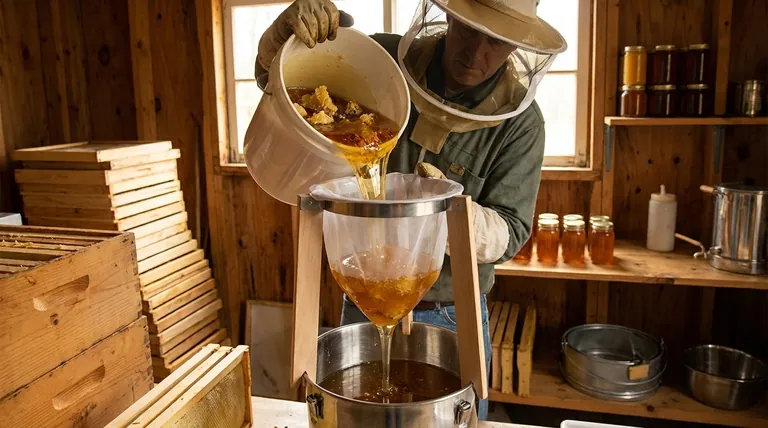
During extraction, it's impossible to avoid introducing small particles into the honey. A strainer’s first job is to catch this evidence of the process:
- Beeswax cappings, sliced from the honeycomb.
- Propolis, the resinous glue of the hive.
- Wood splinters from frames or boxes.
- Occasionally, bee parts.
Removing these isn't about creating an artificial product; it’s about presenting the honey in its best possible form.
The Psychology of Clarity
We trust what we can see. A jar of honey that is clear and smooth speaks of meticulous craftsmanship. Suspended particles can create a cloudy appearance or a gritty texture, which a customer might misinterpret as a flaw or contamination.
Straining ensures the visual promise of your honey matches its quality. It’s the final polish that builds consumer confidence before the jar is even opened.
The Final Gatekeeper Before the Bottle
Before bottling, honey must be clean. Straining is the essential quality control step that prevents future issues, like wax particles slowly floating to the top of the jar over time. It ensures your product remains as perfect on the shelf as the day it was bottled.
The Anatomy of a Simple Machine
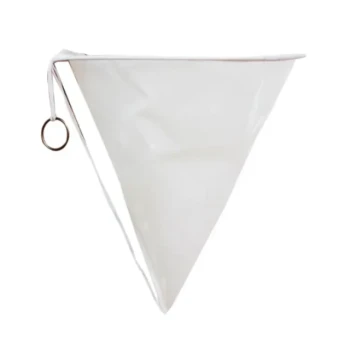
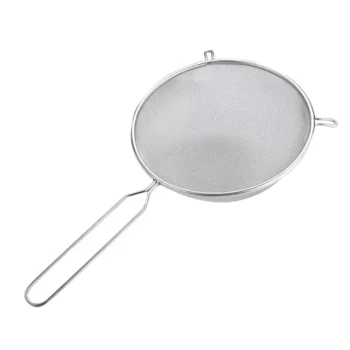
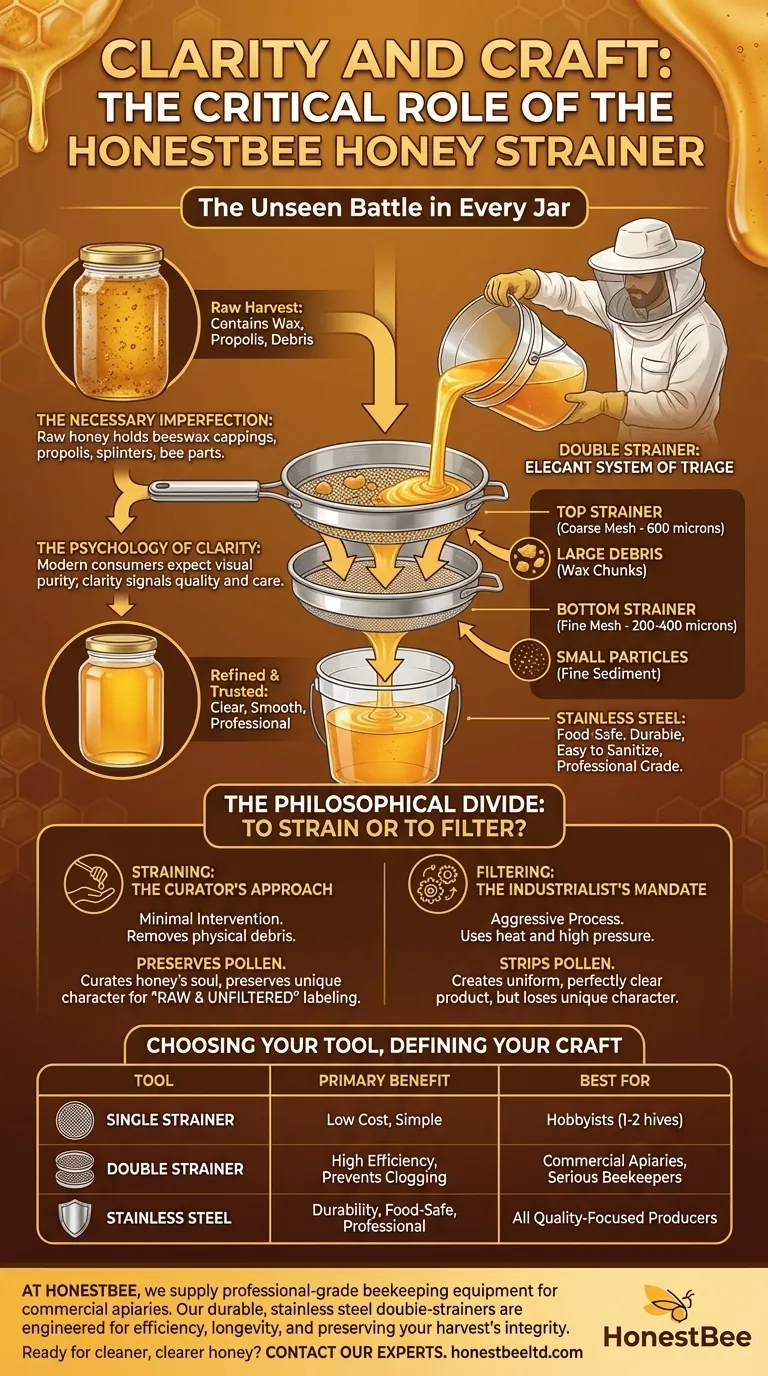
The principle of a honey strainer is gravity itself. You pour honey through a mesh screen, and the liquid passes through while the solids remain. The elegance is in the design variations that cater to different needs.
The Single Strainer: Simplicity in Form
This is the most basic setup—a single mesh screen over a bucket. It's affordable and perfect for the hobbyist with one or two hives. Its primary limitation is that the single screen can clog quickly, requiring frequent cleaning during a larger processing session.
The Double Strainer: An Elegant System of Triage
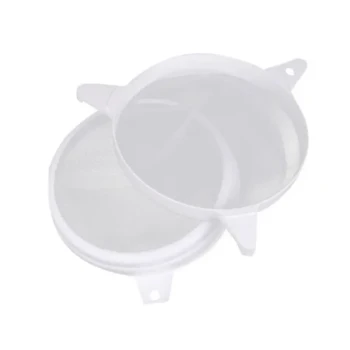
A more sophisticated and efficient design, the double strainer uses two nested screens.
- The Top Strainer: A coarse mesh (e.g., 600 microns) catches the large debris like chunks of wax.
- The Bottom Strainer: A finer mesh (e.g., 200-400 microns) catches the smaller particles that slipped through.
This two-stage system is brilliant in its simplicity. The top screen acts as a guard, preventing the fine bottom screen from clogging prematurely. This design drastically improves workflow and is the standard for anyone processing honey from several hives.
Material Integrity: The Unsung Hero
Professional-grade strainers are made from stainless steel. This isn't just a preference; it's a commitment. Stainless steel is food-safe, will not rust or impart flavors, and is incredibly durable and easy to sanitize. It is a buy-it-for-life tool that reflects a serious approach to the craft.
The Philosophical Divide: To Strain or To Filter?
In the world of honey, "straining" and "filtering" are not synonyms. They represent two fundamentally different philosophies. Understanding this distinction is key to defining your product and your identity as a beekeeper.
Straining: The Curator's Approach
Straining is a minimalist intervention. Its goal is to remove unwanted physical debris while leaving the honey's soul intact. Critically, straining does not remove pollen. Pollen is the microscopic fingerprint of the honey's floral source, a key component that makes local, raw honey so valuable. Straining curates the honey; it doesn't sterilize it.
Filtering: The Industrialist's Mandate
Commercial filtering is an aggressive process, often using heat and high pressure to force honey through microscopic filters. This strips out everything—wax, debris, and nearly all of the beneficial pollen grains. The goal is to create a perfectly clear, uniform product with a long shelf life, but at the cost of its unique character.
Why Your Choice Defines Your Product
As a small-scale or commercial beekeeper, the unique character of your honey is your greatest asset. By choosing to strain rather than filter, you are preserving the very qualities that differentiate you from mass-market brands. Straining is the process that allows you to honestly and proudly label your product as "raw" and "unfiltered."
Choosing Your Tool, Defining Your Craft
Your choice of equipment is a direct reflection of your commitment to quality and efficiency. For beekeepers who see their work not just as a hobby but as a professional craft, the quality of their tools is non-negotiable.
| Tool | Primary Benefit | Best For |
|---|---|---|
| Single Strainer | Low cost, simple | Hobbyists with one or two hives |
| Double Strainer | High efficiency, prevents clogging | Commercial apiaries, serious beekeepers |
| Stainless Steel | Durability, food-safe, professional | All producers focused on quality and longevity |
At HONESTBEE, we supply professional-grade beekeeping equipment to commercial apiaries and distributors who understand this distinction. Our durable, stainless steel double-strainer systems are engineered for efficiency and longevity, helping you preserve the integrity of your harvest while scaling your operations.
If you are ready to produce cleaner, clearer, and more valuable honey, we have the tools to help you succeed. Contact Our Experts
Visual Guide
Related Products
- Stainless Steel Triangle Support Honey Strainer and Filters
- Nylon Honey Strainer Square Filter Cloth for Honey Filters
- Professional Cone-Shaped Honey Filter with Reinforced Steel Ring
- Stainless Steel Double Layer Honey Strainer Sieve Filters
- Conical Nylon Honey Strainer Filter Bag for Beekeeping and Honey Filtration
Related Articles
- The Last Gate: Why a Simple Strainer Defines Honey Quality at Any Scale
- How to Strain Honey Like a Pro: Science-Backed Methods for Maximum Purity
- The Unseen Bottleneck: How Strainer Mesh Size Dictates Your Honey Harvest's Success
- The First Refinement: Why the Humble Honey Strainer is a Masterclass in Process Engineering
- The Strainer's Dilemma: How Simple Filtration Defines Your Honey's Identity